A powdered “Japanese tonic” built from a long list of antioxidants and adaptogens, anchored by two ingredients with real but modest data — wrapped in marketing that promises far more than the evidence supports. Here’s the honest, fully-sourced read.
Nagano Tonic is a modest, not magic, metabolism powder. Of its many ingredients, only green tea catechins and the prebiotic fiber inulin have credible human evidence, and even those move the scale by roughly 1–1.5 kg over months when properly dosed[1][8]. Because Nagano Tonic hides every ingredient inside a proprietary blend, you cannot confirm any active is dosed effectively, so our verdict is MODEST, leaning weak for weight loss alone.
If you’ve landed on a Nagano Tonic sales page, you’ve probably met the pitch: a secret “Japanese mountain” recipe of superfoods that flips your metabolism back on so the fat finally falls away. At SourceLean we take that kind of claim apart for a living, so this Nagano Tonic review is the honest version — every effectiveness claim below is tied to a numbered source. Nagano Tonic is a powdered drink-mix supplement that bundles more than a dozen plant extracts and nutrients, a few of which have genuine but modest research behind them. Whether Nagano Tonic earns a place in your routine depends almost entirely on what you expect from it.
Every effectiveness claim below is checked against primary sources — peer-reviewed research on the individual ingredients, the NIH Office of Dietary Supplements, the NIH National Center for Complementary and Integrative Health, and FDA and FTC guidance — not Nagano Tonic’s marketing. SourceLean makes money only through transparent affiliate links, disclosed above; we run no star ratings, sponsored placements or fabricated reviews, and our verdict scale (real / modest / weak / hype) is applied the same way to every product. This is educational information, not medical advice.
- What is Nagano Tonic?
- What ingredients are in Nagano Tonic?
- Does Nagano Tonic work for weight loss?
- How is Nagano Tonic supposed to work?
- What does green tea (EGCG) actually do?
- Do the other ingredients help?
- Is Nagano Tonic dosed effectively?
- What are Nagano Tonic’s side effects?
- Does Nagano Tonic interact with medications?
- Who should take Nagano Tonic?
- How much does Nagano Tonic cost?
- How does Nagano Tonic compare?
- How should you take Nagano Tonic?
- Is Nagano Tonic a scam or legit?
- The verdict
- FAQ
What is Nagano Tonic?
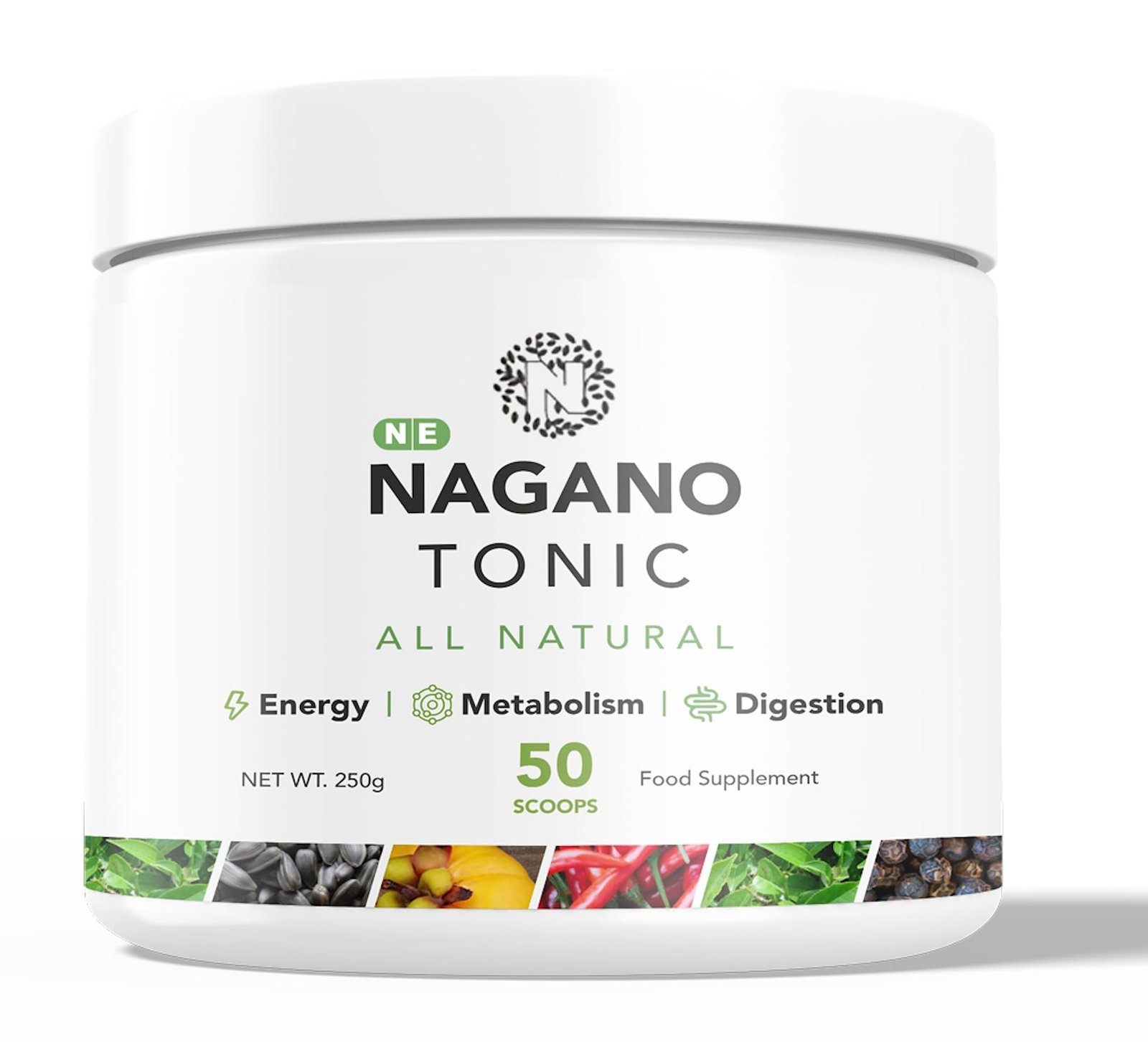
Nagano Tonic is a powdered dietary supplement sold online and marketed as a Japanese-inspired “metabolic tonic.” You mix one scoop into water or a smoothie once a day. It combines green tea extract and several botanicals with antioxidant and adaptogen nutrients, sold on the premise that this blend reignites a slowed metabolism.
Nagano Tonic’s positioning leans on a genuinely popular idea: that traditional “longevity” foods from places like Japan support a healthier metabolism, and that packing many of them into one daily drink could help the body burn fat more efficiently. There is a kernel of truth there — diets rich in vegetables, fiber, tea and fermented foods do track with better metabolic health — but Nagano Tonic’s marketing stretches that population-level observation into a promise a single powder cannot keep.
A few honest framing points before the hype takes over. A dietary supplement is a product taken by mouth that contains a “dietary ingredient” — vitamins, minerals, herbs, amino acids and similar — intended to supplement the diet, not to treat disease. Dietary supplements like Nagano Tonic are not approved by the U.S. Food and Drug Administration; the FDA does not approve any supplement before sale[5]. And Nagano Tonic’s individual ingredient amounts are bundled into a proprietary blend, which means you cannot see how much of each active you are actually getting — and dose is what separates a clinically meaningful ingredient from a sprinkle on the label. Keep both facts in mind throughout this review.
Nagano Tonic is a digital-first product, meaning it is sold primarily through its own sales pages rather than in pharmacies or major retailers. That distribution model is common for this category and is not in itself a red flag — but it does mean the only place to verify Nagano Tonic’s current price, ingredient panel and guarantee is the official website, and that independent shelf-testing of the product is scarce. The powder format is the one real differentiator from capsule competitors: it is easier to take if you dislike pills, and it can carry more total grams of fiber than a capsule, but it does not make the underlying ingredients any better studied.
What ingredients are in Nagano Tonic?
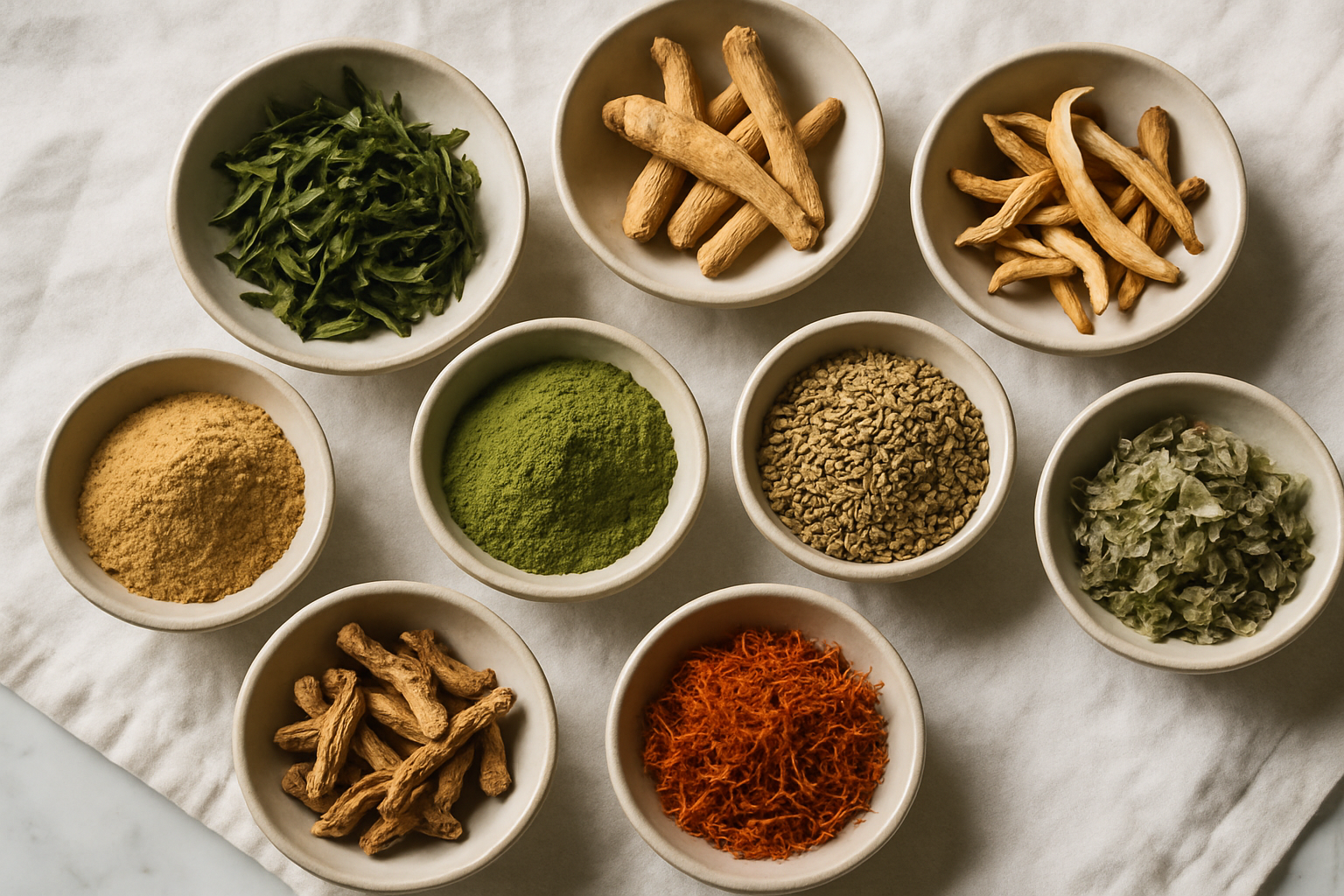
Nagano Tonic’s ingredients typically include green tea extract (EGCG), bitter melon, cinnamon, panax ginseng, ashwagandha, ginger, inulin fiber, eleuthero, alfalfa, mangosteen, acerola and camu camu — a mix of metabolism botanicals, adaptogens and antioxidants. Because they sit inside a proprietary blend, the label shows the blend’s total weight but not the individual dose of each ingredient.
Below is the honest read on Nagano Tonic’s main ingredients, with the strength of evidence for weight graded plainly. “Evidence for weight” here means human research showing the ingredient affects body weight or fat — not whether it supplies vitamin C or acts as an antioxidant, which are separate questions.
| Ingredient | Why it’s in Nagano Tonic | Studied dose | Evidence for weight |
|---|---|---|---|
| Green tea extract (EGCG) | Fat oxidation via catechins + caffeine | ~250–500 mg catechins/day[1] | Moderate |
| Inulin (prebiotic fiber) | Appetite & satiety via gut | ~10–21 g/day[8] | Preliminary–Moderate |
| Bitter melon | Blood sugar support | ~2,000 mg/day extract[9] | Weak |
| Cinnamon (cassia) | Blood sugar & insulin support | ~1–6 g/day[10] | Weak |
| Panax ginseng | Energy & metabolic support | ~200–3,000 mg/day[11] | Thin |
| Ashwagandha | Stress & cortisol (adaptogen) | ~300–600 mg/day extract[12] | Weak (stress-related) |
| Ginger | Digestion & thermogenesis | ~1–3 g/day[13] | Weak |
| Eleuthero, alfalfa, mangosteen | Adaptogen / antioxidant support | Not well established for weight | Thin |
| Acerola & camu camu | Vitamin C / antioxidant | Vitamin C RDA ~75–90 mg/day[7] | None for weight |
The pattern is clear before we even reach the detail: Nagano Tonic is built mostly from ingredients with antioxidant, adaptogen or blood-sugar rationale but weak direct weight-loss evidence, anchored by two ingredients — green tea catechins and inulin fiber — that have real, if modest, human data. The rest of this review works through what each can and cannot do.
Does Nagano Tonic work for weight loss?
Nagano Tonic works only modestly for weight loss, and only as an add-on to diet and activity. Two ingredients carry credible human evidence — green tea catechins and inulin fiber — with meta-analyses and trials pointing to about 1–1.5 kg of average difference over months[1][8]. No drink overrides energy balance, so the “melt fat fast” claim is hype.
Here is the balanced picture. Nagano Tonic is built around real botanicals, and a couple of them have legitimate, if modest, metabolic evidence. Green tea catechins paired with caffeine can produce a small increase in fat oxidation and a small weight difference over time, and a daily dose of prebiotic fiber can blunt appetite for some people[1][8]. That is the realistic ceiling for Nagano Tonic — a kilogram or two of assistance over months, not a transformation.
The “ancient tonic that melts fat” narrative, by contrast, is exactly the kind of effortless-weight-loss promise the U.S. Federal Trade Commission flags as a red flag for deceptive marketing[6]. The NIH Office of Dietary Supplements reaches the same sober conclusion across the category: weight-loss supplements produce, at best, modest effects and are no substitute for diet and physical activity[4]. If Nagano Tonic helps you at all, it will be at the margins, layered on top of the things that actually move the needle: a calorie-aware diet, adequate protein, sleep, movement and time. We lay out those fundamentals in our guide to what actually works for belly fat.

It is worth being precise about why even a real 1–1.5 kg figure does not guarantee Nagano Tonic will work for you. Those numbers are averages from trials that used full, disclosed doses of single ingredients — not a blend — often in participants with metabolic conditions and under controlled conditions. Individual responses vary widely, some people see no benefit at all, and — crucially — Nagano Tonic does not disclose how much green tea extract or inulin each scoop contains. An average effect from a known dose tells you very little about an unknown dose inside a blend.
How is Nagano Tonic supposed to work?
Nagano Tonic claims to work by “reigniting” a slowed metabolism with a stack of superfoods. The underlying biology is only half-right: some ingredients can nudge fat oxidation, blood sugar or appetite slightly, but a daily drink cannot reset a metabolism that has not actually broken, and most weight gain reflects energy balance, not a stalled engine.
Several of Nagano Tonic’s ingredients have plausible, individually documented actions. Green tea catechins plus caffeine can modestly raise energy expenditure and fat oxidation; prebiotic fibers like inulin feed gut bacteria and can increase satiety hormones; bitter melon, cinnamon and ginseng have small effects on blood sugar handling in some studies. Stacking them into one drink is the marketing logic: many small levers pulled at once.
The problem is that “many small levers” does not reliably add up to one big effect, and the “slow metabolism” framing is largely a myth for most people. Measured metabolic rates differ far less between individuals than the marketing implies, and stubborn weight usually reflects total energy intake, activity, sleep and time — not a metabolism that needs a botanical jump-start. A daily tonic cannot “reignite” a furnace that is, in fact, already running normally; at most it plays a small supporting role around the edges of the real work.
So when Nagano Tonic frames itself as switching a dormant metabolism back on, treat that as a story built on real ingredients doing small, real things, not as a demonstrated mechanism for the finished product. The honest version is narrower: a few of Nagano Tonic’s ingredients have plausible metabolic actions, and two of them have human weight data. That is the mechanism worth examining — not the “reignite your metabolism” framing.
What does green tea (EGCG) actually do?
Green tea extract supplies catechins — antioxidant plant compounds, chiefly EGCG (epigallocatechin gallate) — plus some caffeine. Together they modestly increase fat oxidation and energy expenditure. In pooled human trials, green tea catechins are linked to a small average weight reduction of roughly 1–1.3 kg, usually at about 250–500 mg of catechins per day[1].
Green tea is the ingredient with the most credible weight evidence in the Nagano Tonic formula, so it deserves a careful look. A 2009 meta-analysis found that green tea catechins, particularly when combined with caffeine, produced a small but statistically significant reduction in body weight and helped with weight maintenance[1]. The effect is real, but it is small, and the caffeine component appears to matter — which is relevant for a tonic that markets itself as low-stimulant.
Three honest caveats keep this in proportion. First, the effect is modest and the evidence is mixed — a Cochrane systematic review concluded that green tea preparations produce only a small, not statistically meaningful weight loss in adults with overweight or obesity, and that results are inconsistent[2]. Second, it is dose-dependent: the benefits come from a meaningful catechin dose, roughly 250–500 mg per day, not a token sprinkle. Third, concentrated green tea extract is not risk-free — the National Center for Complementary and Integrative Health notes that high-dose green tea extracts have, in rare cases, been linked to liver injury, which is a reason to care about dose and source rather than assume “more is better”[3].
For Nagano Tonic, the practical question is whether the product delivers green tea catechins anywhere near that 250–500 mg range. If it does, a modest metabolic benefit is plausible. If the proprietary blend contains a fraction of that, the realistic effect shrinks toward nothing. You can read the full breakdown in our green tea extract guide.
Do the other ingredients help?
Nagano Tonic’s other ingredients — bitter melon, cinnamon, ginseng, ashwagandha, ginger, eleuthero, alfalfa, mangosteen, acerola and camu camu — have little direct weight-loss evidence. Inulin fiber is the strongest of the supporting cast for appetite; most of the rest support blood sugar, stress or antioxidant status rather than burning fat, and several have only thin human data.
Inulin is a prebiotic fiber that feeds gut bacteria and can increase fullness; one well-known randomized trial using about 21 g/day of oligofructose found roughly 1 kg of weight loss over 12 weeks alongside reduced appetite[8]. That is a genuinely useful effect — but it requires several grams per day, far more than a small scoop of multi-ingredient tonic is likely to supply, and high fiber doses commonly cause gas and bloating. You can read more in our inulin guide.
Bitter melon (Momordica charantia) is traditionally used for blood sugar, and small trials at around 2,000 mg/day show inconsistent, modest glucose effects; a Cochrane review concluded the evidence is insufficient to recommend it, and it has no established weight-loss benefit[9]. Cinnamon shows small, inconsistent improvements in fasting glucose at roughly 1–6 g/day, but a meta-analysis found no reliable effect on body weight, and cassia cinnamon contains coumarin, which is best limited at high intakes[10]. See our cinnamon and bitter melon guides for the detail.
Panax ginseng is an adaptogen studied mostly for energy and fatigue; weight-loss evidence in humans is thin and preliminary[11]. Ashwagandha may modestly reduce stress and cortisol, and one small trial linked it to a small drop in body weight in chronically stressed adults — an indirect, stress-mediated effect rather than fat burning, and far from proof[12]. Ginger has a small meta-analytic signal for reduced body weight and waist circumference, but the effect is modest and the trials are heterogeneous[13]. Eleuthero (Siberian ginseng), alfalfa and mangosteen are mostly traditional or antioxidant ingredients with little human weight data, while acerola and camu camu are essentially vitamin C sources[7] — useful nutritionally, but not fat burners. You can explore each in our ginger, ginseng, ashwagandha and camu camu guides. None of these is a reason to buy Nagano Tonic on its own, and none should be expected to drive weight loss.
Is Nagano Tonic dosed effectively?
You cannot tell whether Nagano Tonic is dosed effectively, because it uses a proprietary blend. A proprietary blend is a group of ingredients listed under one name, where the label legally must disclose only the blend’s total weight — not the amount of each ingredient inside[15]. That hides exactly the number that decides whether Nagano Tonic works.
This is the single most important point in the whole Nagano Tonic review. Under U.S. labeling rules (21 CFR 101.36), a proprietary blend must list its ingredients in descending order by weight and disclose the blend’s total weight, but it does not have to reveal the milligrams of each individual ingredient[15]. So a single “proprietary tonic blend” listing a dozen ingredients could be mostly cheap fiber and flavoring with a trace of green tea extract, and the label would be entirely legal and “complete.”
Green tea catechins only show a weight effect at roughly 250–500 mg/day, and inulin’s appetite effect needs several grams[1][8]. With more than a dozen ingredients sharing one blend, the active doses cannot all reach their studied ranges at once — and because the blend hides individual amounts, you cannot confirm any single one gets close. That uncertainty alone caps how confident anyone can be about Nagano Tonic’s effectiveness.
There is a name for the trick a blend enables: “fairy dusting” — adding a research-backed hero ingredient at a token amount, far below the studied dose, so it can appear on the label without the cost of an effective dose. A long ingredient list makes fairy dusting easier to hide, because the more names you cram into one blend, the smaller each one’s share must be. We walk through exactly how to spot this in our guide to reading a supplement label. For Nagano Tonic, the takeaway is simple: a fully disclosed label would let you verify the key doses, and the proprietary blend takes that ability away.
What are Nagano Tonic’s side effects?
Nagano Tonic’s side effects are usually mild. The most common are digestive — gas, bloating or loose stools from the fiber and botanicals — plus possible jitteriness or sleep disruption from green tea’s caffeine in sensitive people[3]. Bitter melon and ginger can upset the stomach, and high-dose green tea extract carries a rare liver-injury signal[3].
For most healthy adults, Nagano Tonic’s individual ingredients are generally well tolerated, but “natural” does not mean “no effects.” The fiber content is the most likely culprit for day-to-day discomfort: prebiotic fibers commonly cause gas and bloating, especially when you first start, and ramping up slowly helps. Because the per-ingredient amounts are hidden, you cannot easily anticipate how strong any single effect will be — another reason the blend matters.

Beyond digestion, concentrated green tea extract has, in rare cases, been associated with liver injury, which is why dose and source matter and why “more is better” is the wrong instinct with catechins[3]. Cassia cinnamon contains coumarin, which can stress the liver at high chronic intakes, and ashwagandha has been linked in rare reports to liver issues as well[10][12]. None of this makes Nagano Tonic dangerous at typical use for most people, but it does mean the “it’s just superfoods” framing understates the picture. The more important safety story, though, is the drug interactions — covered next.
Does Nagano Tonic interact with medications?
Yes — Nagano Tonic can interact with medications. Several ingredients lower blood sugar (bitter melon, cinnamon, ginseng), so combining them with diabetes drugs may push glucose too low. Ginger and ginseng can affect blood clotting and blood thinners, green tea adds caffeine, and ashwagandha may affect thyroid and sedative medications[9][12].
This is the part of the Nagano Tonic review to take most seriously, because the long ingredient list multiplies the interaction surface. Bitter melon, cinnamon and ginseng can each add to the blood-sugar-lowering effect of diabetes medications like metformin or insulin, raising the risk of hypoglycemia[9]. Ginger and ginseng may affect platelet function and could interact with anticoagulant or antiplatelet drugs such as warfarin[13]. Green tea contributes caffeine, which interacts with stimulants and some medications, and ashwagandha may increase thyroid hormone levels and add to the effect of sedatives and immune-related drugs[12].
Several of these ingredients should also be avoided in pregnancy and breastfeeding — ashwagandha and bitter melon in particular are advised against — and the product is not appropriate for children. The practical rule for Nagano Tonic is simple: if you take any prescription medication, are pregnant or nursing, or have a thyroid, liver or bleeding condition, talk to your doctor or pharmacist before starting it. This is exactly the situation where a two-minute conversation beats a guess — and where the hidden blend doses make self-managing any interaction harder.
Who should take Nagano Tonic?
Nagano Tonic may suit people who dislike capsules, already have their diet and activity in order, like the idea of a fiber-and-tea daily drink, and accept a modest, unguaranteed effect. Nagano Tonic is a poor fit for anyone expecting real weight loss from a powder, on interacting medications, pregnant or breastfeeding, or shopping on a tight budget.
Nagano Tonic might suit you if…
- You’re already doing the fundamentals — calorie-aware diet, protein, activity, sleep
- You prefer a daily drink to swallowing capsules, and like the idea of green tea plus fiber
- You’re curious about a broad superfood blend and accept a modest, not-guaranteed effect
- You’re comfortable spending on a “small nudge,” not a transformation
You should skip Nagano Tonic if…
- You expect meaningful weight loss from the tonic alone
- You take medication affected by these botanicals (diabetes, blood thinners, thyroid, sedatives)
- You’re pregnant, breastfeeding, or have a thyroid, liver or bleeding condition
- You’re on a tight budget — a transparently dosed green tea or fiber product is usually better value
The honest summary: Nagano Tonic is a niche product. The people most likely to get something out of it are those who need it least — already-healthy individuals chasing a marginal edge who happen to prefer a drink — while the people the marketing targets hardest, those hoping a tonic will do the work for them, are the ones most likely to be disappointed.
How much does Nagano Tonic cost?
Nagano Tonic is sold online in tiered multi-jar bundles, with bigger discounts on larger orders, and is typically backed by an unusually long money-back guarantee in the region of 180 days. Exact prices and refund terms change frequently, so the only reliable source is Nagano Tonic’s official order page.
Nagano Tonic follows the standard digital-supplement pricing model: a higher per-jar price for a single jar, falling sharply for three- and six-jar bundles, often with free shipping on the larger orders and occasional “bonus” digital guides. This structure is designed to push larger upfront purchases, so it is worth deciding in advance how long you actually intend to trial it before the bundle math tempts you into a six-month commitment.
The roughly 180-day money-back guarantee is genuinely useful here, and notably longer than the 60-day windows common in this category — it transfers more of the risk back to the seller, so if Nagano Tonic does nothing for you, a generous refund window exists. Two practical notes: guarantees on digital-first products sometimes require returning jars (even empty ones) or contacting support within a set window, and the terms can change, so read the current guarantee on the official page rather than trusting any figure in a review, including this one. We have deliberately not printed a specific dollar price for that reason.
How does Nagano Tonic compare?
Compared with the alternatives, Nagano Tonic’s weakness is transparency. A standalone, fully-dosed green tea extract or fiber supplement lets you verify you are getting the studied amount, while Nagano Tonic hides everything in a blend. Against other “metabolic tonic” powders, Nagano Tonic is broadly similar — real ingredients, overstated claims, undisclosed doses.
| Option | Doses disclosed? | Weight evidence | Best for |
|---|---|---|---|
| Nagano Tonic | No — proprietary blend | Indirect / unverifiable | Those wanting a broad superfood drink, eyes open |
| Standalone green tea extract | Yes — single ingredient | Modest, verifiable | Anyone whose real interest is catechins |
| Other “tonic” / juice blends | Usually no | Weak / unverifiable | Few people — same blend problem |
| Diet + activity (no supplement) | N/A | Strong | Everyone, as the foundation |
The comparison makes Nagano Tonic’s position clear. If your genuine interest is green tea catechins or fiber — the ingredients with real data — a transparently dosed standalone product is almost always the smarter purchase, because you can confirm you are getting the studied amount and you are not paying for fairy-dusted extras. Nagano Tonic only makes sense if you specifically want the broader superfood drink and you have set realistic expectations about its modest, unverifiable effect. We put three tonics head-to-head in our Ikaria vs Okinawa vs Nagano comparison, and you can weigh more formulas in our comparisons. For other category options we’ve reviewed, see Java Burn, Mitolyn and Ikaria Lean Belly Juice.
How should you take Nagano Tonic?
Take Nagano Tonic as directed — usually one scoop mixed into water or a smoothie once a day — and treat it as one small input rather than the centerpiece of a plan. Use it consistently for several weeks while you track diet, protein, steps and sleep, so that if you do see a change, you can tell whether Nagano Tonic or your habits caused it.
Because Nagano Tonic’s fiber content can cause gas and bloating at first, starting with a smaller amount and ramping up, taken with plenty of water, usually helps. If you are caffeine-sensitive, take it earlier in the day, since the green tea extract contributes some caffeine. Give it a fair window — several weeks, in line with the multi-week trials of green tea catechins and inulin — before judging it; a few days tells you nothing. If you are on any medication, clear Nagano Tonic with your pharmacist or doctor first, particularly because of the blood-sugar and blood-thinner interactions covered above.
The single most useful thing you can do is structure the trial so it is actually informative: change one thing at a time, keep a simple record of weight and waist measurements, and be honest about whether your diet and activity also shifted. That way, the generous guarantee window doubles as a genuine test period — and if Nagano Tonic does nothing measurable on top of your habits, you have both the evidence and the refund option to walk away.

Is Nagano Tonic a scam or legit?
Nagano Tonic is not obviously a scam: its ingredients are real, its guarantee is standard-to-generous, and it is sold by an identifiable seller. The fair criticism is overstated weight-loss marketing and a proprietary blend that hides individual doses — so you cannot verify the actives reach studied amounts. Treat the bold claims skeptically and buy only from the official site.
It helps to separate “scam” from “overhyped.” A scam takes your money and delivers nothing or something dangerous. Nagano Tonic delivers a real powder containing recognizable, generally safe ingredients, with a long refund window — that is not the profile of an outright scam. What Nagano Tonic shares with weaker products in the category is marketing that outruns the evidence and a label that hides the doses, which together make its central promise impossible to verify.
There is one category-wide safety note worth stating plainly, even though it is not specific to Nagano Tonic: independent testing has repeatedly found some weight-loss supplements adulterated with undeclared pharmaceutical drugs, and the FTC warns that effortless, dramatic weight-loss claims are a hallmark of deceptive products[6]. This is the strongest practical reason to buy any such product only from its official source rather than unknown third-party marketplaces, where counterfeits are more likely. For Nagano Tonic specifically, the verdict is not “scam” — it is “real product, oversold, and impossible to fully verify because of the blend.”
The verdict: modest, not magic
Nagano Tonic earns a verdict of MODEST, leaning weak for weight loss alone. It is a reasonable superfood drink mix with two genuinely useful ingredients — green tea catechins and inulin fiber — wrapped in badly overstated marketing, and its proprietary blend makes the all-important doses impossible to verify.
Strip away the “reignite your metabolism” story and what is left is a defensible, if unremarkable, supplement whose real-world impact — assuming clinical doses, which the proprietary blend makes impossible to confirm — is a small metabolic nudge for some people, on top of diet and activity. That is not nothing, but it is a long way from the sales page. Its longer-than-average guarantee is a genuine point in its favor, mainly because it lowers the cost of finding out for yourself.
If green tea catechins or fiber is what you’re really after, a standalone, transparently dosed product is usually the smarter buy, because you can verify the dose. If you like the idea of a broad superfood drink and you’ve set realistic expectations, Nagano Tonic is defensible — just don’t expect the sales page’s miracle, and buy only from the official site.
If you’ve read the trade-offs above and still want to try Nagano Tonic, buy only from the official site — and treat it as an adjunct to diet and activity, not a substitute.
Nagano Tonic
The powdered tonic reviewed on this page. Check the current price, bundle tiers and the money-back guarantee on the official site.
Ikaria vs Okinawa vs Nagano
See how Nagano Tonic stacks up against two other popular tonic-style formulas on transparency, ingredients and value.
Frequently asked questions
Does Nagano Tonic work for weight loss?
Nagano Tonic works only modestly, and only as an add-on to diet and activity. Of its many ingredients, green tea catechins (EGCG) and the prebiotic fiber inulin have the most credible metabolic evidence, with average weight reductions of roughly 1 to 1.5 kg over several months.
The rest are mostly antioxidants and adaptogens with thin weight-loss data, and Nagano Tonic’s proprietary blend hides whether any active reaches its studied dose — so the realistic expectation is a small nudge at best, not a transformation.
Is Nagano Tonic FDA approved?
No. The FDA does not approve any dietary supplement, so Nagano Tonic cannot be FDA approved. Under DSHEA, the FDA regulates supplements only after they reach the market.
The accurate phrase a brand may use is “made in an FDA-registered, GMP facility,” which describes the factory and its manufacturing standards — not approval of the product, and not proof it works.
What is in Nagano Tonic?
Nagano Tonic is a powdered drink mix marketed as a Japanese-inspired metabolic tonic, typically built on green tea extract (EGCG), bitter melon, cinnamon, panax ginseng, ashwagandha, ginger, inulin fiber, eleuthero, alfalfa, mangosteen, acerola and camu camu.
Because these are grouped in a proprietary blend, the label shows only the blend’s total weight, not the individual dose of each ingredient.
How do you take Nagano Tonic?
Nagano Tonic is taken as a powder: typically one scoop stirred into water, a smoothie or another drink once a day, often in the morning.
It is meant to be used consistently alongside diet and activity changes, not as a stimulant pre-workout, and the powder format mainly changes how you take it, not how strong the evidence behind the ingredients is.
Does Nagano Tonic have caffeine?
Nagano Tonic contains green tea extract, which naturally carries some caffeine, but the product is marketed as a low-stimulant tonic rather than an energy drink.
Because the green tea dose sits inside a proprietary blend, the exact caffeine content is not disclosed, so caffeine-sensitive people cannot confirm how much they are getting and should treat the amount as unknown.
Is Nagano Tonic safe, and does it interact with medications?
Nagano Tonic’s core ingredients are generally well tolerated, but several can interact with medications. Bitter melon, cinnamon and ginseng may lower blood sugar and add to diabetes drugs; ginger and ginseng can affect blood thinners; and green tea and ashwagandha have their own cautions.
Avoid it in pregnancy and breastfeeding, and consult a doctor before use if you take any medication or have a thyroid, liver or bleeding condition.
How long does Nagano Tonic take to work?
Any effect from Nagano Tonic would build over several weeks of consistent daily use alongside diet and activity changes, in line with the multi-week trials of its main ingredients like green tea catechins and inulin fiber.
A product promising visible results in days is overstating what these ingredients can realistically do.
Does Nagano Tonic have a money-back guarantee?
Nagano Tonic is typically sold online with a money-back guarantee in the region of 180 days, which is longer than many products in this category.
Refund terms and prices change, so confirm the current guarantee and any requirement to return jars on the official order page before buying.
Is Nagano Tonic a scam?
Nagano Tonic is not obviously a scam: its ingredients are real and its guarantee is unusually long. The fair criticism is overstated marketing and a proprietary blend that hides individual doses, so you cannot verify whether the active ingredients reach studied amounts.
Treat the weight-loss claims skeptically and buy only from the official site to avoid counterfeits.
Is Nagano Tonic better than a capsule fat burner?
Neither format is inherently better; what matters is the dose, and both Nagano Tonic and most capsule fat burners hide their doses in proprietary blends.
A powder is easier to take if you dislike pills and can carry more total grams of fiber, but it shares the same core problem: you cannot confirm any single active reaches its studied amount.
Can you take Nagano Tonic if you are pregnant or breastfeeding?
No. Nagano Tonic is not appropriate during pregnancy or breastfeeding. Several of its ingredients, including ashwagandha, bitter melon and high-dose botanicals, are advised against or not adequately studied in pregnancy, and weight loss generally is not recommended during this time.
Anyone pregnant, nursing or trying to conceive should avoid it and speak with a doctor.
Green tea extract: what the research really says
Inulin fiber, explained
How to read a supplement label
Ingredients with the strongest evidence
Side-by-side comparisons
All health articles
We research weight-loss supplements and the ingredients inside them, scoring products on label transparency rather than hype. No star spam, no fabricated reviews — just the evidence, stated plainly. Our editorial standards →
- Hursel R, et al. The effects of green tea on weight loss and weight maintenance: a meta-analysis. International Journal of Obesity, 2009. pubmed.ncbi.nlm.nih.gov
- Jurgens TM, et al. Green tea for weight loss and weight maintenance in overweight or obese adults (Cochrane Systematic Review). Cochrane Database of Systematic Reviews, 2012. pubmed.ncbi.nlm.nih.gov
- NIH National Center for Complementary and Integrative Health — Green Tea: Usefulness and Safety (including liver-injury note). nccih.nih.gov
- NIH Office of Dietary Supplements — Dietary Supplements for Weight Loss (Health Professional Fact Sheet). ods.od.nih.gov
- U.S. FDA — Questions and Answers on Dietary Supplements (supplements are not FDA approved; post-market oversight). fda.gov
- U.S. FTC — “Gut Check”: red-flag weight-loss claims; Health Products Compliance Guidance. ftc.gov
- NIH Office of Dietary Supplements — Vitamin C (Health Professional Fact Sheet). ods.od.nih.gov
- Parnell JA, Reimer RA. Weight loss during oligofructose supplementation is associated with decreased ghrelin and increased peptide YY in overweight and obese adults. American Journal of Clinical Nutrition, 2009. pubmed.ncbi.nlm.nih.gov
- Ooi CP, et al. Momordica charantia (bitter melon) for type 2 diabetes mellitus (Cochrane Systematic Review). Cochrane Database of Systematic Reviews, 2012. pubmed.ncbi.nlm.nih.gov
- Allen RW, et al. Cinnamon use in type 2 diabetes: an updated systematic review and meta-analysis. Annals of Family Medicine, 2013. pubmed.ncbi.nlm.nih.gov
- NIH National Center for Complementary and Integrative Health — Asian Ginseng: Usefulness and Safety. nccih.nih.gov
- Choudhary D, et al. Body weight management in adults under chronic stress through treatment with Ashwagandha root extract: a randomized, double-blind, placebo-controlled trial. Journal of Evidence-Based Complementary & Alternative Medicine, 2017. pubmed.ncbi.nlm.nih.gov
- Maharlouei N, et al. The effects of ginger intake on weight loss and metabolic profiles among overweight and obese subjects: a systematic review and meta-analysis. Critical Reviews in Food Science and Nutrition, 2019. pubmed.ncbi.nlm.nih.gov
- NIH Office of Dietary Supplements — Dietary Supplement Label Database and labeling overview. ods.od.nih.gov
- U.S. FDA — Supplement Facts panel and proprietary blend rules, 21 CFR 101.36 (eCFR). ecfr.gov
- Jun 17, 2026 — Review published as a full evidence review; claims checked against current NIH, FDA, FTC and peer-reviewed sources.
Affiliate disclosure: SourceLean is reader-supported. When you buy through links on this site, we may earn a commission at no extra cost to you. Checkout is always handled on the official product website.
Pingback: Java Burn vs Nagano Tonic: Which Works? (2026)