A powdered “metabolic juice” built on a uric-acid story and four proprietary blends — a couple of real ingredients buried under marketing that promises far more than the evidence supports. Here’s the honest, fully-sourced read.
Ikaria Lean Belly Juice is a modest, not magic, metabolism drink. A few of its ingredients — African mango and green tea catechins in particular — have limited human evidence for small effects[1][4], but most have thin data, and the whole formula hides individual doses inside four proprietary blends. The headline “high uric acid is the root cause of your belly fat” claim oversimplifies the science. Our verdict: MODEST, leaning weak for weight loss alone.
If you’ve landed on an Ikaria Lean Belly Juice sales page, you’ve probably met the pitch: a newly discovered “root cause” — high uric acid from ceramide compounds — is quietly blocking your metabolism, and one scoop of fruit-flavored powder a day flushes it out so the belly fat finally melts. At SourceLean we take that kind of claim apart for a living, so this Ikaria Lean Belly Juice review is the honest version — every effectiveness claim below is tied to a numbered source. Ikaria Lean Belly Juice is a powdered drink that bundles many plant extracts, polyphenols, fiber and probiotics, a handful of which have genuine but modest research behind them. Whether it earns a place in your routine depends almost entirely on what you expect from it.
Every effectiveness claim below is checked against primary sources — peer-reviewed research on the individual ingredients, the NIH Office of Dietary Supplements, the NIH National Center for Complementary and Integrative Health, and FDA and FTC guidance — not Ikaria’s marketing. SourceLean makes money only through transparent affiliate links, disclosed above; we run no star ratings, sponsored placements or fabricated reviews, and our verdict scale (real / modest / weak / hype) is applied the same way to every product. This is educational information, not medical advice.
- What is Ikaria Lean Belly Juice?
- What ingredients are in Ikaria Lean Belly Juice?
- Does Ikaria Lean Belly Juice work for weight loss?
- How is Ikaria Lean Belly Juice supposed to work?
- Does uric acid really cause belly fat?
- What does African mango actually do?
- Do the other ingredients help?
- Is Ikaria Lean Belly Juice dosed effectively?
- What are Ikaria Lean Belly Juice’s side effects?
- Does it interact with medications?
- Who should take Ikaria Lean Belly Juice?
- How much does Ikaria Lean Belly Juice cost?
- How does Ikaria Lean Belly Juice compare?
- How should you take Ikaria Lean Belly Juice?
- Is Ikaria Lean Belly Juice a scam or legit?
- The verdict
- FAQ
What is Ikaria Lean Belly Juice?
Ikaria Lean Belly Juice is a powdered dietary supplement sold online and marketed as a “metabolic juice” for belly fat. You mix one scoop into water once a day. It combines plant extracts, polyphenol-rich fruit powders, fiber and probiotics, and is sold on the premise that lowering uric acid and supporting metabolism helps the body release stubborn fat.
Ikaria Lean Belly Juice’s positioning leans on a genuinely popular idea: that something measurable in your bloodstream is “blocking” fat loss, and that clearing it unlocks results. There’s a kernel of truth in the background biology — uric acid is associated with metabolic problems, and polyphenols and fiber do have roles in metabolism — but Ikaria’s marketing stretches those associations into promises the science does not support.
A few honest framing points before the hype takes over. A dietary supplement is a product taken by mouth that contains a “dietary ingredient” — vitamins, minerals, herbs, amino acids and similar — intended to supplement the diet, not to treat disease. Dietary supplements like Ikaria Lean Belly Juice are not approved by the U.S. Food and Drug Administration; the FDA does not approve any supplement before sale[7]. And Ikaria’s individual ingredient amounts are bundled into proprietary blends, which means you cannot see how much of each active you are actually getting — and dose is what separates a clinically meaningful ingredient from a sprinkle on the label. Keep both facts in mind throughout this review.
Ikaria Lean Belly Juice is a digital-first product, meaning it is sold primarily through its own sales pages rather than in pharmacies or major retailers. That distribution model is common for this category and is not in itself a red flag — but it does mean the only place to verify Ikaria’s current price, ingredient panel and guarantee is the official website, and that independent shelf-testing of the product is scarce.
What ingredients are in Ikaria Lean Belly Juice?
Ikaria Lean Belly Juice is built from four proprietary blends — typically a metabolic blend, a polyphenol fruit blend, a digestive blend and a probiotic blend. Named ingredients usually include African mango, milk thistle, green tea EGCG, resveratrol, Panax ginseng, citrus pectin, capsaicin, beetroot, dandelion, inulin fiber and probiotics, with each blend’s total shown but not the per-ingredient dose.
Below is the honest read on Ikaria’s main ingredients, with the strength of evidence for weight graded plainly. “Evidence for weight” here means human research showing the ingredient affects body weight or fat — not whether it supports the liver, gut or antioxidant status, which are separate questions.
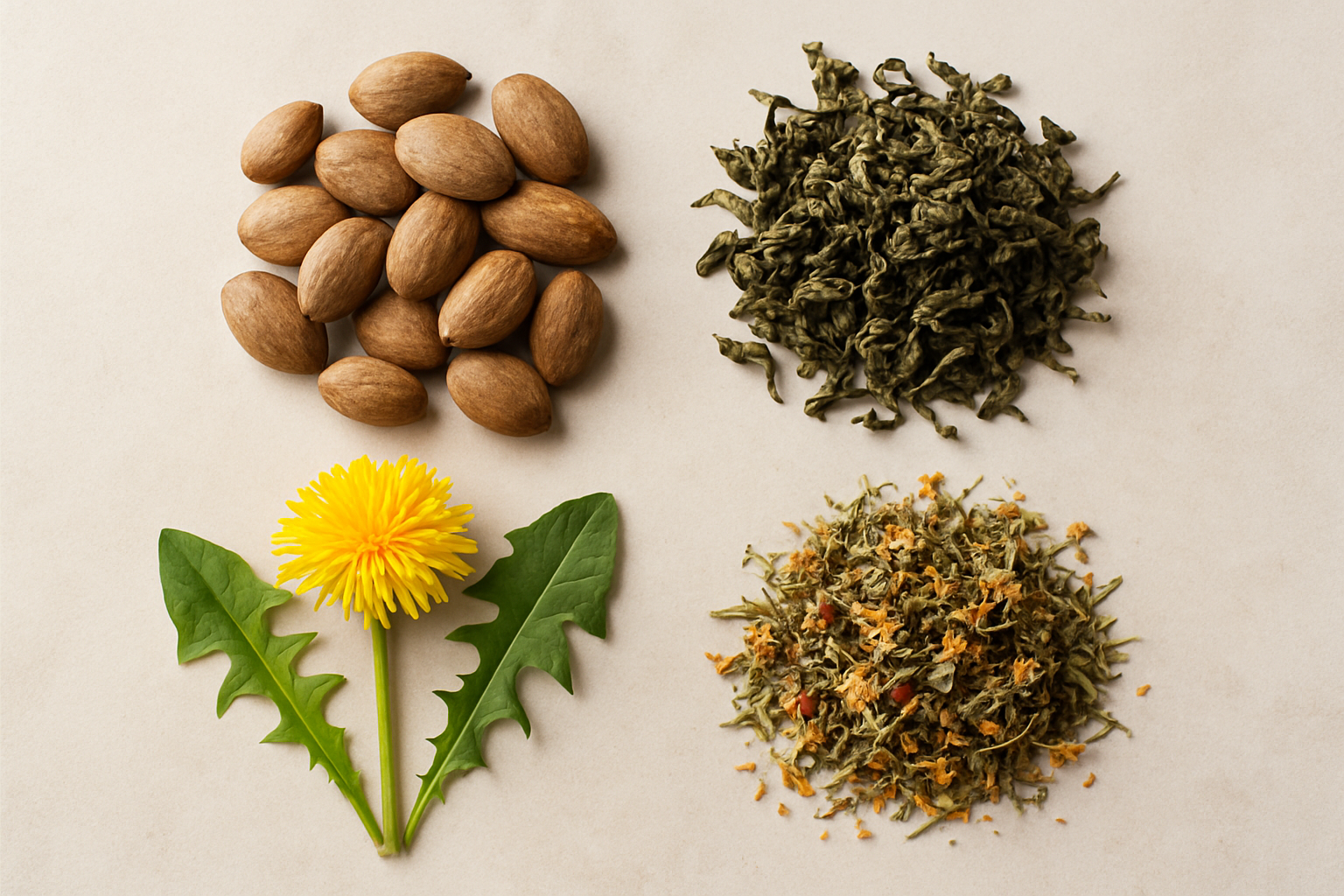
| Ingredient | Why it’s in Ikaria | Studied dose | Evidence for weight |
|---|---|---|---|
| African mango (Irvingia gabonensis) | Appetite & fat metabolism | ~150 mg IGOB131, 2×/day[1] | Preliminary |
| Green tea extract (EGCG) | Thermogenesis via catechins | ~100–460 mg EGCG/day[4] | Modest |
| Milk thistle (silymarin) | Liver antioxidant support | ~140 mg silymarin, 2–3×/day[6] | Weak |
| Resveratrol | Polyphenol, metabolic support | ~150–500 mg/day[10] | Weak |
| Panax ginseng | Energy & metabolic support | ~200–400 mg/day[11] | Thin |
| Citrus pectin / inulin (fiber) | Satiety & digestion | ~10–20 g/day fiber for effect[12] | Weak at low dose |
| Beetroot | Blood flow via nitrates | ~300–600 mg nitrate[9] | Weak |
| Probiotic blend | Gut–weight axis | Strain- & CFU-dependent[13] | Small / inconsistent |
The pattern is clear before we even reach the detail: Ikaria Lean Belly Juice is built mostly from ingredients with strong antioxidant, gut or metabolic rationale but weak direct weight-loss evidence, with only one or two — African mango and green tea catechins — carrying any meaningful human weight data, and even those produce small effects. The rest of this review works through what each can and cannot do.
Does Ikaria Lean Belly Juice work for weight loss?
Ikaria Lean Belly Juice works only modestly at best, and only as an add-on to diet and activity. A couple of ingredients — African mango and green tea catechins — have limited human evidence for small effects, on the order of a few pounds in some trials[1][4]. No powdered drink overrides energy balance, so the “watch belly fat melt” claim is hype.
Here is the balanced picture. Ikaria Lean Belly Juice is built around real ingredients, and a few of them have legitimate, if modest, metabolic data. At sensible doses, green tea catechins may give a small thermogenic nudge, and African mango produced encouraging numbers in a small set of trials[1][4]. That is the realistic ceiling for Ikaria — a few pounds of assistance over months in the best case, not a transformation, and only when paired with the basics.
The “flush the root cause and watch the fat melt” narrative, by contrast, is exactly the kind of effortless-weight-loss promise the U.S. Federal Trade Commission flags as a red flag for deceptive marketing[8]. The NIH Office of Dietary Supplements reaches the same sober conclusion across the category: weight-loss supplements produce, at best, modest effects and are no substitute for diet and physical activity[5]. If Ikaria helps you at all, it will be at the margins, layered on top of the things that actually move the needle: a calorie-aware diet, adequate protein, sleep, movement and time. We cover those fundamentals in how to lose belly fat: what actually works.
It is worth being precise about why even the African mango trials don’t guarantee Ikaria will work for you. Those numbers came from studies that used a specific, disclosed extract (IGOB131) at a defined dose, often in a small number of participants, under controlled conditions, and some of that research has been criticized for limited independent replication[2]. Individual responses vary widely, some people see no benefit at all, and — crucially — Ikaria does not disclose how much African mango each scoop contains. An average effect from a known dose tells you very little about an unknown dose inside a blend.
How is Ikaria Lean Belly Juice supposed to work?
Ikaria Lean Belly Juice claims to work by lowering uric acid and “reactivating” a stalled metabolism so the body burns fat. The underlying biology is only half-right: uric acid is genuinely linked to metabolic problems, but in most people excess weight and diet drive high uric acid — not the reverse — so a juice cannot “flush” your way to fat loss.
The marketing constructs a tidy mechanism: ceramide compounds and high uric acid clog the metabolism, so neutralizing them releases stored fat. Each of those words points at something real — ceramides and uric acid are both studied in metabolic health — but the story bolts them together into a single switch that the product can flip. That is not how human metabolism works, and no capsule or powder has been shown to act as that switch.
The evidence points the other way for most people: dietary excess and body fat tend to drive metabolic dysfunction and elevated uric acid, rather than a single circulating compound causing weight gain that a drink can clear. That matters because it changes what actually fixes the loop. Reducing the dietary load — fewer refined carbohydrates and less added sugar and alcohol, a modest calorie deficit, more activity — is what improves these markers in practice. A flavored powder cannot “detoxify” that pathway open; at most it plays a small supporting role around the edges of the real work.
So when Ikaria frames itself as unlocking a blocked fat-burning system, treat that as a story built on real biology doing real work, not as a demonstrated mechanism for the product. The honest version is narrower: a few of Ikaria’s ingredients have plausible metabolic actions, and one or two have human data. That is the mechanism worth examining — not the “uric-acid flush” framing.
Does uric acid really cause belly fat?
Uric acid does not straightforwardly cause belly fat. High uric acid is consistently associated with obesity, insulin resistance and metabolic syndrome, but most of that relationship runs the other way or reflects shared causes like a high-sugar diet[3]. Treating uric acid as the upstream cause a juice can reverse oversimplifies a two-way, still-debated relationship.
Here is the careful version. Uric acid is a waste product the body makes when it breaks down purines and fructose. Population studies repeatedly find that people with higher uric acid are more likely to have excess weight, high blood pressure and insulin resistance, and some laboratory work suggests fructose-driven uric acid can worsen aspects of metabolism[3]. That association is real and is why uric acid keeps appearing in metabolic research.
But association is not the same as a one-way cause you can supplement away. Excess body fat itself raises uric acid, diets high in sugar and alcohol raise it, and kidney function affects it — so in many people high uric acid is a consequence or a shared marker, not the root trigger of belly fat. Crucially, the intervention with the best evidence for lowering uric acid in overweight people is the same boring prescription as for the fat itself: lose weight, cut added sugar and alcohol, and move more. There is no good clinical evidence that a polyphenol-and-fiber drink meaningfully lowers uric acid or that doing so releases belly fat. The uric-acid framing is best read as a marketing hook attached to a genuine but misrepresented piece of science.
What does African mango actually do?
African mango (Irvingia gabonensis) is a West African seed extract studied mainly as IGOB131 at about 150 mg twice daily before meals. In a small number of human trials it was linked to reductions in body weight and waist size and improved metabolic markers, but the evidence base is limited, some of it industry-funded, and independent replication is thin[1][2].
African mango is the ingredient with the most direct weight data in the Ikaria formula, so it deserves a careful look. The most cited study — a 2009 randomized, double-blind, placebo-controlled trial of the IGOB131 seed extract — reported meaningful reductions in body weight, waist circumference and several metabolic markers over ten weeks[1]. The proposed mechanisms include slowed gastric emptying from soluble fiber, effects on the appetite hormone leptin, and changes in fat-cell metabolism.
Three honest caveats keep this in proportion. First, the evidence base is small and mixed — a systematic review concluded the trials were few, of limited methodological quality, and not enough to recommend African mango for weight loss with confidence[2]. Second, it is dose- and form-specific: the positive results came from a standardized extract (IGOB131) at roughly 150 mg twice daily before meals, not from an unspecified amount of generic mango powder[1]. Third, African mango is not a treatment for obesity or any disease, and presenting it as one would be both inaccurate and a regulatory problem.
For Ikaria, the practical question is whether the product delivers African mango as the studied standardized extract, anywhere near that 150 mg-twice-daily range. If it does, a modest effect is plausible. If the proprietary blend contains a small amount of generic powder, the realistic effect shrinks toward nothing. You can read the full dose-by-dose breakdown in our African mango guide.
Do the other ingredients help?
Ikaria Lean Belly Juice’s other ingredients — milk thistle, resveratrol, Panax ginseng, citrus pectin, beetroot, dandelion, the polyphenol fruit mix and probiotics — have little direct weight-loss evidence. Most support the liver, gut, blood flow or antioxidant status rather than burning fat, and several have only thin human data or doses that rarely match what research used.
Green tea extract (EGCG) is the second-best-supported ingredient. Catechins, especially EGCG, can produce a small thermogenic effect, and a meta-analysis found green tea catechins modestly reduced body weight and helped weight maintenance — but the effect is small and partly tied to caffeine[4]. You can see where it sits among the better options in our roundup of the weight-loss ingredients with the strongest evidence. Milk thistle (silymarin) is the classic liver botanical; the evidence is strongest for liver enzyme markers in people who already have liver conditions, and the National Center for Complementary and Integrative Health notes the evidence is not strong even there — and there is essentially no good evidence it causes weight loss in healthy people[6].
Resveratrol is a polyphenol with interesting laboratory activity; a dose-response meta-analysis found small effects on some obesity measures at roughly 150–500 mg/day, but the human results are inconsistent and modest[10]. Panax ginseng is used for energy and general metabolic support, but robust human weight-loss data is thin, and the NCCIH notes the evidence for most ginseng uses is limited[11]. Beetroot supplies dietary nitrates that support blood flow and exercise performance at around 300–600 mg of nitrate, which can help training but has a negligible direct effect on body weight[9].
Citrus pectin and inulin are soluble fibers that can aid satiety and digestion, but the appetite and weight benefits in trials generally need around 10–20 g/day — far more than a single scoop of a multi-ingredient powder is likely to provide[12]. Dandelion (taraxacum) has a traditional reputation as a mild diuretic; any “weight” change from a diuretic is water, not fat, and human data for fat loss is essentially absent. The probiotic blend targets the gut–weight axis, but meta-analyses show probiotic effects on body weight are small and inconsistent and depend heavily on the specific strains and doses used[13]. None of these is a reason to buy Ikaria on its own, and none should be expected to drive weight loss.
Is Ikaria Lean Belly Juice dosed effectively?
You cannot tell whether Ikaria Lean Belly Juice is dosed effectively, because it uses proprietary blends. A proprietary blend is a group of ingredients listed under one name, where the label legally must disclose only the blend’s total weight — not the amount of each ingredient inside[14]. That hides exactly the numbers that decide whether Ikaria works.
This is the single most important point in the whole Ikaria Lean Belly Juice review. Under U.S. labeling rules (21 CFR 101.36), a proprietary blend must list its ingredients in descending order by weight and disclose the blend’s total weight, but it does not have to reveal the milligrams of each individual ingredient[14]. So a multi-gram “Metabolic Blend” listing a dozen ingredients could be mostly fiber and fruit powder with a trace of African mango or EGCG, and the label would be entirely legal and “complete.”
African mango only showed effects at roughly 150 mg twice daily as a standardized extract[1], and fiber generally needs 10–20 g/day to influence appetite[12]. If Ikaria’s blends spread a few grams of powder across a dozen ingredients, the studied actives cannot all reach their effective ranges — and because the blends hide individual amounts, you cannot confirm any of them get close. That uncertainty alone caps how confident anyone can be about Ikaria’s effectiveness.
There is a name for the trick a blend enables: “fairy dusting” — adding a research-backed hero ingredient at a token amount, far below the studied dose, so it can appear on the label without the cost of an effective dose. Inside a proprietary blend, fairy dusting is invisible; on a fully disclosed label, it is obvious. We walk through exactly how to spot this in our guide to reading a supplement label. For Ikaria, the takeaway is simple: a fully disclosed label would let you verify the African mango and EGCG doses, and the proprietary blends take that ability away.
What are Ikaria Lean Belly Juice’s side effects?
Ikaria Lean Belly Juice’s side effects are usually mild. The fiber and probiotic content can cause bloating, gas or changes in bowel habits, especially in the first days; green tea catechins and any caffeine can cause jitteriness or sleep trouble; and milk thistle can trigger mild stomach upset or allergy in people sensitive to the ragweed family[4][6].
For most healthy adults, Ikaria’s individual ingredients are generally well tolerated, but “natural” does not mean “no effects.” The most common complaints with this kind of fiber-and-fruit powder are digestive: bloating, gas, loose stools or mild cramping as the gut adjusts to added soluble fiber and probiotics[12]. These usually ease over a week or two and are gentler if you start with a smaller serving and plenty of water — though with a proprietary blend you do not control the per-ingredient amount.

Beyond digestion, concentrated green tea catechins have, rarely, been associated with liver enzyme changes at high intakes, and the caffeine in green tea can stack with coffee to cause jitteriness, a faster heartbeat or disrupted sleep[4]. Milk thistle occasionally causes mild laxative effects or allergic reactions, particularly in people allergic to plants in the Asteraceae/ragweed family[6]. Beetroot can harmlessly turn urine or stool pink. The more important safety story for Ikaria is not the side effects themselves but the drug interactions — covered next.
Does Ikaria Lean Belly Juice interact with medications?
Yes — Ikaria Lean Belly Juice can interact with medications. Green tea EGCG and milk thistle can affect drug-metabolizing enzymes; Panax ginseng may interact with blood thinners like warfarin and with diabetes medication; and added caffeine can compound stimulant effects. These interactions matter even though the proprietary blends hide exactly how much of each ingredient you are getting[4][11].
This is the part of the Ikaria review to take seriously. Panax ginseng has been reported to reduce the effectiveness of the blood thinner warfarin and may add to the blood-sugar-lowering effect of diabetes drugs, raising the risk of levels dropping too low[11]. Green tea catechins can interact with some medications and, in concentrated form, may affect the liver enzymes that process certain drugs; green tea’s vitamin K content and caffeine are also relevant for people on anticoagulants or sensitive to stimulants[4]. Milk thistle can theoretically affect drug-metabolizing enzymes too, though the clinical significance is less clear[6].
Ikaria should also be avoided in pregnancy and breastfeeding, since several botanicals here are not established as safe in those situations, and it is not appropriate for children. The practical rule is simple: if you take any prescription medication — especially blood thinners, diabetes drugs or blood-pressure medication — are pregnant or nursing, or have a liver or kidney condition, talk to your doctor or pharmacist before starting Ikaria Lean Belly Juice. This is exactly the situation where a two-minute conversation beats a guess — and where the hidden blend doses make self-managing any interaction harder.
Who should take Ikaria Lean Belly Juice?
Ikaria Lean Belly Juice may suit people who already have their diet and activity in order, like the convenience of a daily polyphenol-and-fiber drink, and accept a modest, unguaranteed effect. It is a poor fit for anyone expecting real belly-fat loss from a powder, on interacting medications, pregnant or breastfeeding, or shopping on a tight budget.
Ikaria might suit you if…
- You’re already doing the fundamentals — calorie-aware diet, protein, activity, sleep
- You like the ritual of a daily fruit-and-fiber drink and accept a modest, not-guaranteed effect
- You’re curious about African mango or green tea catechins specifically
- You’re comfortable spending on a “small nudge,” not a transformation
You should skip Ikaria if…
- You expect meaningful belly-fat loss from the powder alone
- You take medication that interacts with green tea, ginseng or affects clotting and blood sugar
- You’re pregnant, breastfeeding, or have a liver or kidney condition
- You’re on a tight budget — a single, transparently dosed ingredient is usually better value
The honest summary: Ikaria Lean Belly Juice is a niche product. The people most likely to get something out of it are those who need it least — already-healthy individuals chasing a marginal edge — while the people the marketing targets hardest, those hoping a daily juice will do the work for them, are the ones most likely to be disappointed.
How much does Ikaria Lean Belly Juice cost?
Ikaria Lean Belly Juice is sold online in tiered multi-jar bundles, with bigger discounts on larger orders, and is typically backed by an unusually long money-back guarantee in the region of 180 days. Exact prices and refund terms change frequently, so the only reliable source is Ikaria’s official order page.
Ikaria follows the standard digital-supplement pricing model: a higher per-jar price for a single jar, falling sharply for three- and six-jar bundles, often with free shipping on the larger orders and occasional “bonus” digital guides. This structure is designed to push larger upfront purchases, so it is worth deciding in advance how long you actually intend to trial it before the bundle math tempts you into a six-month commitment.
The roughly 180-day money-back guarantee is genuinely useful here, because it transfers some of the risk back to the seller — if Ikaria does nothing for you, a long refund window exists. Two practical notes: guarantees on digital-first products sometimes require returning jars (even empty ones) or contacting support within a set window, and the terms can change, so read the current guarantee on the official page rather than trusting any figure in a review, including this one. We have deliberately not printed a specific dollar price for that reason.
How does Ikaria Lean Belly Juice compare?
Compared with the alternatives, Ikaria’s weakness is transparency. A standalone, fully-dosed African mango or green tea extract lets you verify you are getting the studied amount, while Ikaria hides everything in four blends. Against other “metabolic juice” and tonic powders, Ikaria is broadly similar — real ingredients, overstated claims, undisclosed doses.
| Option | Doses disclosed? | Weight evidence | Best for |
|---|---|---|---|
| Ikaria Lean Belly Juice | No — four proprietary blends | Indirect / unverifiable | Those wanting a broad daily juice, eyes open |
| Standalone African mango / green tea | Yes — single ingredient | Modest, verifiable | Anyone whose real interest is one active |
| Other “metabolic tonic” powders | Usually no | Weak / unverifiable | Few people — same blend problem |
| Diet + activity (no supplement) | N/A | Strong | Everyone, as the foundation |
The comparison makes Ikaria’s position clear. If your genuine interest is one ingredient — African mango or green tea catechins, the two with real metabolic data — a transparently dosed standalone product is almost always the smarter purchase, because you can confirm you are getting the studied amount and you are not paying for fairy-dusted extras. Ikaria only makes sense if you specifically want the broad daily polyphenol-and-fiber drink and you have set realistic expectations about its modest, unverifiable effect. You can weigh formulas side by side in our Ikaria vs Okinawa vs Nagano comparison.
How should you take Ikaria Lean Belly Juice?
Take Ikaria Lean Belly Juice as directed — usually one scoop mixed into water once a day, often in the morning — and treat it as one small input rather than the centerpiece of a plan. Use it consistently for several weeks while you track diet, protein, steps and sleep, so that if you do see a change, you can tell whether Ikaria or your habits caused it.
Because Ikaria’s fiber and probiotic content can cause early bloating, starting with a slightly smaller serving and plenty of water usually helps the gut adjust[12]. Give it a fair window — several weeks, in line with the multi-week trials of its better-studied ingredients — before judging it; a few days tells you nothing. If you are on any medication, particularly blood thinners or diabetes drugs, clear Ikaria with your pharmacist or doctor first, because of the green tea and ginseng interactions covered above.
The single most useful thing you can do is structure the trial so it is actually informative: change one thing at a time, keep a simple record of weight and waist measurements, and be honest about whether your diet and activity also shifted. That way, the long guarantee window doubles as a genuine test period — and if Ikaria does nothing measurable on top of your habits, you have both the evidence and the refund option to walk away.
Is Ikaria Lean Belly Juice a scam or legit?
Ikaria Lean Belly Juice is not obviously a scam: its ingredients are real, its guarantee is standard for the category, and it is sold by an identifiable seller. The fair criticism is overstated belly-fat and uric-acid marketing plus proprietary blends that hide individual doses — so you cannot verify the actives reach studied amounts. Treat the bold claims skeptically and buy only from the official site.
It helps to separate “scam” from “overhyped.” A scam takes your money and delivers nothing or something dangerous. Ikaria delivers a real supplement containing recognizable, generally safe ingredients, with a refund window — that is not the profile of an outright scam. What Ikaria shares with weaker products in the category is marketing that outruns the evidence — especially the uric-acid “root cause” story — and labels that hide the doses, which together make its central promise impossible to verify.
There is one category-wide safety note worth stating plainly, even though it is not specific to Ikaria: independent testing has repeatedly found some weight-loss supplements adulterated with undeclared pharmaceutical drugs, and the FTC warns that effortless, dramatic weight-loss claims are a hallmark of deceptive products[8]. This is the strongest practical reason to buy any such product only from its official source rather than unknown third-party marketplaces, where counterfeits are more likely. For Ikaria specifically, the verdict is not “scam” — it is “real product, oversold, and impossible to fully verify because of the blends.”
The verdict: modest, not magic
Ikaria Lean Belly Juice earns a verdict of MODEST, leaning weak for weight loss alone. It is a broad polyphenol-and-fiber drink with one or two genuinely interesting ingredients — African mango and green tea catechins — wrapped in a badly overstated uric-acid story, and its proprietary blends make the all-important doses impossible to verify.
Strip away the “flush the root cause and watch belly fat melt” narrative and what is left is a defensible, if unremarkable, supplement whose real-world impact — assuming clinical doses, which the proprietary blends make impossible to confirm — is a small metabolic nudge for some people, on top of diet and activity. That is not nothing, but it is a long way from the sales page.
If African mango or green tea catechins are what you’re really after, a standalone, transparently dosed product is usually the smarter buy, because you can verify the dose. If you like the idea of a broad daily metabolic juice and you’ve set realistic expectations, Ikaria is defensible — just don’t expect the sales page’s miracle, and buy only from the official site.
If you’ve read the trade-offs above and still want to try Ikaria Lean Belly Juice, buy only from the official site — and treat it as an adjunct to diet and activity, not a substitute.
Ikaria Lean Belly Juice
The powdered drink reviewed on this page. Check the current price, bundle tiers and the money-back guarantee on the official site.
Compare the alternatives
See how Ikaria’s approach stacks up against other metabolism tonics on transparency and ingredients.
Frequently asked questions
Does Ikaria Lean Belly Juice work for weight loss?
Ikaria Lean Belly Juice works only modestly at best, and only as an add-on to diet and activity. A few of its ingredients, such as African mango and green tea catechins, have limited human evidence pointing to small effects.
The others have thin data and the whole formula uses proprietary blends that hide the individual doses, so the studied amounts cannot be confirmed — the realistic expectation is a small nudge at best, not a transformation.
Is Ikaria Lean Belly Juice FDA approved?
No. The FDA does not approve any dietary supplement, so Ikaria Lean Belly Juice cannot be FDA approved. Under DSHEA, the FDA regulates supplements only after they are on the market.
The accurate phrase a brand may use is “made in an FDA-registered facility,” which describes the factory and its manufacturing standards — not approval of the product, and not proof it works.
What ingredients are in Ikaria Lean Belly Juice?
Ikaria Lean Belly Juice is a powdered drink built from four proprietary blends. It typically includes African mango, milk thistle, green tea EGCG, resveratrol, Panax ginseng, citrus pectin, capsaicin, beetroot, dandelion, a polyphenol fruit mix, inulin fiber and probiotics.
Because these sit inside proprietary blends, the label shows each blend total, not the dose of each ingredient.
Does Ikaria Lean Belly Juice really lower uric acid and reduce belly fat?
High uric acid is associated with obesity and metabolic syndrome, but the link is largely a marker, not a proven one-way cause of belly fat that a juice can reverse.
Excess body fat and a diet high in sugar and alcohol tend to raise uric acid, so the realistic fix is diet and weight loss, not a powdered drink marketed as a uric-acid cleanse.
What is the right dose of African mango in Ikaria Lean Belly Juice?
The most cited African mango trials used a standardized seed extract called IGOB131 at about 150 mg twice a day before meals.
Ikaria Lean Belly Juice lists African mango inside a proprietary blend, so the actual per-serving dose is not disclosed and cannot be confirmed to reach the studied amount.
Is Ikaria Lean Belly Juice safe, and does it interact with medications?
Ikaria Lean Belly Juice’s ingredients are generally well tolerated, but several carry interactions. Green tea EGCG and milk thistle can affect drug-metabolizing enzymes, Panax ginseng may interact with blood thinners and diabetes drugs, and the caffeine in green tea can add up.
Avoid it in pregnancy and breastfeeding, and consult a doctor before use if you take any medication.
How long does Ikaria Lean Belly Juice take to work?
Any effect from Ikaria Lean Belly Juice would build over several weeks of consistent daily use alongside diet and activity changes, in line with the multi-week trials of ingredients like African mango and green tea.
A product promising visible belly-fat loss in days is overstating what these ingredients can do.
Does Ikaria Lean Belly Juice have a money-back guarantee?
Ikaria Lean Belly Juice is typically sold online with a money-back guarantee in the region of 180 days, which is unusually long for the category.
Refund terms and prices change, and some guarantees require returning bottles within a set window, so confirm the current terms on the official order page before buying.
How do you take Ikaria Lean Belly Juice?
Ikaria Lean Belly Juice is taken as one scoop of powder mixed into water or a drink once a day, usually in the morning.
Treat it as one small input rather than the centerpiece of a plan, use it consistently for several weeks, and track diet, protein, steps and sleep so you can tell whether the juice or your habits caused any change.
Is Ikaria Lean Belly Juice a scam?
Ikaria Lean Belly Juice is not obviously a scam: its ingredients are real and its guarantee is standard for the category. The fair criticism is overstated belly-fat and uric-acid marketing plus proprietary blends that hide individual doses, so you cannot verify the actives reach studied amounts.
Treat the weight-loss claims skeptically and buy only from the official site.
Can you buy Ikaria Lean Belly Juice on Amazon or in stores?
Ikaria Lean Belly Juice is sold primarily through its official website rather than Amazon or physical stores.
Listings on third-party marketplaces are more likely to be counterfeit, expired or resold, and they fall outside the official money-back guarantee, so the official order page is the only reliable place to confirm price, formula and refund terms.
Is Ikaria Lean Belly Juice better than a standalone ingredient?
If your real interest is one ingredient, such as African mango or green tea extract, a transparently dosed standalone product is usually the smarter buy, because you can confirm you are getting the studied amount.
Ikaria Lean Belly Juice bundles many ingredients into proprietary blends, so you pay for breadth while losing the ability to verify any single effective dose.
African mango: what the research really says
Green tea extract, explained
How to read a supplement label
Ikaria vs Okinawa vs Nagano
All health articles
We research weight-loss supplements and the ingredients inside them, scoring products on label transparency rather than hype. No star spam, no fabricated reviews — just the evidence, stated plainly. Our editorial standards →
- Ngondi JL, et al. IGOB131, a novel seed extract of the West African plant Irvingia gabonensis, significantly reduces body weight and improves metabolic parameters in overweight humans in a randomized double-blind placebo controlled investigation. Lipids in Health and Disease, 2009. pubmed.ncbi.nlm.nih.gov
- Onakpoya I, et al. The use of Irvingia gabonensis (African mango) supplements in the management of overweight and obesity: a systematic review of randomized clinical trials. Journal of Dietary Supplements, 2013. pubmed.ncbi.nlm.nih.gov
- King C, Lanaspa MA, Jensen T, et al. Uric Acid as a Cause of the Metabolic Syndrome. Contributions to Nephrology, 2018. pubmed.ncbi.nlm.nih.gov
- NIH National Center for Complementary and Integrative Health — Green Tea: Usefulness, Safety and Interactions. nccih.nih.gov
- NIH Office of Dietary Supplements — Dietary Supplements for Weight Loss (Health Professional Fact Sheet). ods.od.nih.gov
- NIH National Center for Complementary and Integrative Health — Milk Thistle: Usefulness and Safety. nccih.nih.gov
- U.S. FDA — Questions and Answers on Dietary Supplements (supplements are not FDA approved; post-market oversight). fda.gov
- U.S. FTC — “Gut Check”: red-flag weight-loss claims; Health Products Compliance Guidance. ftc.gov
- Domínguez R, et al. Effects of beetroot juice supplementation on exercise performance (nitrate dosing review). Nutrients, 2017. pubmed.ncbi.nlm.nih.gov
- Mousavi SM, et al. Resveratrol supplementation significantly influences obesity measures: a systematic review and dose-response meta-analysis. Obesity Reviews, 2019. pubmed.ncbi.nlm.nih.gov
- NIH National Center for Complementary and Integrative Health — Asian Ginseng (Panax ginseng): Usefulness and Safety. nccih.nih.gov
- Guess ND, et al. A randomized controlled trial: the effect of inulin on weight management and ectopic fat in subjects with prediabetes. Nutrition & Metabolism, 2015. pubmed.ncbi.nlm.nih.gov
- Borgeraas H, et al. Effects of probiotics on body weight, BMI, fat mass and fat percentage in overweight or obese subjects: a systematic review and meta-analysis of randomized controlled trials. Obesity Reviews, 2018. pubmed.ncbi.nlm.nih.gov
- U.S. FDA — Supplement Facts panel and proprietary blend rules, 21 CFR 101.36 (eCFR). ecfr.gov
- Jun 14, 2026 — Review published as a full evidence review; claims checked against current NIH, FDA, FTC and peer-reviewed sources.
Affiliate disclosure: SourceLean is reader-supported. When you buy through links on this site, we may earn a commission at no extra cost to you. Checkout is always handled on the official product website.
Pingback: Ikaria vs Liv Pure (2026): Honest Comparison