Two of the most-searched weight-loss supplements online — one a fruity drink mix, one a liver-support capsule — put side by side. Here’s the honest, fully-sourced read on which (if either) earns your money.
Ikaria Lean Belly Juice and Liv Pure are both modest, not magic. Liv Pure has the more interesting formula on paper because it includes berberine, the one ingredient here with real metabolic data — roughly 2 kg of average weight loss over about 12 weeks when properly dosed[3]. Ikaria leans on African mango and green tea catechins, with weaker evidence, but offers a far longer 180-day guarantee. Both hide doses in proprietary blends, so neither can be verified. Winner: Liv Pure on ingredient evidence, Ikaria on risk-free trial — neither replaces diet and activity.
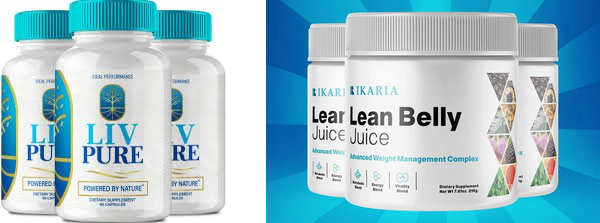
Ikaria Lean Belly Juice and Liv Pure are two of the most heavily marketed weight-loss supplements on the internet, and shoppers compare them constantly — partly because they chase the same buyer and partly because their sales pages make strikingly similar promises about “stubborn belly fat.” This comparison is the honest version. Ikaria Lean Belly Juice is a flavored powder you stir into water once a day; Liv Pure is a twice-daily capsule built around liver support. Both claim to switch your metabolism into a higher gear. Below, we put their ingredients, studied doses, evidence, safety and pricing side by side — with every effectiveness claim tied to a numbered source — so you can decide which, if either, deserves a place in your routine.
Every effectiveness claim below is checked against primary sources — peer-reviewed research on the individual ingredients, the NIH Office of Dietary Supplements, the NIH National Center for Complementary and Integrative Health, and FDA and FTC guidance — not either brand’s marketing. SourceLean makes money only through transparent affiliate links, disclosed above; we run no star ratings, sponsored placements or fabricated reviews, and our verdict scale (real / modest / weak / hype) is applied the same way to both products. This is educational information, not medical advice.
- Ikaria vs Liv Pure: the quick verdict
- What is Ikaria Lean Belly Juice?
- What is Liv Pure?
- How do the ingredients compare?
- Does Ikaria Lean Belly Juice actually work?
- Does Liv Pure actually work?
- Which has the stronger formula on paper?
- Are the doses disclosed?
- What are the side effects and who should avoid them?
- Do they interact with medications?
- How much do they cost and what are the guarantees?
- What are the honest limitations?
- Which should you choose?
- The verdict
- FAQ
Ikaria vs Liv Pure: what’s the quick verdict?
Ikaria Lean Belly Juice is a fruity drink mix built on African mango, green tea catechins and polyphenols; Liv Pure is a liver-support capsule that adds berberine, milk thistle and metabolism nutrients. Liv Pure wins on ingredient evidence thanks to berberine, while Ikaria wins on its much longer 180-day guarantee — but both are modest, dose-hidden add-ons, not fat-loss engines.
Before the detail, here is the head-to-head at a glance. The most important rows are not the marketing claims but doses disclosed and weight evidence, because those two decide whether either product can plausibly do what its sales page says.
| Feature | Ikaria Lean Belly Juice | Liv Pure |
|---|---|---|
| Format | Flavored powder for water | Twice-daily capsule |
| Key actives | African mango, green tea (EGCG), resveratrol, beetroot, citrus pectin, hibiscus, milk thistle | Berberine, milk thistle (silymarin), green tea (EGCG), betaine, glutathione, resveratrol, choline |
| Standout ingredient | African mango (IGOB131)[9] | Berberine[3] |
| Doses disclosed? | No — proprietary blend | No — two proprietary blends |
| Weight evidence | Weak / unverifiable | Modest (berberine) / unverifiable |
| Stimulant load | Some caffeine from green tea | Low; caffeine-light |
| Price model | Tiered bundles (confirm on site) | Tiered bundles (confirm on site) |
| Guarantee | ~180 days (confirm on site) | ~60 days (confirm on site) |
| Best for | Those who prefer a drink and want a long risk-free trial | Those wanting a berberine-led, liver-support blend |
The table tells most of the story: these are two versions of the same idea — a blend of mostly modest ingredients, anchored by one or two with real evidence, sold with claims that run well ahead of that evidence. The differences are real but narrow, and we work through each below. If you want the deep dives, we also review each product on its own in Does Ikaria Lean Belly Juice work? and Does Liv Pure work?
What is Ikaria Lean Belly Juice?
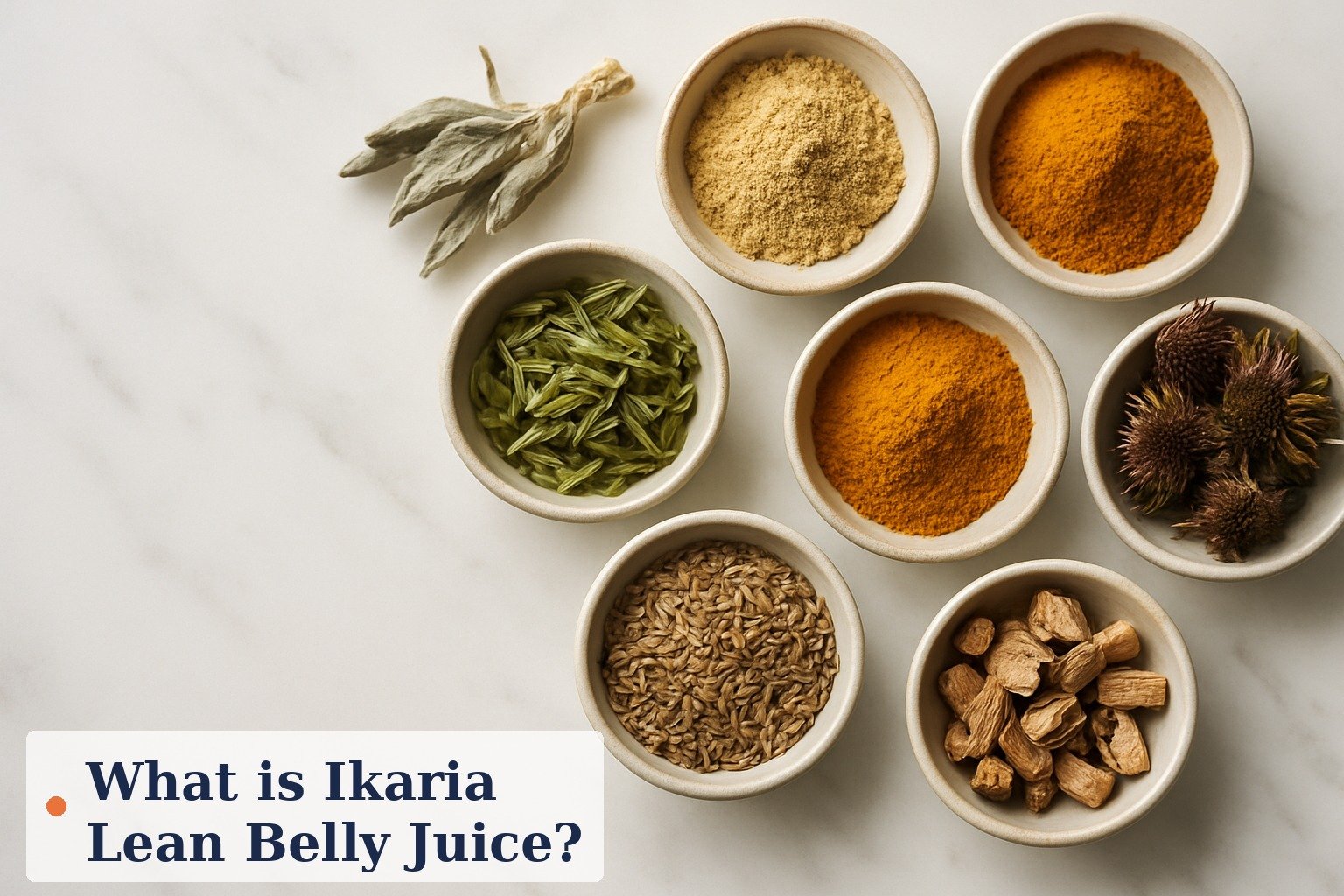
Ikaria Lean Belly Juice is a powdered dietary supplement mixed into water once a day and marketed as a metabolic and “uric acid” support drink. It bundles African mango seed extract, green tea catechins, resveratrol, beetroot, citrus pectin, hibiscus, milk thistle and other polyphenols, sold on the premise that these support fat metabolism.
Ikaria’s positioning leans on a popular but loosely-evidenced idea: that high uric acid and a “clogged” metabolism are the hidden reason belly fat won’t shift, and that a polyphenol-rich drink can reverse it. There is a kernel of biology there — uric acid and metabolic health are statistically associated — but Ikaria’s marketing stretches a correlation into a causal promise it cannot keep. A dietary supplement is a product taken by mouth that contains a “dietary ingredient” — vitamins, minerals, herbs and similar — intended to supplement the diet, not to treat disease, and supplements like Ikaria are not approved by the FDA before sale[7].
The product’s most interesting active is African mango (Irvingia gabonensis), a West African seed extract studied mainly as the standardized extract IGOB131. Around it sit green tea catechins (a source of EGCG, the catechin most linked to fat oxidation), resveratrol, beetroot, citrus pectin, hibiscus, milk thistle and assorted berry polyphenols. Like most products in this category, Ikaria is digital-first — sold primarily through its own sales pages rather than pharmacies — so the only reliable place to verify its current price, ingredient panel and guarantee is the official website, and independent shelf-testing is scarce.
What is Liv Pure?
Liv Pure is a capsule dietary supplement, taken twice daily, marketed as a liver-support and fat-burning complex. It is organized into two named proprietary blends: a Liver Purification Complex (silymarin, betaine, berberine, molybdenum, glutathione) and a Liver Fat-Burning Complex (green tea catechins, resveratrol, genistein, chlorogenic acid, choline).
Liv Pure’s story is that a sluggish, fat-burdened liver is the upstream cause of stubborn weight, and that “purifying” the liver releases the body’s ability to burn fat. As with Ikaria, the underlying biology is only half-right: the liver is genuinely central to how the body processes fats and sugars, but for most people excess weight and poor diet drive liver stress — not the reverse. So a capsule cannot “detox” you to fat loss; at most it plays a small supporting role around the edges of diet and activity.
The formula’s most credible active is berberine, a plant alkaloid that mildly activates the cellular energy sensor AMPK and has the best human metabolic data of any ingredient in either product. It is joined by milk thistle (silymarin), betaine (trimethylglycine), glutathione and molybdenum on the “purification” side, and green tea catechins, resveratrol, genistein, chlorogenic acid and choline on the “fat-burning” side. Liv Pure is also digital-first, so the same caveat applies: verify current price, panel and guarantee on the official site only.
How do the ingredients compare?
Ikaria and Liv Pure overlap on green tea and milk thistle but diverge on their anchors: Ikaria’s is African mango, Liv Pure’s is berberine. Of all these actives, berberine has the strongest human weight evidence, African mango the most promising but least replicated, and the rest mostly support the liver or act as antioxidants rather than burning fat.
Below is the honest read on each product’s main ingredients, with the strength of evidence for weight graded plainly. “Evidence for weight” here means human research showing the ingredient affects body weight or fat — not whether it supports the liver or acts as an antioxidant, which are separate questions. The studied-dose column matters most: it is what you compare against the (undisclosed) label dose.
| Ingredient | In which product | Studied dose | Evidence for weight |
|---|---|---|---|
| Berberine | Liv Pure | ~900–1,500 mg/day split[1] | Moderate |
| African mango (IGOB131) | Ikaria | ~150 mg twice daily before meals[9] | Preliminary |
| Green tea (EGCG) | Both | ~250–500 mg catechins/day[10] | Weak–modest |
| Milk thistle (silymarin) | Both | ~140 mg silymarin, 2–3×/day[4] | Weak |
| Resveratrol | Both | ~150–500 mg/day[5] | Weak |
| Choline | Liv Pure | AI 425–550 mg/day[6] | Weak (unless deficient) |
| Glutathione / betaine | Liv Pure | ~250–1,000 mg/day[12] | Weak |
| Beetroot / citrus pectin / hibiscus | Ikaria | Varies; not weight-specific | Thin |
The pattern is clear before we reach the detail: both products are built mostly from ingredients with a liver-support or antioxidant rationale but weak direct weight-loss evidence, each anchored by a single more-credible active — berberine for Liv Pure, African mango for Ikaria. Of those two anchors, berberine has the deeper and more replicated human evidence, which is the central reason Liv Pure edges Ikaria on paper. You can read the full breakdowns in our berberine guide, African mango guide and green tea guide.
Does Ikaria Lean Belly Juice actually work?
Ikaria Lean Belly Juice works only modestly, and only as an add-on to diet and activity. Its best-evidenced actives, African mango and green tea catechins, have limited human data: African mango produced encouraging numbers in a few small trials, while green tea catechins are linked to a small average fat-loss effect[9][10]. No drink overrides energy balance.
Here is the balanced picture. African mango (as the standardized IGOB131 extract) reported meaningful reductions in weight and waist in a small number of trials, but those studies were short, small and largely from a narrow set of researchers, so the findings are best treated as preliminary rather than proven[9]. Green tea catechins, working partly alongside caffeine, are associated with a small average weight reduction — on the order of about 1 kg in pooled analyses — that often fades over time[10]. That is the realistic ceiling for Ikaria: a small nudge over months, not a transformation.
The “dissolve stubborn belly fat” narrative, by contrast, is exactly the kind of effortless-weight-loss promise the U.S. Federal Trade Commission flags as a red flag for deceptive marketing[11]. The NIH Office of Dietary Supplements reaches the same sober conclusion across the category: weight-loss supplements produce, at best, modest effects and are no substitute for diet and physical activity[5]. And the same caution that limits every average applies doubly here — Ikaria does not disclose how much African mango or EGCG each scoop contains, so even the modest published effects cannot be assumed to apply to this product.
Does Liv Pure actually work?
Liv Pure works only modestly for weight loss, and only as an add-on to diet and activity. Just one ingredient, berberine, has credible human evidence, with meta-analyses showing an average reduction of about 2 kg over roughly three months when properly dosed[3]. The liver-support botanicals around it have little direct weight-loss data.
Berberine is the strongest card either product holds. A 2015 meta-analysis found benefits across blood sugar, lipids and blood pressure in people with metabolic conditions, and a 2020 systematic review concluded berberine produces a small but statistically significant weight reduction — on the order of about 2 kg, with a modest drop in BMI[1][3]. At a sensible dose, berberine may give some people a small edge in blood-sugar control and weight management when paired with the basics. That, not the “liver detox” story, is Liv Pure’s realistic mechanism.
Three caveats keep this in proportion. First, the effect is modest and trial quality is mixed — the NIH National Center for Complementary and Integrative Health notes the human evidence for berberine and weight is limited and not yet conclusive[2]. Second, it is dose-dependent: the benefits come from roughly 900–1,500 mg per day, usually split with meals, because berberine clears the body quickly[1]. Third, Liv Pure buries berberine inside a proprietary blend, so you cannot confirm it reaches that range — and if it doesn’t, the realistic effect shrinks toward nothing. For the full picture, see our deep dive on berberine for weight loss.
Which has the stronger formula on paper?
Liv Pure has the stronger formula on paper, narrowly, because berberine carries deeper and more replicated human weight evidence than Ikaria’s African mango. But “stronger on paper” assumes clinical doses, and since both products use proprietary blends, neither can prove its anchor ingredient reaches the amount that made it look good in trials.
Think of it as comparing two anchors. Berberine’s ~2 kg average over 12 weeks comes from multiple trials and pooled analyses, including people with metabolic conditions[3]. African mango’s numbers, while in some cases larger, rest on fewer, smaller and less independently replicated studies, which is why we grade it “preliminary” rather than “moderate”[9]. Both products then layer on green tea catechins, which add a small, real-but-fading effect[10], plus a supporting cast (milk thistle, resveratrol, choline, beetroot) with weak direct weight evidence.
“Stronger on paper” is not the same as “stronger in your hand.” Liv Pure’s berberine edge only matters if the capsule actually delivers a clinical dose — and the proprietary blend means you cannot confirm that. The same is true of Ikaria’s African mango. So the paper advantage is real but conditional, and it does not survive contact with the undisclosed label.
Are the doses disclosed?
No — neither Ikaria nor Liv Pure discloses its individual ingredient doses, because both use proprietary blends. A proprietary blend is a group of ingredients listed under one name, where the label legally must disclose only the blend’s total weight, not the amount of each ingredient inside[8]. That hides exactly the number that decides whether either product works.
This is the single most important point in the whole comparison. Under U.S. labeling rules (21 CFR 101.36), a proprietary blend must list its ingredients in descending order by weight and disclose the blend’s total weight, but it does not have to reveal the milligrams of each individual ingredient[8]. So Ikaria’s polyphenol blend could be mostly cheaper fruit powder with a trace of African mango, and Liv Pure’s “Liver Purification Complex” and “Liver Fat-Burning Complex” could each be mostly a filler with only a sprinkle of berberine or catechins — and both labels would be entirely legal and “complete.”
Berberine only works at roughly 900–1,500 mg/day[1]; African mango’s data come from ~150 mg twice daily[9]. If a blend’s total weight is smaller than the dose its hero ingredient needs, that ingredient cannot reach the studied range — and because the blend hides individual amounts, you cannot confirm it even gets close. That single uncertainty caps how confident anyone can be about either product.
There is a name for the trick a blend enables: “fairy dusting” — adding a research-backed hero ingredient at a token amount, far below the studied dose, so it can appear on the label without the cost of an effective dose. Inside a proprietary blend, fairy dusting is invisible; on a fully disclosed label, it is obvious. We walk through exactly how to spot this in our guide to reading a supplement label. For both Ikaria and Liv Pure, the takeaway is the same: a fully disclosed label would let you verify the hero dose, and the proprietary blend takes that ability away.
What are the side effects and who should avoid them?
Both products are usually well tolerated, but each carries population-specific cautions. Liv Pure’s berberine commonly causes digestive symptoms and should be avoided in pregnancy and breastfeeding. Ikaria’s green tea catechins add caffeine and, at high concentrated doses, rare liver-stress signals. Anyone on medication, pregnant, nursing, or with a liver condition should check with a doctor first.
For most healthy adults, the individual ingredients in both Ikaria and Liv Pure are generally well tolerated — but “natural” does not mean “no effects.” In Liv Pure, berberine’s gastrointestinal effects — cramping, diarrhea or constipation — are the most frequently reported, and they tend to be dose-related, which is another reason the hidden blend dose matters[2]. Milk thistle, present in both products, can cause mild stomach upset and allergic reactions in people sensitive to the ragweed (Asteraceae) family[4].
In Ikaria, the green tea catechins supply caffeine, which can cause jitteriness, a faster heartbeat or sleep disruption in sensitive people; very high doses of concentrated green tea extract have, rarely, been linked to liver stress, so dose discipline matters[10]. The split below sums up who should think twice about each product.
Be cautious with Ikaria if…
- You are caffeine-sensitive or take other stimulants
- You are pregnant, breastfeeding, or have a liver condition
- You are allergic to the ragweed/Asteraceae family (milk thistle, hibiscus)
- You expect meaningful weight loss from a drink alone
Be cautious with Liv Pure if…
- You take diabetes, blood-pressure, statin or immunosuppressant medication (berberine interactions)
- You are pregnant or breastfeeding (avoid berberine)
- You have a liver condition or take drugs cleared by CYP3A4
- You are prone to digestive upset
Do they interact with medications?
Yes — both can interact with medications, but Liv Pure carries the larger risk because of berberine. Berberine can lower blood sugar and blood pressure and inhibits liver enzymes (notably CYP3A4) that metabolize many drugs[2]. Ikaria’s green tea catechins and caffeine can interact with stimulants and some medications too. If you take anything, ask a doctor first.
This is the part of the comparison to take most seriously. Berberine, in Liv Pure, interacts with a long list of medications: it can add to the blood-sugar-lowering effect of diabetes drugs like metformin (raising hypoglycemia risk), amplify blood-pressure medication, and — because it inhibits CYP3A4 — raise the blood levels of many prescription drugs, including some statins and immunosuppressants such as cyclosporine[2]. Berberine should also be avoided in pregnancy and breastfeeding, and is not appropriate for infants.
Ikaria’s interaction profile is milder but not zero: green tea catechins and caffeine can add to other stimulants, may interact with certain blood-pressure and stimulant medications, and high-dose green tea extract can theoretically affect drug-metabolizing enzymes. Milk thistle, in both products, can also theoretically affect those enzymes, though the clinical significance is less clear[4]. The practical rule for either product is simple: if you take any prescription medication, are pregnant or nursing, or have a liver condition, talk to your doctor or pharmacist before starting — and the hidden blend doses make self-managing these interactions harder, not easier.
How much do they cost and what are the guarantees?
Both Ikaria and Liv Pure use the same tiered, multi-bottle pricing — a higher single-bottle price falling sharply on three- and six-bottle bundles, often with free shipping and bonus guides on larger orders. The key difference is the guarantee: Ikaria typically offers around 180 days, Liv Pure around 60. Confirm current figures on each official page.
The pricing model is designed to push larger upfront purchases, so decide in advance how long you actually intend to trial either product before the bundle math tempts you into a six-month commitment. We have deliberately not printed specific dollar prices, because they change frequently and the only reliable source is each official order page.
The guarantee gap is the more meaningful difference. Ikaria’s roughly 180-day money-back guarantee is unusually generous and transfers far more risk back to the seller; it also happens to be a more realistic window for testing a supplement that, if it works at all, works slowly. Liv Pure’s roughly 60-day guarantee is the category norm but a tighter test period. With both, guarantees on digital-first products can require returning bottles or contacting support within a set window, and the terms change — so read the current guarantee on the official page rather than trusting any figure in a review, including this one.
What are the honest limitations?
The honest limitations are shared: both products bury their actives in proprietary blends, so their best ingredients cannot be verified to reach studied doses; both rest on a “detox/uric-acid” story that reverses the real direction of cause and effect; and both are studied as marketed formulas almost not at all — the evidence is for isolated ingredients, not the finished product.
It is worth being precise about what the evidence does not show. First, there are no published clinical trials of Ikaria Lean Belly Juice or Liv Pure as complete products — every effectiveness claim above is built from research on individual ingredients, often at doses and in populations that may not match what these blends deliver. Second, the headline numbers (berberine’s ~2 kg, African mango’s reductions, green tea’s ~1 kg) are averages from controlled trials; individual responses vary widely, and many people see no benefit at all[3][10].
Third, the marketing mechanism — “uric acid” for Ikaria, “liver detox” for Liv Pure — is more story than demonstrated pathway. For most people, dietary excess and body fat drive metabolic and liver stress, not the reverse, so the real fix is a calorie-aware diet, adequate protein, sleep, movement and time. Neither drink nor capsule changes that order of operations; at best it adds a small effect at the margins. If you want the foundations laid out plainly, see how to lose belly fat: what actually works and the weight-loss ingredients with the strongest evidence.
Which should you choose?
Choose Liv Pure if your real interest is berberine and a liver-support angle and you accept a 60-day window; choose Ikaria if you prefer a drink, want the much longer 180-day guarantee, and are caffeine-tolerant. But for either anchor ingredient, a single, transparently dosed standalone product is usually the smarter buy, because you can verify the dose.
| If your priority is… | Better pick | Why |
|---|---|---|
| Best ingredient evidence | Liv Pure | Berberine has the deepest human weight data here[3] |
| Longest risk-free trial | Ikaria | ~180-day guarantee vs ~60 days |
| Hate swallowing capsules | Ikaria | A flavored drink mixed into water |
| Caffeine-sensitive | Liv Pure | Lower stimulant load than green-tea-forward Ikaria |
| Verifiable dose & value | Neither — go standalone | A single-ingredient berberine or African mango product discloses the dose |
The comparison makes the position clear. If your genuine interest is berberine — the one ingredient with the most metabolic data — a transparently dosed standalone berberine product is almost always the smarter purchase, because you can confirm you are getting the studied amount and you are not paying for fairy-dusted extras. The same logic applies to African mango. Ikaria or Liv Pure only make sense if you specifically want the broader blend and the convenience, and you have set realistic expectations about a modest, unverifiable effect. You can weigh formulas side by side in our comparisons hub and our 2026 buyer’s guide.
The verdict: modest, not magic — either way
Ikaria Lean Belly Juice and Liv Pure both earn a verdict of MODEST, leaning weak for weight loss alone. Liv Pure has the better-evidenced anchor in berberine; Ikaria has the better guarantee and an easier format. Both wrap real but modest ingredients in badly overstated marketing and hide the all-important doses in proprietary blends.
Strip away the “dissolve belly fat” and “purify your liver” stories and what remains are two defensible, if unremarkable, supplements whose real-world impact — assuming clinical doses, which neither blend lets you confirm — is a small metabolic nudge for some people, layered on top of diet and activity. That is not nothing, but it is a long way from either sales page.
Pick Liv Pure if you want the berberine-led, liver-support angle and accept a 60-day window. Pick Ikaria if you prefer a drink and want the longer 180-day guarantee. But if a single hero ingredient is what you’re really after, a standalone, transparently dosed product is usually the smarter buy — and whichever you choose, buy only from the official site and treat it as an adjunct, not a substitute, for the basics.
If you’ve read the trade-offs above and still want to try one, buy only from the official site — and treat it as an adjunct to diet and activity, not a substitute. Checkout always happens on the official product page.
Liv Pure
The capsule reviewed here, anchored by berberine — the most evidence-backed active in this comparison. Check the current price, bundles and ~60-day guarantee on the official site.
Ikaria Lean Belly Juice
The fruity drink mix built on African mango and green tea, with an unusually long ~180-day guarantee. Confirm the current price and terms on the official site.
Frequently asked questions
Is Ikaria Lean Belly Juice or Liv Pure better for weight loss?
Neither is better in a blanket sense, and both are modest add-ons rather than fat-loss engines. Liv Pure has the more interesting formula on paper because it includes berberine, the one ingredient here with solid metabolic data — roughly 2 kg of average weight loss over about 12 weeks when properly dosed.
Ikaria leans on African mango and green tea, with weaker evidence, but offers a much longer 180-day guarantee. Both are unverifiable because of proprietary blends.
What is the difference between Ikaria Lean Belly Juice and Liv Pure?
Ikaria Lean Belly Juice is a flavored powder you mix into water once a day, built around African mango, green tea catechins and polyphenols like resveratrol. Liv Pure is a twice-daily capsule organized into a Liver Purification Complex and a Liver Fat-Burning Complex, anchored by berberine, milk thistle and green tea.
Both hide individual doses inside proprietary blends.
Which has better ingredients, Ikaria or Liv Pure?
On evidence, Liv Pure edges it because berberine has the strongest human data of any active in either product, with meta-analyses showing about 2 kg of average weight loss over roughly 12 weeks.
Ikaria’s African mango and green tea catechins have weaker, smaller and less consistent evidence. But both bury their actives in proprietary blends, so neither dose can be verified.
Are Ikaria and Liv Pure FDA approved?
No. The FDA does not approve any dietary supplement, so neither Ikaria Lean Belly Juice nor Liv Pure can be FDA approved. Under DSHEA, the FDA regulates supplements only after they reach the market.
A brand may accurately say it is “made in an FDA-registered, GMP facility,” which describes the factory — not approval of the product, and not proof it works.
Do Ikaria or Liv Pure disclose their ingredient doses?
No. Both Ikaria and Liv Pure use proprietary blends, which legally must list the blend’s total weight but not the milligrams of each individual ingredient.
That hides the single number that decides effectiveness — whether berberine, African mango or green tea reaches its studied dose — so neither product’s potency can be confirmed from the label.
Which has the better money-back guarantee, Ikaria or Liv Pure?
Ikaria Lean Belly Juice typically offers a much longer guarantee — around 180 days — while Liv Pure is usually backed by about 60 days. A longer window transfers more risk back to the seller and gives a more realistic span to test a supplement that works slowly.
Always confirm the current terms on each official order page, since they change.
Are Ikaria and Liv Pure safe, and do they interact with medications?
Both use generally well-tolerated ingredients, but Liv Pure carries more interaction risk because of berberine, which can lower blood sugar and blood pressure and affects liver enzymes that metabolize many drugs. Avoid berberine in pregnancy and breastfeeding.
Ikaria’s green tea catechins add caffeine and rare liver-stress signals at high doses. If you take any medication, ask a doctor first.
How long do Ikaria and Liv Pure take to work?
Any effect from either product builds over several weeks of consistent daily use alongside diet and activity, in line with the multi-week trials of their main ingredients.
Neither delivers visible results in days; a sales page promising that is overstating what these ingredients can do. Use the guarantee window as a structured trial period.
Can you take Ikaria and Liv Pure together?
There is no good reason to stack them, and doing so increases cost, overlapping ingredients and interaction risk — both contain green tea catechins, and Liv Pure adds berberine.
Doubling up on these actives raises the chance of digestive upset and medication interactions without proven added benefit. Pick one, trial it properly, and talk to a doctor before combining supplements.
Is Ikaria or Liv Pure a scam?
Neither is obviously a scam: both contain real, recognizable ingredients and offer standard money-back guarantees. The fair criticism of both is overstated weight-loss marketing and proprietary blends that hide individual doses, so you cannot verify the actives reach studied amounts.
Treat the bold claims skeptically and buy only from each official site to avoid counterfeits.
Which is cheaper, Ikaria or Liv Pure?
Both follow the same digital-supplement pricing model — a higher single-bottle price that falls sharply on three- and six-bottle bundles, often with free shipping and bonus guides on larger orders. Per-serving cost is broadly similar and changes frequently.
The only reliable figures are on each official order page. Decide your trial length before the bundle math tempts a six-month commitment.
Does Ikaria Lean Belly Juice work?
Does Liv Pure work?
Berberine for weight loss
African mango, explained
How to read a supplement label
All comparisons
We research weight-loss supplements and the ingredients inside them, scoring products on label transparency rather than hype. No star spam, no fabricated reviews — just the evidence, stated plainly. Our editorial standards →
- Lan J, et al. Meta-analysis of the effect and safety of berberine in the treatment of type 2 diabetes mellitus, hyperlipemia and hypertension. Journal of Ethnopharmacology, 2015. pubmed.ncbi.nlm.nih.gov
- NIH National Center for Complementary and Integrative Health — Berberine and Weight Loss (evidence status and safety). nccih.nih.gov
- Ilyas Z, et al. The effect of Berberine on weight loss in order to prevent obesity: A systematic review. Biomedicine & Pharmacotherapy, 2020. pubmed.ncbi.nlm.nih.gov
- NIH National Center for Complementary and Integrative Health — Milk Thistle: Usefulness and Safety. nccih.nih.gov
- NIH Office of Dietary Supplements — Dietary Supplements for Weight Loss (Health Professional Fact Sheet). ods.od.nih.gov
- NIH Office of Dietary Supplements — Choline (Health Professional Fact Sheet). ods.od.nih.gov
- U.S. FDA — Questions and Answers on Dietary Supplements (supplements are not FDA approved; post-market oversight). fda.gov
- U.S. FDA — Supplement Facts panel and proprietary blend rules, 21 CFR 101.36 (eCFR). ecfr.gov
- Onakpoya I, et al. The efficacy of Irvingia gabonensis (African mango) supplementation in the management of overweight and obesity: a systematic review of randomized controlled trials. Journal of Dietary Supplements, 2013. pubmed.ncbi.nlm.nih.gov
- Hursel R, et al. The effects of green tea on weight loss and weight maintenance: a meta-analysis. International Journal of Obesity, 2009. pubmed.ncbi.nlm.nih.gov
- U.S. FTC — “Gut Check”: red-flag weight-loss claims; Health Products Compliance Guidance. ftc.gov
- Richie JP, et al. Randomized controlled trial of oral glutathione supplementation on body stores of glutathione. European Journal of Nutrition, 2015. pubmed.ncbi.nlm.nih.gov
- Jun 23, 2026 — Comparison published; Ikaria Lean Belly Juice and Liv Pure put head-to-head with claims checked against current NIH, FDA, FTC and peer-reviewed sources.
Affiliate disclosure: SourceLean is reader-supported. When you buy through links on this site, we may earn a commission at no extra cost to you. Checkout is always handled on the official product website.