Spot-reduction myths, “detox” teas and miracle pills aside — here is the evidence-based version of what genuinely shrinks a waistline, and where supplements honestly fit (mostly at the edges).
You cannot target belly fat directly — no exercise or food burns fat in one spot[2]. You lose belly fat by losing overall body fat through a sustained calorie deficit, and the levers that make that deficit livable are higher protein, more fiber, strength training, regular movement, decent sleep and managed stress. Visceral (deep) belly fat is the most dangerous kind — and the good news is it often responds first. Supplements? A small nudge at best, never the engine.
“How to lose belly fat” is one of the most-searched health questions on the internet, and it’s also one of the most lied-about. For every honest answer there are a dozen sales pages promising a tea, a tonic or a “one weird trick” that melts abdominal fat while you sleep. At SourceLean we read the studies behind those claims for a living, and the honest version is less dramatic but far more useful: belly fat is just body fat that happens to sit around your middle, and it leaves the same way it arrived — through the slow arithmetic of energy balance, made easier by a handful of habits that actually have evidence behind them. This guide walks through what those are, what the numbers really show, and where supplements do and don’t belong.
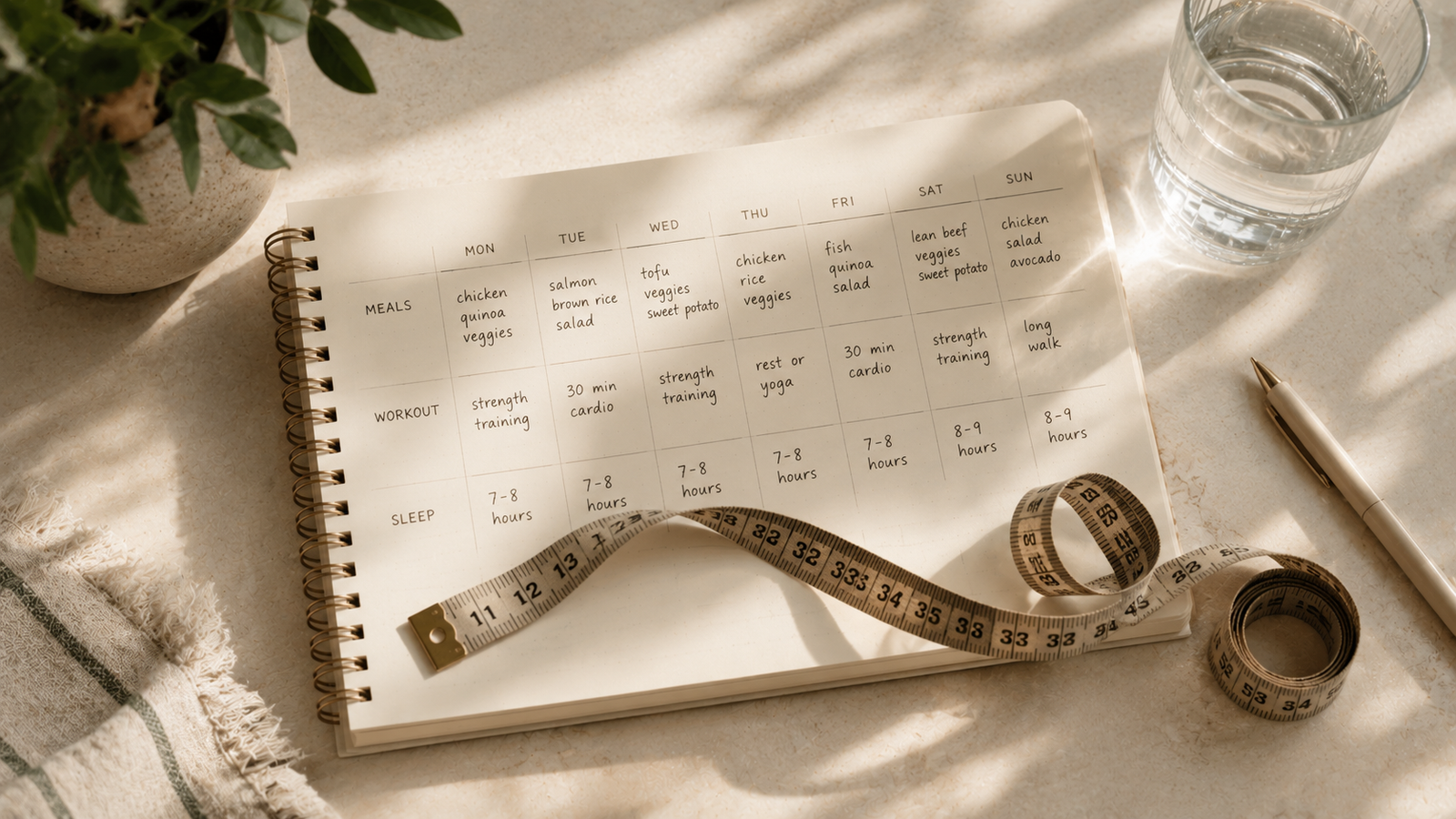
Every effectiveness claim below is checked against primary sources — peer-reviewed trials and meta-analyses, the NIH Office of Dietary Supplements, the NIH National Center for Complementary and Integrative Health, CDC guidance and FTC consumer warnings — not supplement marketing. SourceLean makes money only through transparent affiliate links, disclosed above; we run no star ratings, sponsored placements or fabricated reviews. This is educational information, not medical advice.
- What is belly fat, really?
- Can you target belly fat specifically?
- What actually makes you lose belly fat?
- How much does protein matter?
- Cardio or strength training — which is better?
- How much does sleep affect belly fat?
- Does stress and cortisol cause belly fat?
- Which foods and drinks fight belly fat?
- Do supplements help you lose belly fat?
- Which ingredients have the strongest evidence?
- Who should be careful — and when to see a doctor?
- What doesn’t work for belly fat?
- What does a realistic plan look like?
- The bottom line
- FAQ
What is belly fat, really?
Belly fat is body fat stored around the midsection, and it comes in two kinds: subcutaneous fat, the soft layer just under the skin you can pinch, and visceral fat, which sits deeper and wraps around the organs. Visceral fat is more metabolically active and more strongly linked to disease — which is why waist size matters more than the scale.
Understanding belly fat starts with separating those two compartments, because they behave very differently. Subcutaneous fat is the pinchable layer between skin and muscle; it is largely a storage depot and, gram for gram, relatively benign. Visceral adipose tissue — visceral fat — is the deeper fat packed in and around the liver, intestines and other abdominal organs. It is hormonally active, releasing inflammatory signals and free fatty acids directly into the portal circulation that feeds the liver, which is why excess visceral fat tracks so closely with insulin resistance, type 2 diabetes, high blood pressure and cardiovascular disease[11].
This distinction has a practical payoff. Because visceral fat is metabolically “busy,” it tends to be among the first fat to shrink when you start losing weight — sometimes before the bathroom scale shows much, and often before subcutaneous fat budges. That is why a tape measure around the waist is one of the most useful and underused progress tools in fat loss. As a rough guide used in clinical practice, cardiometabolic risk rises when waist circumference exceeds roughly 102 cm (40 inches) in men or 88 cm (35 inches) in women, with lower cut-offs recommended for some South Asian and East Asian populations[11]. A waistline that is trending down is real progress, even on weeks the scale stalls.
One more honest framing point: where you store fat is heavily influenced by genetics, sex and age, none of which you control. Men and post-menopausal women store proportionally more visceral fat; younger pre-menopausal women tend toward hips and thighs. You cannot choose where fat comes off first any more than you chose where it went on. What you can influence is the total amount — and reducing the total is what eventually reaches the belly.
Can you target belly fat specifically?
No. “Spot reduction” — burning fat from one body part by exercising it — does not work. In a controlled six-week trial, abdominal exercises produced no measurable reduction in belly fat compared with doing nothing[2]. Crunches build the muscle under the fat; they do not remove the fat on top of it.
This is the single most important myth to retire, because it underwrites a huge amount of wasted effort and most of the “targeted” gadgets and ab-belt marketing. The body does not draw fuel preferentially from the muscle that’s working; fat is mobilized from stores all over the body and delivered through the bloodstream, governed by hormones and overall energy demand, not by which muscle is sore. In the often-cited study, participants who did seven abdominal exercises five days a week for six weeks saw no significant change in abdominal fat, waist circumference or body-fat percentage versus a control group — the exercises strengthened the muscle without touching the fat layer[2].
The same logic dismantles the “detox” and “belly-fat-burning” supplement angle. No tea, tonic, drop or capsule routes fat-burning to your midsection. When a product promises to dissolve belly fat in particular, that specificity is itself a red flag — the U.S. Federal Trade Commission lists claims of substantial, effortless or targeted fat loss among the hallmarks of deceptive weight-loss marketing[12]. What actually shrinks your waist is lowering your total body fat; the belly comes off as part of that whole-body process, on a timeline your genetics largely set. Train your abs for strength and posture if you like — just don’t expect crunches to do the fat-loss work.
What actually makes you lose belly fat?
A sustained calorie deficit — consistently eating fewer calories than you burn — is what makes you lose belly fat, because it forces the body to draw on stored fat for energy[13]. Everything else (protein, fiber, exercise, sleep) matters mainly because it makes that deficit easier to create and sustain without losing muscle.
Energy balance is not a fad; it is thermodynamics applied to the body. A calorie deficit means your daily energy intake is lower than your total daily energy expenditure — the sum of your resting metabolism, the energy cost of digesting food, and your movement. When that gap exists consistently, the body makes up the difference largely from fat stores, and belly fat is part of that withdrawal[13]. There is no diet — keto, paleo, carnivore, intermittent fasting — that bypasses this. Diets that “work” do so because they help you eat fewer calories, usually by cutting a food group, adding protein and fiber, or restricting eating windows. The mechanism underneath is always the deficit.
A realistic, safe pace is roughly 0.5 to 1 kg (about 1 to 2 lb) of fat per week, which corresponds to a daily deficit of about 300–700 calories. Going far below that with crash dieting backfires in three predictable ways: you lose more lean muscle alongside fat, your appetite hormones push back hard, and adherence collapses. Slower is not just safer; for keeping the weight off, it is usually more effective. This is also why the “lose your belly in 7 days” promise is hollow — a week of restriction mostly shifts water and the contents of your gut, not stored fat.
The rest of this guide is, in effect, a list of the most reliable ways to make a modest deficit feel manageable: protein to protect muscle and blunt hunger, fiber and water for fullness, strength training to keep metabolically active tissue, and sleep and stress management so the whole thing doesn’t fall apart by Friday. Those are the levers. Supplements, where they help at all, only tug gently on a couple of them.

How much does protein matter for belly fat?
Protein matters more than almost any other single dietary lever. Higher protein intake — roughly 1.2 to 1.6 g per kg of body weight per day — increases fullness, raises the calories burned digesting food, and protects muscle during a deficit, so more of the weight you lose is fat[4]. That makes a belly-fat plan both easier and more effective.
Of the three macronutrients, protein is the one most consistently shown to help with weight management, and the reasons are mechanistic, not magical. First, protein is the most satiating macronutrient — gram for gram it keeps you fuller for longer, which quietly lowers calorie intake without conscious restriction[4]. Second, it has the highest thermic effect of food: the body burns roughly 20–30 % of protein’s calories just digesting and processing it, compared with about 5–10 % for carbohydrate and 0–3 % for fat. Third, and most importantly during fat loss, adequate protein paired with resistance training preserves lean muscle mass, so a larger share of the weight you lose comes from fat rather than muscle[4].
In practice, that translates to spreading protein across the day — something on the order of 25–40 g per meal from sources like eggs, dairy, poultry, fish, lean meat, tofu, tempeh, legumes or a simple whey or plant protein shake. You don’t need to weigh every gram; most people get the benefit simply by making protein the anchor of each meal and treating it as non-negotiable. This is also the one place a supplement is genuinely reasonable: a protein powder is just food in convenient form, and we cover where it fits — alongside the truly evidence-backed ingredients — in the weight-loss ingredients with the strongest evidence. Protein won’t “burn” belly fat, but it makes the deficit that does burn it dramatically easier to sustain.
Does cardio or strength training work better for belly fat?
Both help, in different ways. Aerobic exercise (cardio) is the more direct way to burn calories and has been shown to reduce visceral fat even without dieting[3]. Strength training burns fewer calories per session but preserves and builds muscle, protecting your metabolism during a deficit. The best plan uses both, on top of a calorie-aware diet.
Exercise is not how most people create the bulk of their deficit — it is far easier to not eat 400 calories than to burn them — but it changes the quality of the fat you lose and where it comes from. A 2012 systematic review and meta-analysis found that aerobic exercise significantly reduced visceral fat, while resistance training alone had a smaller, less consistent effect on visceral fat specifically[3]. Cardio — brisk walking, jogging, cycling, swimming, rowing — is therefore a direct lever on the most dangerous belly fat, and notably it reduced visceral fat in several studies even when participants didn’t lose much total weight[3].
Strength training plays a different but essential role. Lifting weights (or bodyweight resistance work) does not torch visceral fat as efficiently as cardio in the short term, but it builds and protects lean muscle — the metabolically active tissue that keeps your resting energy expenditure higher and ensures the weight you lose is fat, not muscle. In a deficit, resistance training is effectively insurance for your metabolism. The pragmatic prescription most evidence supports: aim for the general activity guideline of about 150–300 minutes of moderate aerobic activity per week plus two or more strength sessions, and — underrated — simply move more all day. Non-exercise activity (walking, standing, taking stairs) can account for hundreds of calories daily and is often the quiet difference between people who lose belly fat and people who stall. Abdominal-specific work, again, builds the muscle but does not preferentially strip the fat above it[2].
How much does sleep affect belly fat?
Sleep affects belly fat more than most people expect. In a controlled trial, dieters who slept 5.5 hours a night lost 55 % less fat — and more muscle — than those sleeping 8.5 hours, despite eating the same calories[6]. Short sleep also raises hunger hormones and cravings, making a deficit much harder to hold.
Sleep is the most underrated variable in fat loss, and the evidence is striking. In a tightly controlled crossover study at the University of Chicago, participants on an identical calorie-restricted diet lost similar total weight under both conditions — but when sleep was cut to 5.5 hours, the proportion of weight lost as fat fell by more than half, and they lost correspondingly more lean muscle[6]. Same diet, different sleep, dramatically different body composition. For someone trying to lose belly fat specifically, that is a direct hit to the goal.
The mechanisms are well mapped. Short and poor sleep raises ghrelin (the hunger hormone) and lowers leptin (the satiety hormone), increasing appetite and especially cravings for energy-dense, high-carbohydrate foods. It impairs insulin sensitivity, nudging the body toward fat storage. And it erodes willpower and energy, so you move less and reach for convenience food more. None of this means a perfect night’s sleep burns belly fat on its own — but chronically under-sleeping can quietly cancel out an otherwise solid diet. Aiming for 7–9 hours, with a consistent schedule, is one of the highest-leverage and lowest-cost things you can do for your waistline. No supplement compensates for the deficit a sleep deficit creates.
Does stress and cortisol cause belly fat?
Chronic stress can contribute to belly fat. Stress raises cortisol, a hormone tied to abdominal fat storage; research links greater cortisol reactivity to more central fat, especially in women[7]. Stress mainly works indirectly — through appetite, cravings and worse sleep — so managing it makes a calorie-aware plan far easier to keep.
Cortisol is the body’s main stress hormone, released by the adrenal glands in response to physical and psychological demands. In short bursts it’s useful; chronically elevated, it is associated with the body preferentially storing fat in the abdominal region. A classic study found that women with greater cortisol reactivity to stress carried more central (abdominal) fat, even among lean women, suggesting that how strongly you respond to stress is linked to where you store fat[7]. That is a real, measurable connection — but it’s important not to overstate it.
Stress does not conjure fat out of nowhere. You still need surplus calories to store fat, and the dominant pathway from stress to belly fat runs through behavior: stress drives cravings for hyper-palatable, calorie-dense food, disrupts sleep (which we just saw matters), and saps the motivation to cook, plan and move. In other words, the cortisol story is real but mostly operates by sabotaging your deficit, not by magically overriding it. The takeaway is constructive rather than alarming: stress management — whether that’s sleep, walking, time outdoors, exercise, social connection or simply protecting downtime — is not a “cortisol detox” (a marketing phrase with no clinical meaning), but a practical way to make the eating and activity changes that actually move belly fat sustainable. Be skeptical of any supplement sold as a “cortisol blocker” for belly fat; the evidence for those products is thin, and they distract from the levers that work.
Which foods and drinks fight belly fat?
No food burns belly fat, but some make a deficit far easier and are linked to less abdominal fat over time. Soluble fiber stands out: in a five-year study, each extra 10 g of daily soluble fiber was associated with a 3.7 % slower accumulation of visceral fat[5]. The biggest wins, though, come from what you remove — sugary drinks and excess alcohol.
Start with the levers that subtract, because they’re the strongest. Sugar-sweetened beverages — soda, sweetened coffees, energy drinks, many juices — are uniquely bad for belly fat. In the long-running Framingham Heart Study, people who drank sugar-sweetened beverages daily gained significantly more visceral fat over six years than non-drinkers[8]. Liquid sugar delivers a lot of calories with little fullness and is metabolized in a way that favors fat storage around the organs. Swapping these for water, sparkling water, unsweetened tea or black coffee is one of the single highest-yield changes you can make. Alcohol is the other big one: at roughly 7 calories per gram it adds up fast, it’s usually consumed on top of normal eating, and it lowers inhibitions around food; heavier intake is consistently associated with greater abdominal obesity.
On the “add” side, the heroes are fiber and protein-rich whole foods. Soluble fiber — the gel-forming fiber in oats, beans, lentils, apples, citrus, flax and psyllium — slows digestion, improves satiety and feeds gut bacteria; the prospective data linking each 10 g/day increase to meaningfully slower visceral-fat gain is some of the most encouraging in this whole area[5]. Vegetables and fruit add volume and fiber for very few calories. Protein anchors every meal, as covered above. And water deserves a mention: it has no fat-burning magic, but drinking it in place of caloric drinks removes calories, and a glass before meals modestly reduces intake. There is no “belly-fat food” — there is a pattern of mostly whole, high-fiber, protein-forward foods with far fewer liquid calories, and it works because it makes eating less feel like eating enough.
| Lever | What to do | Why it helps belly fat | Evidence |
|---|---|---|---|
| Cut sugary drinks | Swap soda/juice for water, tea, black coffee | Daily intake linked to more visceral fat gain[8] | Strong |
| More soluble fiber | Oats, beans, lentils, fruit, psyllium | +10 g/day linked to 3.7% slower visceral-fat gain[5] | Strong |
| Higher protein | ~1.2–1.6 g/kg/day, every meal | Fullness, muscle protection, higher diet thermogenesis[4] | Strong |
| Limit alcohol | Fewer drinks, smaller servings | ~7 cal/g, usually surplus; tied to abdominal obesity | Moderate |
| Aerobic exercise | 150–300 min/week brisk activity | Directly lowers visceral fat, even without dieting[3] | Strong |
| Sleep 7–9 h | Consistent schedule, dark cool room | Short sleep cut fat loss by 55% on same diet[6] | Moderate |
Do supplements help you lose belly fat?
At best modestly, and never on their own. The NIH concludes that weight-loss supplements produce only small effects and are no substitute for diet and physical activity[1]. None targets belly fat specifically. A few ingredients have real but minor evidence; many products either hide doses in proprietary blends or are simply overhyped.
This is where most people’s “how to lose belly fat” search ends up — staring at a sales page for a tonic, tea or capsule. So here is the honest, category-wide verdict from the people with no product to sell: the NIH Office of Dietary Supplements, after reviewing the field, concludes that dietary supplements for weight loss have limited and often inconsistent evidence, produce modest effects at most, and cannot replace the fundamentals of diet and activity[1]. No supplement has been shown to selectively remove abdominal fat. Any product whose entire pitch is “belly fat” is leaning on a claim the science does not support.
That doesn’t make the whole category worthless — it makes it marginal, and only when used honestly. A small number of ingredients (covered in the next section) can give a slight nudge to appetite or energy expenditure, layered on top of a real plan. The problems are practical: many formulas use proprietary blends that hide how much of each active ingredient you’re getting, many “fairy-dust” the one researched ingredient at a token dose, and a few have been found adulterated with undeclared drugs. We dig into one popular example — a caffeine-and-green-tea metabolism formula — in our Java Burn review, which is a useful case study in how a product with real ingredients can still oversell what they do. The rule of thumb: if a supplement is going to help you at all, it’ll be by gently supporting a habit you’re already doing well — not by doing the work for you.
Which supplement ingredients have the strongest evidence?
The ingredients with the best (still modest) evidence are caffeine, green tea catechins, protein and soluble fiber/glucomannan; berberine has moderate metabolic data. Effects are small — typically one to two kilograms over months — and dose matters enormously. Most “fat burner” exotics (raspberry ketone, garcinia, “detox” blends) have weak or no human evidence.
If you want the honest ingredient-by-ingredient picture, here it is, graded by the strength of human evidence for body weight or fat — not by marketing. “Studied dose” is the amount used in research; the catch with real products is whether they actually deliver it, since blends often don’t.
| Ingredient | What it does | Studied dose | Realistic effect | Evidence |
|---|---|---|---|---|
| Caffeine | Mild thermogenesis, slight appetite blunting | ~3–6 mg/kg/day | Small bump in calories burned; tolerance builds | Moderate |
| Green tea catechins (EGCG) | Catechins + caffeine raise fat oxidation | ~270–1,200 mg catechins/day[9] | ~1–1.5 kg over 12 weeks in meta-analysis[9] | Moderate |
| Protein powder | Satiety, muscle protection, diet thermogenesis | ~1.2–1.6 g/kg/day total[4] | Easier deficit, more fat-vs-muscle loss | Strong (as food) |
| Glucomannan / soluble fiber | Gel-forming fiber increases fullness | ~3 g/day glucomannan; +10 g/day fiber[5] | Modest appetite control; slower visceral gain | Moderate |
| Berberine | Activates AMPK; improves blood sugar markers | ~900–1,500 mg/day, split[10] | ~2 kg average over ~12 weeks[10] | Moderate |
| Raspberry ketone / garcinia / “detox” blends | Marketed as fat-burners | Not established in humans | No reliable human effect | None / weak |
Caffeine is a genuine, mild metabolic stimulant — it raises energy expenditure slightly and can blunt appetite — but the effect is small and tolerance builds with regular use. Green tea extract pairs catechins (notably EGCG) with caffeine; a well-known meta-analysis found green tea preparations produced a small but statistically significant weight loss, on the order of about 1–1.5 kg over 12 weeks, again best understood as a nudge[9]. Berberine, an alkaloid that mildly activates the cellular energy sensor AMPK, has the most interesting metabolic data of the botanicals, with systematic reviews showing roughly 2 kg of average weight loss at studied doses of 900–1,500 mg/day — but the NCCIH cautions the evidence is limited and not conclusive[10]. Glucomannan and other soluble fibers work through fullness rather than fat-burning. Everything in the bottom row — raspberry ketone, garcinia cambogia, exotic “detox” complexes — has weak or absent human evidence and exists mostly to fill out a label. For the full breakdown of what clears the evidence bar and what doesn’t, see the weight-loss ingredients with the strongest evidence.
Who should be careful — and when should you see a doctor?
Most people can safely improve diet, sleep and activity. But some should get medical guidance before aggressive dieting or any supplement: anyone pregnant or breastfeeding, people on medications (especially for blood sugar or blood pressure), those with a history of eating disorders, and anyone with a chronic health condition. Sudden, unexplained belly-fat changes also warrant a check-up.
The fundamentals in this guide — more protein, more fiber, less liquid sugar, regular movement, better sleep — are safe and beneficial for almost everyone. The cautions cluster around two areas: supplements and extreme dieting.
On supplements, the stimulant and botanical ingredients carry real interactions. Caffeine and green tea extract can be a problem for people with anxiety, heart rhythm issues, high blood pressure or poor sleep. Berberine interacts with many medications — it can add to the blood-sugar-lowering effect of drugs like metformin (risking hypoglycemia), amplify blood-pressure medication, and inhibit liver enzymes (notably CYP3A4) that metabolize many prescriptions; it should be avoided in pregnancy and breastfeeding[10]. As a blanket rule: if you are pregnant or nursing, take any prescription medication, or have a heart, liver, kidney or metabolic condition, talk to your doctor or pharmacist before starting any weight-loss supplement.
On dieting itself, aggressive restriction is the wrong tool for some people. Anyone with a current or past eating disorder should approach calorie tracking and weight goals only with professional support. And it’s worth knowing that not all abdominal change is dietary: rapid, unexplained increase in belly size, bloating or weight — or fat loss you didn’t intend — can occasionally signal a medical issue and deserves a doctor’s evaluation rather than a supplement. When in doubt, a brief conversation with a clinician is faster and safer than guessing.
What doesn’t work for belly fat?
Plenty. Spot-reduction exercises, “detox” teas and cleanses, waist trainers and sauna belts, fat-dissolving creams, and most exotic “fat-burner” pills do not selectively remove belly fat[2][1]. Crash diets work briefly, then rebound. The FTC flags effortless, dramatic and targeted fat-loss claims as classic deception[12].
An honest guide has to name what to ignore, because avoiding wasted money and effort is half the battle. Here is the short list of things that do not deliver on the belly-fat promise:
- Endless crunches and ab gadgets. They build abdominal muscle but don’t remove the fat on top — spot reduction is not real[2].
- “Detox” teas, juices and cleanses. “Detox” is a marketing word, not a physiological mechanism; your liver and kidneys already do the job. These mostly cause water loss (and sometimes a laxative effect), not fat loss.
- Waist trainers, sauna belts and corsets. They redistribute and dehydrate, temporarily, with zero effect on stored fat.
- Fat-burning creams, patches and “belly drops.” No topical product penetrates and dissolves abdominal fat.
- Exotic fat-burner pills (raspberry ketone, garcinia, most “proprietary blends”). Weak or no human evidence, and the NIH rates the whole category as modest at best[1].
- Crash diets and extreme fasts. They drop water and muscle fast, slow you down, and reliably rebound — the opposite of a durable result.
The unifying tell is the promise itself. Whenever a product claims effortless, rapid or belly-specific fat loss, you’re looking at exactly the pattern the Federal Trade Commission identifies as a red flag for false weight-loss advertising[12]. Real fat loss is unglamorous, whole-body, and paced in weeks. Anything marketed as the opposite is selling the wish, not the result.
What does a realistic belly-fat plan look like?
A realistic plan is boring on paper and effective in practice: a modest calorie deficit anchored by protein and fiber, fewer liquid calories, a mix of cardio and strength training, 7–9 hours of sleep, and managed stress — tracked by your waistline as much as the scale. Supplements, if any, sit at the very end as a minor add-on.
Pulling the evidence together, here is what an honest, sustainable belly-fat plan actually contains — in rough priority order:
- Set a modest deficit. Aim to lose about 0.5–1 kg per week; a daily deficit near 300–700 calories is sustainable and protects muscle[13].
- Anchor every meal with protein. Target roughly 1.2–1.6 g/kg/day for fullness and muscle retention[4].
- Make fiber the default. Build meals around vegetables, fruit, legumes and whole grains; the soluble fiber link to slower visceral-fat gain is one of the strongest in the literature[5].
- Cut the liquid calories first. Replace sugary drinks with water or unsweetened options, and keep alcohol modest[8].
- Train both ways. 150–300 minutes of aerobic activity weekly to hit visceral fat directly[3], plus 2+ strength sessions to protect muscle, and move more all day.
- Protect sleep and manage stress. 7–9 hours nightly; short sleep alone can halve the fat you lose on the same diet[6].
- Measure your waist, not just the scale. Track waist circumference monthly; visceral fat often shrinks before the scale moves much[11].
- Treat supplements as the last 5%. Only after the above is consistent, and only the evidence-backed ones, at honest doses — see our strongest-evidence guide.
Notice what dominates that list: food, movement, sleep and consistency. Notice what’s at the bottom: pills. That ordering is the whole message of this guide. The plan works not because any single element is powerful, but because together they make a modest calorie deficit feel livable for the months it actually takes — and your belly, including the dangerous visceral fat, comes off as part of that whole-body process.
Lose total body fat through a sustainable deficit — built on protein, fiber, fewer liquid calories, cardio plus strength, and good sleep — and your belly fat goes with it. There is no targeted shortcut, and no supplement does the work for you.
The bottom line
Losing belly fat comes down to losing overall body fat, and that comes down to a sustained calorie deficit made livable by protein, fiber, exercise, sleep and stress management. You cannot spot-reduce it, no product melts it, and supplements offer a small nudge at most. The boring fundamentals are the only thing that reliably works — and they work for almost everyone.
If you came here hoping for a faster, easier answer, the honest one is genuinely better news than the hype: belly fat isn’t a special, stubborn substance requiring a special, secret product. It’s ordinary fat in a high-risk location, and it responds to the same fundamentals as fat anywhere — with the bonus that the most dangerous part, visceral fat, often responds first[11]. Put your money and energy into food, movement and sleep, not into tonics that promise to do it for you. If you do want to explore supplements, do it with clear eyes and realistic expectations — start with what the evidence actually supports.
Supplements are the last 5% of a belly-fat plan, not the engine. If you want to understand the category honestly before spending a cent, start with our evidence reviews — no hype, no fabricated results.
Strongest-Evidence Ingredients
Which weight-loss ingredients actually clear the evidence bar — with studied doses, realistic effect sizes, and what to skip entirely.
Does Java Burn Work?
A case study in honest scrutiny: a caffeine-and-green-tea metabolism formula, what its ingredients can really do, and where the marketing outruns the science.
Frequently asked questions
Can you lose belly fat in a week?
You cannot meaningfully lose stored belly fat in a week. A safe rate of fat loss is roughly 0.5 to 1 kg per week, and most of what changes in seven days is water and gut contents, not fat.
Lasting belly fat loss takes a sustained calorie deficit over weeks and months, not days. Anything promising a flat stomach in a week is selling water loss and wishful thinking.
What is the fastest way to lose belly fat?
The fastest sustainable way to lose belly fat is a moderate calorie deficit built on higher protein and fiber, combined with strength training, regular activity and adequate sleep. There is no shortcut that bypasses energy balance.
Crash diets lose more muscle and water and tend to rebound, so faster is rarely better — a steady 0.5–1 kg per week keeps more muscle and stays off.
Do ab exercises burn belly fat?
No. Ab exercises strengthen the muscles under the fat but do not preferentially burn the fat on top of them. A controlled trial found six weeks of abdominal exercises produced no reduction in belly fat compared with no exercise.
You lose belly fat by lowering total body fat through a calorie deficit, not by targeting the area. Train abs for strength and posture, not for spot reduction.
What foods help you lose belly fat?
No single food burns belly fat, but protein-rich foods, vegetables, fruit, legumes, whole grains and other high-fiber foods help by keeping you full on fewer calories. In one study, each 10-gram increase in daily soluble fiber was linked to less visceral fat gain over five years.
Cutting sugar-sweetened drinks and excess alcohol matters most — removing liquid calories is often the single highest-yield change.
Does drinking water help you lose belly fat?
Water does not directly burn belly fat, but it helps indirectly. Replacing sugar-sweetened drinks with water removes liquid calories that are strongly linked to visceral fat gain, and drinking water before meals can modestly reduce how much you eat.
Think of water as supporting fat loss through the overall calorie picture, not as a fat-burner on its own.
Is visceral fat more dangerous than subcutaneous fat?
Yes. Visceral fat, which wraps around the organs deep in the abdomen, is more metabolically active and more strongly linked to type 2 diabetes, heart disease and other risks than the subcutaneous fat just under the skin.
The encouraging news is that visceral fat often responds first and fastest when you lose weight through diet and activity, so a shrinking waist is real, meaningful progress.
Do weight-loss supplements reduce belly fat?
At best modestly, and never on their own. The NIH concludes that weight-loss supplements produce small effects and are no substitute for diet and activity.
A few ingredients such as caffeine, green tea catechins, protein and soluble fiber have some evidence, but none specifically targets belly fat, and many products are fairy-dusted or hide doses in proprietary blends.
How big should my waist be?
As a general guide, health risk rises when waist circumference exceeds about 102 cm (40 inches) in men or 88 cm (35 inches) in women, with lower thresholds in some populations.
Waist measurement is a useful proxy for visceral fat, and a shrinking waist is often a better progress signal than the scale alone.
Does stress cause belly fat?
Stress can contribute to belly fat. Chronic stress raises cortisol, and research links higher cortisol reactivity to greater abdominal fat, partly through appetite, cravings and disrupted sleep.
Stress alone will not make you gain fat without surplus calories, but managing stress and sleep makes a calorie-aware plan far easier to sustain.
How long does it take to lose belly fat?
Expect visible waist changes over weeks to months, not days. At a safe rate of about 0.5 to 1 kg of fat per week, a noticeable difference in how clothes fit often takes four to twelve weeks of consistent effort.
Visceral fat tends to respond early, so waist measurements may improve before the scale moves dramatically.
Does alcohol cause belly fat?
Alcohol can promote belly fat. It adds roughly 7 calories per gram, often on top of normal eating, lowers inhibitions around food, and heavy intake is associated with greater abdominal obesity.
Moderate drinking is not guaranteed to cause belly fat, but alcohol calories are easy to overlook and are a common hidden obstacle to losing it.
The weight-loss ingredients with the strongest evidence
Does Java Burn actually work?
Berberine: what the research really says
Green tea extract, explained
All health articles
We research weight-loss supplements and the ingredients inside them, scoring products on label transparency rather than hype. No star spam, no fabricated reviews — just the evidence, stated plainly. Our editorial standards →
- NIH Office of Dietary Supplements — Dietary Supplements for Weight Loss (Health Professional Fact Sheet). ods.od.nih.gov
- Vispute SS, et al. The effect of abdominal exercise on abdominal fat. Journal of Strength and Conditioning Research, 2011. pubmed.ncbi.nlm.nih.gov
- Ismail I, et al. A systematic review and meta-analysis of the effect of aerobic vs. resistance exercise training on visceral fat. Obesity Reviews, 2012. pubmed.ncbi.nlm.nih.gov
- Leidy HJ, et al. The role of protein in weight loss and maintenance. American Journal of Clinical Nutrition, 2015. pubmed.ncbi.nlm.nih.gov
- Hairston KG, et al. Lifestyle factors and 5-year abdominal fat accumulation; soluble fiber and visceral fat. Obesity, 2012. pubmed.ncbi.nlm.nih.gov
- Nedeltcheva AV, et al. Insufficient sleep undermines dietary efforts to reduce adiposity. Annals of Internal Medicine, 2010. pubmed.ncbi.nlm.nih.gov
- Epel ES, et al. Stress and body shape: stress-induced cortisol secretion is consistently greater among women with central fat. Psychosomatic Medicine, 2000. pubmed.ncbi.nlm.nih.gov
- Ma J, et al. Sugar-sweetened beverage consumption is associated with change in visceral adipose tissue (Framingham Heart Study). Circulation, 2016. pubmed.ncbi.nlm.nih.gov
- Hursel R, et al. The effects of green tea on weight loss and weight maintenance: a meta-analysis. International Journal of Obesity, 2009. pubmed.ncbi.nlm.nih.gov
- NIH National Center for Complementary and Integrative Health — Berberine and Weight Loss (evidence status and safety). nccih.nih.gov
- Ross R, et al. Waist circumference as a vital sign in clinical practice: a consensus statement. Nature Reviews Endocrinology, 2020. pubmed.ncbi.nlm.nih.gov
- U.S. FTC — “Gut Check”: a reference guide for media on spotting false weight-loss claims. ftc.gov
- Hall KD, et al. Energy balance and its components: implications for body weight regulation. American Journal of Clinical Nutrition, 2012. pubmed.ncbi.nlm.nih.gov
- Jun 13, 2026 — Guide published; claims checked against current NIH, CDC, FTC and peer-reviewed sources.
Affiliate disclosure: SourceLean is reader-supported. When you buy through links on this site, we may earn a commission at no extra cost to you. Checkout is always handled on the official product website.
Pingback: Does Ikaria Lean Belly Juice Work? Honest 2026 Review
Pingback: Does Liv Pure Work? An Honest 2026 Review
Pingback: Does Nagano Tonic Work? Honest 2026 Review
Pingback: Does Mitolyn Work? Honest 2026 Review
Pingback: Java Burn vs Nagano Tonic: Which Works? (2026)