Hundreds of ingredients claim to burn fat. Only a handful have credible human data — and even those work at the margins. Here’s the evidence-ranked, fully-sourced shortlist.
The weight-loss ingredients with the strongest evidence are soluble fiber and protein (appetite and muscle), caffeine and green tea catechins (a small rise in energy expenditure), and berberine (metabolic support). Each produces only a few pounds of average benefit over weeks to months, and only on top of diet and activity[1]. Everything else on the typical label is weaker — or essentially unproven.
Walk down any supplement aisle, or scroll any weight-loss sales page, and you’ll meet dozens of “clinically proven” fat-burning ingredients. The honest truth is that most of them are not proven at all, and the few that are work modestly. At SourceLean we read the trials so you don’t have to, and this guide ranks the most common weight-loss ingredients by the strength of their human evidence — naming which ones earn their place, which are oversold, and which are essentially decoration on a label. Every effectiveness claim below is tied to a numbered source, and we’ve flagged the single number that decides whether any of them matter: the dose actually used in research, versus the dose you tend to get in a product.
Every rating below is checked against primary sources — peer-reviewed meta-analyses and randomized trials on each ingredient, the NIH Office of Dietary Supplements, the NIH National Center for Complementary and Integrative Health, and FDA/FTC guidance — not product marketing. We grade evidence as Strong, Moderate or Weak/None based on the quality, size and consistency of human studies, and we always compare the studied dose with what supplements typically deliver. SourceLean makes money only through transparent affiliate links, disclosed above. This is educational information, not medical advice.
- What ingredients have the strongest evidence?
- Does fiber help you lose weight?
- Is protein a weight-loss ingredient?
- Does caffeine actually help fat loss?
- Do green tea extract and EGCG burn fat?
- Is berberine a good weight-loss ingredient?
- Does capsaicin boost fat burning?
- Which ingredients have weak or no evidence?
- How do these ingredients actually work?
- Studied dose vs. label dose: are you getting enough?
- Who should avoid these ingredients?
- What are the honest limitations of the evidence?
- How should you choose a supplement?
- The verdict
- FAQ
What weight-loss ingredients have the strongest evidence?
The weight-loss ingredients with the strongest human evidence are soluble fiber and dietary protein for appetite and muscle retention, caffeine and green tea catechins for a small rise in energy expenditure, and berberine for metabolic support. None is powerful: each adds roughly 1–3 kg of average benefit over weeks to months, and only alongside diet and activity[1].
Before the ingredient-by-ingredient detail, it helps to see the whole field at once. The table below grades the most common weight-loss ingredients by the strength of their human evidence, with the dose actually studied and the realistic effect size in plain numbers. “Evidence for weight” here means controlled human research showing a real effect on body weight or fat — not lab studies, not animal data, and not effects on unrelated markers. We use three bands: Strong (consistent, good-quality human trials), Moderate (real but small or mixed-quality data), and Weak / None (thin, inconsistent or absent human evidence).
| Ingredient | How it’s supposed to help | Studied dose | Realistic effect | Evidence |
|---|---|---|---|---|
| Protein (whey / food) | Fullness, muscle retention, higher thermic effect | ~1.2–1.6 g/kg/day[2] | Better fat loss & less muscle loss in a deficit | Strong |
| Soluble fiber (glucomannan, psyllium) | Slows gastric emptying, increases satiety | ≥3 g/day glucomannan w/ water[3] | ~1–2 kg average, appetite-led | Moderate |
| Caffeine | Raises energy expenditure & fat oxidation | ~3–6 mg/kg/day[4] | Small; tolerance builds quickly | Moderate |
| Green tea catechins (EGCG) + caffeine | Modest rise in fat oxidation & expenditure | ~270–1,200 mg catechins/day[5] | ~1–2 kg over ~12 weeks | Moderate |
| Berberine | Activates AMPK; metabolic support | ~900–1,500 mg/day split[6] | ~2 kg over ~12 weeks | Moderate |
| Capsaicin / capsinoids (chili) | Small thermogenic & appetite effect | ~2–6 mg capsaicinoids/day[7] | Very small; helps appetite slightly | Weak–Moderate |
| Chromium picolinate | Claimed to curb cravings / insulin | ~200–1,000 mcg/day[8] | ~0.5 kg; clinically trivial | Weak |
| Garcinia cambogia (HCA) | Claimed to block fat synthesis | ~1,500–2,800 mg HCA/day[9] | Negligible & inconsistent | Weak / None |
| CLA, L-carnitine, raspberry ketones, green coffee | Various “fat-burning” claims | Varies / often untested in humans | Tiny to none | Weak / None |
The pattern is the headline. The ingredients that actually earn a place work mostly through appetite and energy balance — fiber and protein make you eat less and hold onto muscle, while caffeine and catechins nudge energy expenditure up a little. The ingredients that promise to “melt” or “block” fat directly are the ones with the weakest evidence. Keep that lens as we go through each in turn.
Does fiber help you lose weight?
Yes — soluble, viscous fiber is one of the better-evidenced weight-loss tools, and it works through appetite, not fat burning. Fiber such as glucomannan (a viscous fiber from konjac root) slows stomach emptying and increases fullness, and trials show small average weight reductions at gram-level doses taken with water before meals[3].
Dietary fiber is the part of plant food the body can’t digest. The subset that matters for weight is soluble, viscous fiber — fibers that absorb water and form a gel in the gut, which physically slows digestion and signals fullness to the brain. Glucomannan is the most-studied example in supplement form, and psyllium (from Plantago husk) is another. A systematic review of glucomannan found modest reductions in body weight versus placebo, though the effect is small and the trial quality varies[3].
The dose is the catch. Effective glucomannan trials use roughly 3 grams or more per day, taken with a full glass of water 30–60 minutes before meals so the gel forms in the stomach[3]. That is a meaningful spoonful — far more than the few hundred milligrams that a multi-ingredient “fat burner” capsule can physically contain. A blend that lists glucomannan among ten other ingredients almost certainly cannot reach the studied dose, which is exactly why fiber works better as a standalone or as actual food than as a token blend ingredient.
Glucomannan must be taken with plenty of water. Regulators have warned that glucomannan in tablet form can swell and cause choking or throat/esophageal blockage if taken with too little fluid[3]. Powder or capsules with a full glass of water are safer — and never take it right before lying down.
Is protein a weight-loss ingredient?
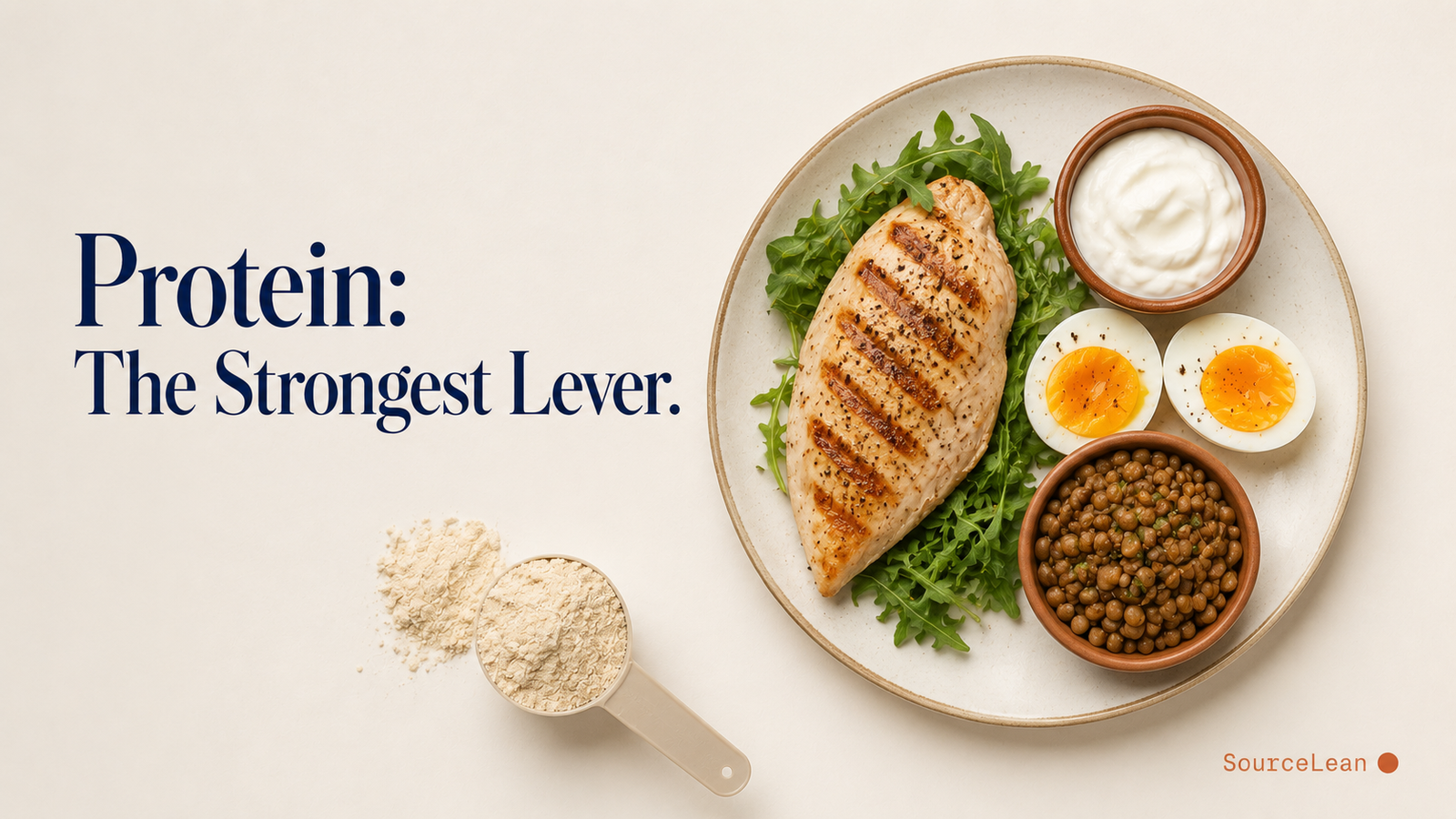
Protein is the most reliable diet lever for fat loss — though it is a macronutrient, not a pill. Higher protein intake increases fullness, preserves lean muscle during a calorie deficit, and has a higher thermic effect than carbs or fat. Research supports roughly 1.2–1.6 grams per kilogram of body weight daily for people losing weight[2].
Protein belongs in any honest evidence ranking even though it doesn’t fit the “fat burner” mold, because the data behind it is genuinely strong. Three mechanisms work together. First, protein is the most satiating macronutrient — gram for gram it suppresses appetite more than carbohydrate or fat, so higher-protein diets tend to reduce spontaneous calorie intake[2]. Second, it has the highest thermic effect of food: the body burns roughly 20–30% of protein’s calories just digesting and processing it, versus a few percent for fat. Third, and most important during weight loss, adequate protein combined with resistance training preserves lean muscle, so more of the weight lost is fat rather than muscle[2].
For practical numbers, controlled trials in people losing weight tend to use about 1.2–1.6 g of protein per kg of body weight per day (some athlete-focused work goes higher)[2]. For a 70 kg person that is roughly 85–110 g daily. A whey or casein protein powder is a convenient way to hit that target, but it’s a food, not a fat-burning compound — it works by changing what and how much you eat, not by some special metabolic trick. That distinction is why protein quietly outperforms most of the flashy ingredients below.
Does caffeine actually help with fat loss?
Yes, modestly. Caffeine — a stimulant that blocks adenosine receptors — raises energy expenditure and fat oxidation in the short term and is one of the most consistently studied fat-loss ingredients. Effective doses sit around 3–6 mg per kg of body weight, but tolerance builds within days to weeks, shrinking the effect[4].
Caffeine is the active ingredient behind most “energy” and “thermogenic” supplements, and unlike many of them it has real pharmacology. By blocking adenosine and raising circulating adrenaline, caffeine produces a measurable, short-term increase in metabolic rate and fat oxidation, and it can modestly improve exercise performance and perceived effort[4]. The studied range for a metabolic or performance effect is roughly 3–6 mg per kg of body weight — about 200–400 mg for many adults, or two to four cups of coffee[4].
Two honest caveats keep caffeine in proportion. First, tolerance: the thermogenic boost is largest in people who don’t regularly consume caffeine, and it diminishes within days to a couple of weeks of daily use, so the long-term contribution to actual weight loss is small[4]. Second, side effects: jitteriness, raised heart rate and blood pressure, anxiety and disrupted sleep are common above individual tolerance, and poor sleep itself undermines weight loss. Caffeine is a useful, well-evidenced training aid and appetite blunter — not a standalone fat burner. Many popular metabolism products, including the coffee-based formula we examine in our Java Burn review, lean heavily on caffeine for whatever effect they have.
Do green tea extract and EGCG burn fat?
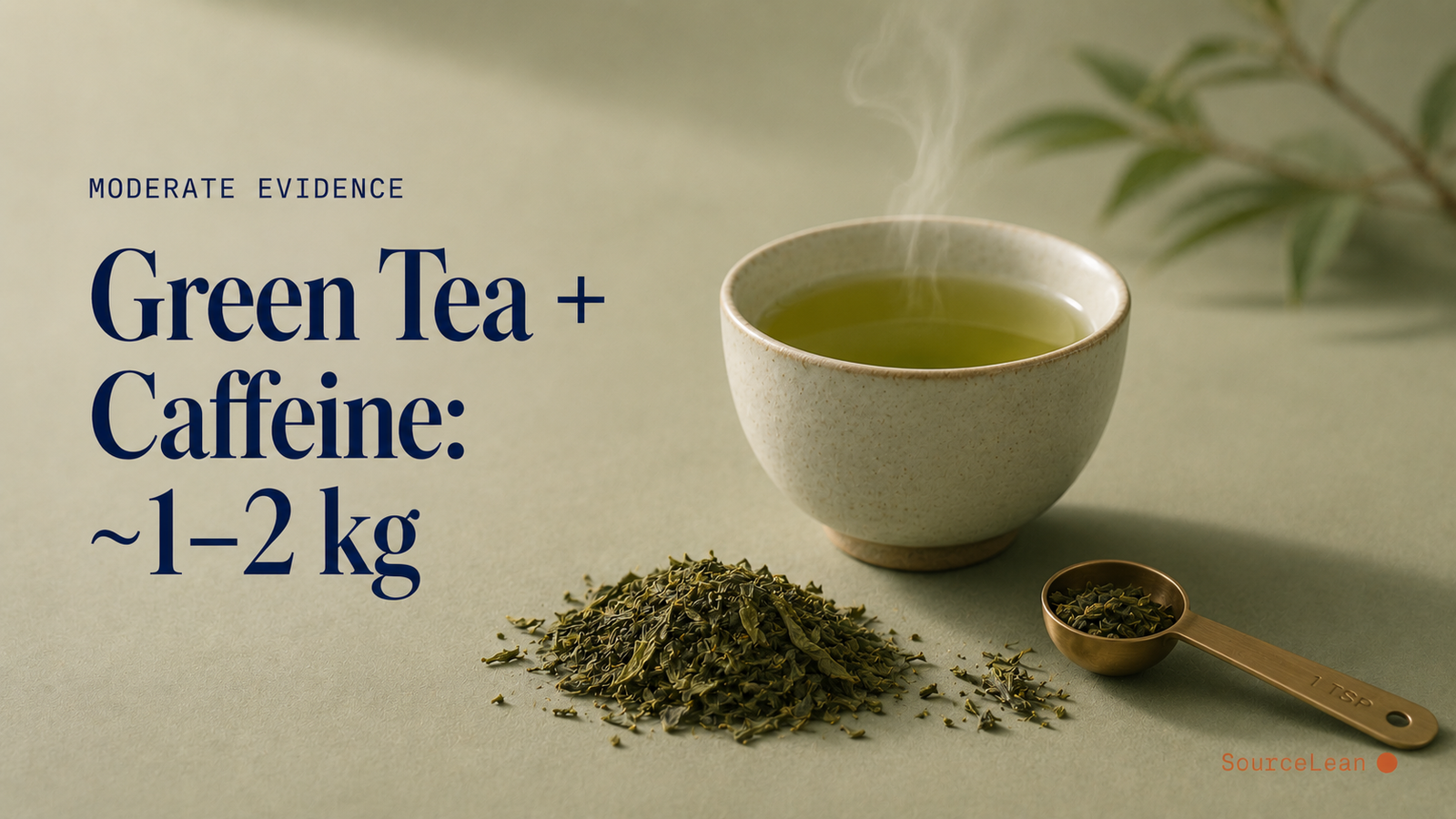
Green tea catechins — mainly EGCG (epigallocatechin gallate), an antioxidant compound from tea leaves — combined with caffeine produce a small increase in fat oxidation and an average weight loss of roughly 1–2 kg in meta-analyses, typically at 270–1,200 mg of catechins daily. The effect is modest and may be smaller in habitual caffeine users[5].
Green tea extract is one of the most common ingredients in fat-burner blends, and it has more evidence than most — though still modest. The proposed mechanism is a synergy between its catechins (especially EGCG) and the caffeine naturally present in tea: together they appear to prolong the action of adrenaline and slightly increase 24-hour energy expenditure and fat oxidation. A meta-analysis of catechin-plus-caffeine mixtures found a small but statistically significant reduction in body weight and a help with weight maintenance, on the order of about 1–2 kg[5].
The important nuances: the effect appears blunted in people who already consume a lot of caffeine, and the benefit is partly attributable to the caffeine itself rather than the catechins alone[5]. Studied doses span a wide range — roughly 270 mg up to about 1,200 mg of catechins per day — and many products under-dose relative to the higher, more effective end. There is also a safety footnote: high-dose green tea extract (not brewed tea) has been linked to rare cases of liver injury, which is why the European Food Safety Authority flagged doses at or above about 800 mg EGCG per day as a potential concern[5]. Brewed green tea remains a safe, pleasant way to get a smaller dose.
Is berberine a good weight-loss ingredient?
Berberine — a plant alkaloid (from barberry and goldenseal) that mildly activates the cellular energy sensor AMPK — has moderate evidence for metabolic support and a small weight effect. Systematic reviews show about 2 kg of average loss over roughly 12 weeks at studied doses of 900–1,500 mg per day, split with meals[6].
Berberine has become a popular “natural Ozempic” talking point, which overstates it — but it does have the best metabolic data of the botanical ingredients. It mildly activates AMPK, a cellular enzyme that acts like a fuel gauge, and in human trials it improves fasting blood sugar and some lipid markers in people with metabolic conditions[6]. For body weight specifically, a 2020 systematic review concluded berberine produces a small but statistically significant reduction — around 2 kg, with a modest drop in BMI[6].
Three caveats matter. The effect is modest and trial quality is mixed; the U.S. National Center for Complementary and Integrative Health notes the human evidence for berberine and weight is limited and not yet conclusive[10]. It is dose-dependent, needing roughly 900–1,500 mg per day split into two or three doses because it clears the body quickly[6]. And it is not a treatment for any disease — it commonly causes digestive upset and interacts with many medications, including diabetes and blood-pressure drugs and anything metabolized by the CYP3A4 liver enzyme[10]. We cover the full picture in our dedicated berberine guide.
Does capsaicin (chili extract) boost fat burning?
Capsaicin — the compound that makes chili peppers hot — has a small, real thermogenic and appetite-suppressing effect, but it is weak. Meta-analyses of capsaicin and its milder relatives, capsinoids, suggest a slight increase in energy expenditure and fat oxidation and a modest reduction in appetite, at roughly 2–6 mg of capsaicinoids per day[7].
Capsaicin and capsinoids work mainly by activating TRPV1 receptors, which produces a small rise in sympathetic-nervous-system activity and energy expenditure, plus a mild dampening of appetite. Pooled analyses indicate the effect is genuine but small — a slightly higher post-meal calorie burn and a modest reduction in subsequent intake, rather than meaningful standalone fat loss[7]. The studied doses are low, around 2–6 mg of capsaicinoids daily, and tolerance to the burning sensation builds over time[7].
The fair verdict is that capsaicin sits at the boundary between weak and moderate: it is one of the more plausible “thermogenic” ingredients, but the real-world contribution to the scale is tiny, and high doses simply cause gastrointestinal discomfort rather than more fat loss. As a spice in your cooking it’s a free, pleasant nudge; as a headline reason to buy a fat burner, it doesn’t carry the weight.
Which popular weight-loss ingredients have weak or no evidence?
Garcinia cambogia, raspberry ketones, chromium picolinate, conjugated linoleic acid (CLA), L-carnitine and green coffee bean extract all have weak, inconsistent or essentially no reliable human weight-loss evidence. Where effects appear, they are tiny and often come from low-quality or industry-funded trials. These are the ingredients to be most skeptical of on a label[1].
For balance, it’s as useful to know what doesn’t work as what does — and these ingredients dominate fat-burner labels precisely because they sound scientific. Here is the honest read on the most common offenders:
- Garcinia cambogia (hydroxycitric acid / HCA) — marketed to “block fat” by inhibiting an enzyme in fat synthesis. A systematic review of randomized trials found the effect on weight is small at best and probably not clinically meaningful, with better-quality trials showing little to no benefit[9]. There have also been rare reports of liver toxicity.
- Chromium picolinate — claimed to curb cravings via insulin. A meta-analysis found an average reduction of only about half a kilogram versus placebo — a difference too small to matter and of questionable reliability[8].
- Conjugated linoleic acid (CLA) — a fatty acid that produced fat-loss effects in animals that largely failed to translate to humans; pooled human data show, at most, a tiny effect with frequent gastrointestinal side effects[1].
- Green coffee bean extract (chlorogenic acid) — its evidence rests heavily on small, poor-quality trials, including one widely-publicized study that was later retracted, leaving the case essentially unproven[1].
- Raspberry ketones — popular after TV promotion, but there are essentially no human weight-loss trials; the evidence is limited to cell and animal studies at doses far beyond what humans could take[1].
- L-carnitine — involved in transporting fatty acids into mitochondria, which sounds like fat burning, but supplementing it produces only a very small average effect in some analyses and no meaningful real-world fat loss for most people[1].
The NIH Office of Dietary Supplements reviews this whole category and reaches the same blunt conclusion: for most weight-loss ingredients the evidence is limited, inconsistent or absent, and even the better ones offer only modest effects[1]. When one of these is the star of a sales page, treat the page accordingly.
How do these ingredients actually work?
Evidence-backed weight-loss ingredients work through three modest mechanisms: reducing appetite (fiber, protein, capsaicin), preserving muscle and raising the thermic effect of food (protein), and slightly increasing energy expenditure and fat oxidation (caffeine, green tea catechins, berberine via AMPK). None overrides the fundamental rule of energy balance[1].
Understanding the mechanism explains why even the best ingredients are modest. Weight change is governed by energy balance — calories in versus calories out — and no legal supplement ingredient changes that equation dramatically. What the evidence-backed ingredients do is tilt one side of it slightly:
- Appetite and intake (the biggest lever). Soluble fiber forms a gel that slows stomach emptying and prolongs fullness; protein triggers satiety hormones and is the most filling macronutrient; capsaicin mildly dampens appetite. Eating a little less, consistently, is how these actually reduce weight.
- Muscle preservation and the thermic effect. Adequate protein during a calorie deficit keeps more lean mass, which keeps resting metabolism higher, and protein itself costs more energy to process than carbs or fat[2].
- Energy expenditure and fat oxidation. Caffeine and catechins raise adrenaline activity to nudge calorie burn up briefly; berberine activates AMPK, the cellular fuel sensor, improving how cells handle glucose and fat[4][6]. These effects are small and prone to tolerance.
Notice what’s missing: there is no credible ingredient that “flips a metabolic switch,” “detoxes” fat away, or “blocks” calories in any meaningful amount. Those phrases are marketing, and the U.S. Federal Trade Commission specifically flags effortless, dramatic weight-loss claims as hallmarks of deceptive products[11]. The real mechanisms are unglamorous and additive — which is exactly why they only ever supplement the fundamentals.
Studied dose vs. label dose: are you getting enough?
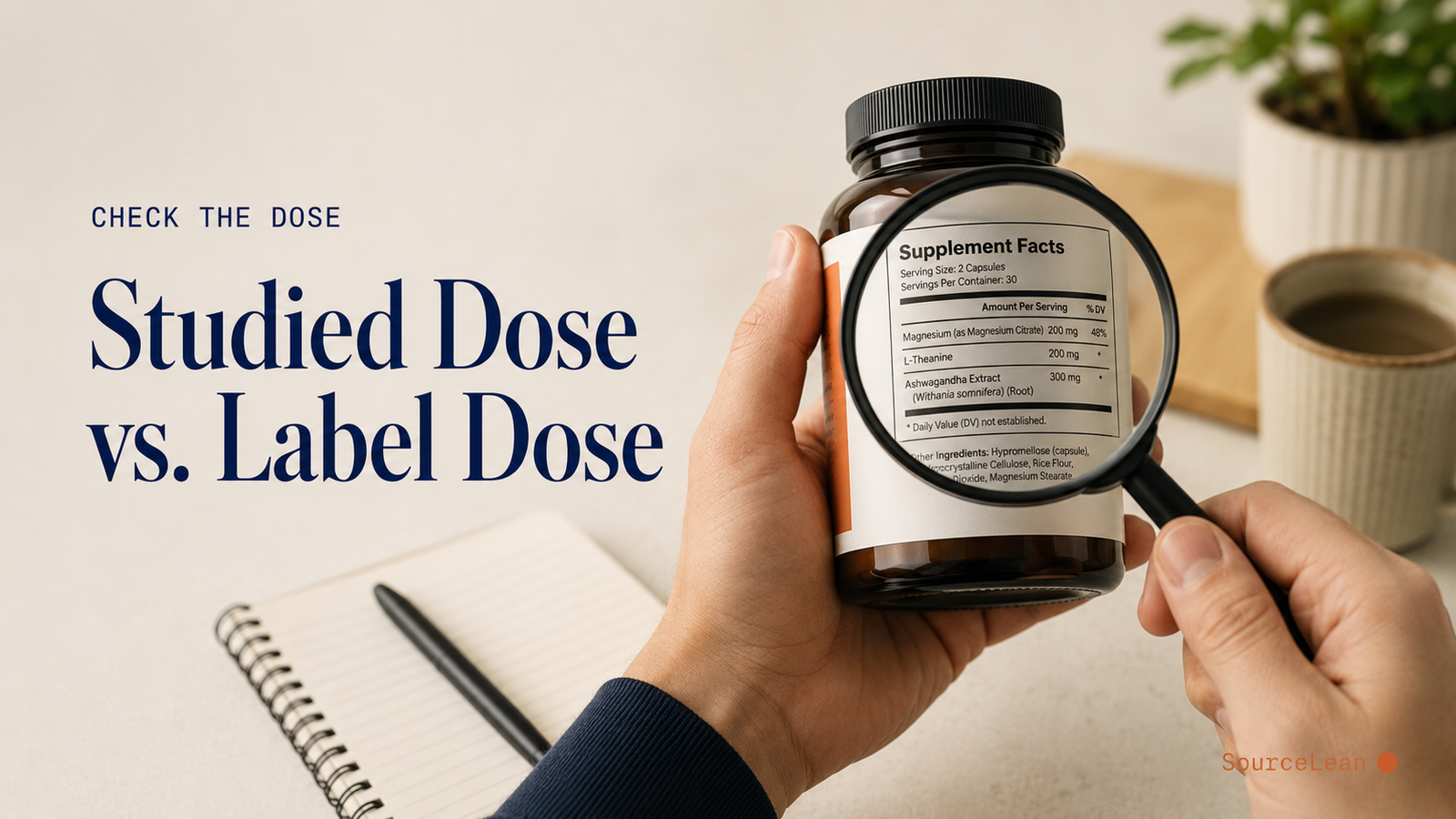
An ingredient only works at the dose used in research, and many products list a research-backed ingredient at a fraction of that amount — a practice called “fairy dusting.” Proprietary blends make this worse by hiding individual doses. If a label can’t show an active reaches its studied dose, you can’t assume the trial results apply[12].
This is the single most useful skill in this entire guide, because it turns a list of “good” ingredients into a real buying decision. Every effect size quoted above came from a specific dose. Glucomannan needs around 3 grams; berberine 900–1,500 mg; green tea catechins often several hundred milligrams. A product can legally print the ingredient name on the label while including a tiny, sub-clinical amount — “fairy dusting” — so the marketing benefits from the research without paying for an effective dose.
Under U.S. labeling rules (21 CFR 101.36), a “proprietary blend” must list its ingredients in descending order by weight and show the blend’s total weight — but it does not have to disclose the milligrams of each ingredient[12]. So a “500 mg metabolism blend” could be mostly filler with a trace of berberine, and the label would be entirely legal. With berberine alone needing up to 1,500 mg, a 500 mg blend cannot deliver a studied dose, no matter how it’s arranged.
Two practical rules follow. First, favor products with a fully disclosed Supplement Facts panel that lists each active’s milligrams, so you can check them against the studied doses in the table above. Second, do the arithmetic: if the total blend weight is smaller than the studied dose of its hero ingredient, the product physically cannot work as advertised. We walk through this step by step in our guide to reading a supplement label — it’s the fastest way to separate an honest formula from a decorated one.
Who should avoid these ingredients?
“Natural” is not the same as “risk-free.” Caffeine and stimulant blends are risky for people with heart conditions, anxiety or insomnia; high-dose green tea extract has been linked to rare liver injury; berberine interacts with many medications. Anyone pregnant or breastfeeding, or on prescription drugs, should check with a doctor first[10].
Be cautious or avoid if you…
- Are pregnant or breastfeeding — avoid berberine, high-dose stimulants and most botanical fat-burners
- Have heart disease, high blood pressure, an arrhythmia or anxiety — caffeine and stimulant blends can worsen these
- Take diabetes or blood-pressure medication — berberine can push blood sugar or pressure too low[10]
- Take drugs metabolized by CYP3A4 (some statins, immunosuppressants) — berberine can raise their levels[10]
Extra-specific cautions
- Green tea extract: high-dose EGCG (≈800 mg+/day) has been linked to rare liver injury — take with food, avoid mega-doses[5]
- Glucomannan: always take with a full glass of water; tablets can swell and cause choking or blockage[3]
- Caffeine: watch total daily intake from all sources; disrupted sleep undermines fat loss
- Garcinia & green coffee: rare liver-toxicity reports — little upside to justify the risk[9]
The practical rule is simple: if you take any prescription medication, have a chronic condition, or are pregnant or nursing, treat even “natural” weight-loss ingredients like the active compounds they are and clear them with your doctor or pharmacist first. The strongest interactions in this whole list belong to berberine — which is also one of the more effective ingredients — so it’s precisely the one to discuss before starting.
What are the honest limitations of the evidence?
The honest limitations are large: effect sizes are small (1–3 kg), many trials are short, small or industry-funded, group averages hide big individual variation, and almost every positive result depends on diet and activity continuing alongside. No ingredient here is proven to produce meaningful weight loss on its own[1].
It would be dishonest to present even the “strong evidence” tier without its caveats. Several limitations apply across the board:
- Small effect sizes. The best ingredients add a kilogram or two on average — useful at the margins, but nowhere near the “30 pounds” sales pages imply. For many people the effect is within the noise of normal weight fluctuation.
- Averages hide individuals. A “2 kg average” means some people lost more, many lost nothing, and the result you personally get is unpredictable. Genetics, baseline diet, caffeine habits and metabolic status all shift the response.
- Short and variable trials. Many studies run 8–12 weeks, so long-term durability is largely unknown, and trial quality ranges from rigorous to weak. Industry funding and publication bias tend to make ingredients look slightly better than they are.
- Context dependence. Nearly every positive trial also held diet and activity steady or improved them. The supplement was the small add-on — not the cause of the loss.
- Tolerance. Stimulant-based effects (caffeine, catechin-caffeine mixes) fade as the body adapts, so early results overstate long-term benefit.
None of this means the evidence-backed ingredients are worthless — it means they should be judged as minor, optional aids, not solutions. The NIH summarizes the field plainly: weight-loss supplements offer modest effects at best and are no substitute for diet and physical activity[1]. That is the frame to keep when any product promises more.
How should you choose a weight-loss supplement?
Choose on evidence and transparency, not marketing. Favor products built on the ingredients with real data — fiber, protein, caffeine, green tea catechins or berberine — that fully disclose each dose so you can match it to the studied amount. Skip proprietary blends, hero ingredients with no human evidence, and any “effortless” claim[11].
Once the fundamentals are in place — a calorie-aware diet, adequate protein, sleep and movement — a supplement is at most a small optional add-on. If you choose to use one, a short checklist filters the field fast:
- Evidence-backed actives. Does the product center on ingredients from the Strong/Moderate tiers above, or on garcinia, raspberry ketones and friends? The former is a better bet.
- Disclosed doses. Can you see the milligrams of each active, and do they reach the studied dose? If it’s a proprietary blend, you can’t verify this — a reason to be cautious.
- Honest claims. A product promising dramatic, effortless or fast results is signaling the opposite of credibility; the FTC treats those exact claims as red flags[11].
- Sensible safety fit. Does it match your medications, caffeine tolerance and health conditions? (See the avoid list above.)
- A real guarantee, bought from the official source. A money-back window transfers some risk back to the seller, and buying direct avoids counterfeits.
If you want to see how a real product holds up against this checklist, our individual reviews apply exactly these tests — including our honest, fully-sourced look at the popular coffee-based metabolism formula in Does Java Burn Actually Work?, which leans on caffeine and green tea, two of the better-evidenced ingredients here.
The verdict: a short, honest shortlist
The verdict is that only a handful of weight-loss ingredients have credible evidence — protein and soluble fiber (appetite and muscle), caffeine and green tea catechins (a small expenditure boost), and berberine (metabolic support) — and even these add just 1–3 kg on top of diet and activity. The rest are weak, unproven or marketing.
If you take one thing from this guide, make it this: the strongest weight-loss ingredients work by gently helping you eat a little less and hold onto muscle, not by burning fat on their own. That makes them legitimate, modest add-ons once your diet, protein, sleep and movement are in order — and it makes them useless as substitutes for those fundamentals. The ingredients with the loudest “fat-melting” marketing are, almost without exception, the ones with the weakest evidence.
Spend your effort (and money) in order of evidence: fundamentals first, then protein and fiber, then — optionally — a transparently dosed caffeine, green tea or berberine product if it suits you and your doctor agrees. Ignore proprietary blends and any ingredient with no human data. A few pounds of help is the realistic ceiling; treat anything promising more as a warning sign, not a breakthrough.
If you want to see how these ingredients play out in a real product, here’s where to go next on SourceLean. We apply the exact evidence-and-dose tests from this guide — and tell you plainly where a formula falls short.
Does Java Burn Actually Work?
Java Burn leans on caffeine and green tea extract — two of the better-evidenced ingredients here. Our honest, fully-sourced review checks whether the doses and claims hold up.
Berberine, explained
Berberine has the best metabolic data of the botanical ingredients. See the full dose-by-dose breakdown, the realistic effect size and the drug interactions to watch.
These are the formulas people search for most, each built around ingredients covered above. Links go to the official product site, where checkout is handled. Treat any of them as a small, optional add-on to diet and activity — never a substitute — and check the disclosed doses against the studied amounts in this guide before buying.
Java Burn
A coffee-mixed powder built on caffeine and green tea catechins — two of the better-evidenced ingredients here.
Ikaria Lean Belly Juice
A fibre-and-botanical tonic aimed at fullness and appetite — judged here on whether its doses are disclosed.
Liv Pure
Built around liver and metabolic support — the same AMPK-and-metabolism theme as berberine above.
Mitolyn
Focused on cellular energy and metabolism — we check whether amounts are disclosed rather than hidden in a blend.
Nagano Tonic
A powdered metabolism-support tonic — assessed on transparency and whether its actives reach studied doses.
Side-by-side comparisons
Not sure which fits? Compare these formulas on transparency, dose and ingredients before choosing.
Frequently asked questions
What is the most effective weight-loss ingredient?
No single ingredient is strongly effective. The ingredients with the best human evidence are soluble fiber and protein for appetite control, caffeine and green tea catechins for a small rise in energy expenditure, and berberine for metabolic support.
Each produces only a few pounds of average benefit over weeks to months, and only alongside diet and activity. The “most effective” choice is really the fundamentals — a calorie-aware diet and adequate protein — with these as minor add-ons.
How much weight can a supplement ingredient realistically help you lose?
In controlled trials, the better-evidenced ingredients produce average extra losses of roughly 1 to 3 kg over 8 to 12 weeks, on top of diet. Caffeine plus green tea catechins average around 1 to 2 kg, berberine about 2 kg, and glucomannan fiber a similar amount.
These are group averages; many individuals see little or nothing, and the effects depend on diet and activity continuing alongside.
Does caffeine actually help with fat loss?
Yes, modestly. Caffeine raises energy expenditure and fat oxidation in the short term and is one of the most consistently studied fat-loss ingredients, with effective doses around 3 to 6 mg per kg of body weight.
The effect is small, tolerance builds within days to weeks, and it works best as a training and appetite aid, not a standalone fat burner.
Do green tea extract and EGCG burn fat?
Green tea catechins, mainly EGCG, combined with caffeine, produce a small increase in fat oxidation and an average weight loss of roughly 1 to 2 kg in meta-analyses, typically at 270 to 1,200 mg of catechins daily.
The effect is modest and may be smaller in habitual caffeine users. High-dose green tea extract has also been linked to rare liver injury, so avoid mega-doses.
Is berberine a good weight-loss ingredient?
Berberine has moderate evidence for metabolic support and a small weight effect, with systematic reviews showing about 2 kg of average loss over roughly 12 weeks at studied doses of 900 to 1,500 mg per day.
It can cause digestive upset and interacts with many medications, including diabetes and blood-pressure drugs, so it needs a doctor’s sign-off if you take prescriptions.
Which weight-loss ingredients have weak or no evidence?
Garcinia cambogia (HCA), raspberry ketones, chromium picolinate, conjugated linoleic acid (CLA), L-carnitine and green coffee bean extract all have weak, inconsistent or essentially no reliable human weight-loss evidence.
Where effects appear, they are tiny and often come from low-quality or industry-funded trials. These are the ingredients to be most skeptical of on a label.
Does fiber help you lose weight?
Soluble, viscous fiber is one of the better-evidenced tools, working through appetite rather than fat burning. It slows stomach emptying and increases fullness, and trials of glucomannan and psyllium show small average weight reductions.
Effective doses are gram-level, typically 3 grams or more of glucomannan daily taken with water before meals — far above what most blends contain.
Is protein a weight-loss ingredient?
Protein is the most reliable diet lever for fat loss, though it is a macronutrient rather than a pill. Higher protein intake increases fullness, preserves muscle during a calorie deficit, and has a higher thermic effect than carbs or fat.
Research supports roughly 1.2 to 1.6 grams per kg of body weight daily, which a whey or food-based approach delivers better than a capsule.
Why is the studied dose so important when reading a supplement label?
Because an ingredient only works at the dose tested in trials, and many products list a research-backed ingredient at a fraction of that amount — a practice called fairy dusting. Proprietary blends make this worse by hiding individual doses.
If a label cannot show that an active reaches its studied dose, you cannot assume the trial results apply to that product.
Are natural weight-loss ingredients safe?
Natural does not mean risk-free. Caffeine can cause jitters, insomnia and raised heart rate; high-dose green tea extract has been linked to rare liver injury; berberine interacts with many medications.
People who are pregnant or breastfeeding, have heart conditions, or take prescription drugs should check with a doctor before using stimulant or botanical weight-loss ingredients.
Should I take a weight-loss supplement at all?
Only with realistic expectations. The NIH concludes that weight-loss supplements offer modest effects at best and are no substitute for diet and physical activity.
A transparently dosed product built on evidence-based ingredients can be a small, optional add-on once the fundamentals — calorie-aware eating, protein, sleep and movement — are in place, not a replacement for them.
Does Java Burn actually work?
Berberine: what the research really says
Green tea extract, explained
How to read a supplement label
Side-by-side comparisons
All health articles
We research weight-loss supplements and the ingredients inside them, scoring products on label transparency rather than hype. No star spam, no fabricated reviews — just the evidence, stated plainly. Our editorial standards →
- NIH Office of Dietary Supplements — Dietary Supplements for Weight Loss (Health Professional Fact Sheet; ingredient-by-ingredient evidence). ods.od.nih.gov
- Leidy HJ, et al. The role of protein in weight loss and maintenance. American Journal of Clinical Nutrition, 2015. pubmed.ncbi.nlm.nih.gov
- Onakpoya I, et al. The efficacy of glucomannan supplementation in overweight and obesity: a systematic review and meta-analysis of randomized clinical trials. Journal of the American College of Nutrition, 2014. pubmed.ncbi.nlm.nih.gov
- Tabrizi R, et al. The effects of caffeine intake on weight loss: a systematic review and dose-response meta-analysis of randomized controlled trials. Critical Reviews in Food Science and Nutrition, 2019. pubmed.ncbi.nlm.nih.gov
- Hursel R, et al. The effects of green tea on weight loss and weight maintenance: a meta-analysis. International Journal of Obesity, 2009. pubmed.ncbi.nlm.nih.gov
- Ilyas Z, et al. The effect of Berberine on weight loss in order to prevent obesity: A systematic review. Biomedicine & Pharmacotherapy, 2020. pubmed.ncbi.nlm.nih.gov
- Whiting S, et al. Capsaicinoids and capsinoids — a potential role for weight management? A systematic review of the evidence. Appetite, 2012. pubmed.ncbi.nlm.nih.gov
- Onakpoya I, et al. Chromium supplementation in overweight and obesity: a systematic review and meta-analysis of randomized controlled trials. Obesity Reviews, 2013. pubmed.ncbi.nlm.nih.gov
- Onakpoya I, et al. The use of Garcinia extract (hydroxycitric acid) as a weight loss supplement: a systematic review and meta-analysis of randomised clinical trials. Journal of Obesity, 2011. pubmed.ncbi.nlm.nih.gov
- NIH National Center for Complementary and Integrative Health — Berberine and Weight Loss (evidence status and safety). nccih.nih.gov
- U.S. FTC — “Gut Check”: red-flag weight-loss claims; Health Products Compliance Guidance. ftc.gov
- U.S. FDA — Supplement Facts panel and proprietary blend rules, 21 CFR 101.36 (eCFR). ecfr.gov
- Jun 12, 2026 — Guide published; ingredient evidence ratings and studied doses checked against current NIH, FDA, FTC and peer-reviewed meta-analyses.
Affiliate disclosure: SourceLean is reader-supported. When you buy through links on this site, we may earn a commission at no extra cost to you. Checkout is always handled on the official product website.
Pingback: Does Ikaria Lean Belly Juice Work? Honest 2026 Review
Pingback: Does Mitolyn Work? Honest 2026 Review
Pingback: Java Burn vs Nagano Tonic: Which Works? (2026)