Two of the most-searched powdered metabolism formulas, side by side — one stirred into coffee, one mixed into water. Here’s the honest, fully-sourced read on which (if either) earns your money.
Java Burn and Nagano Tonic are both modest, not magic. Nagano Tonic has the more interesting formula on paper because it includes berberine, the one ingredient here with real metabolic data — roughly 2 kg of average weight loss over about 12 weeks when properly dosed[6]. Java Burn is the simpler, coffee-based option leaning on green tea catechins[1]. Both hide doses in proprietary blends, so neither can be verified. Winner: Nagano Tonic on ingredients, Java Burn on simplicity — neither replaces diet and activity.
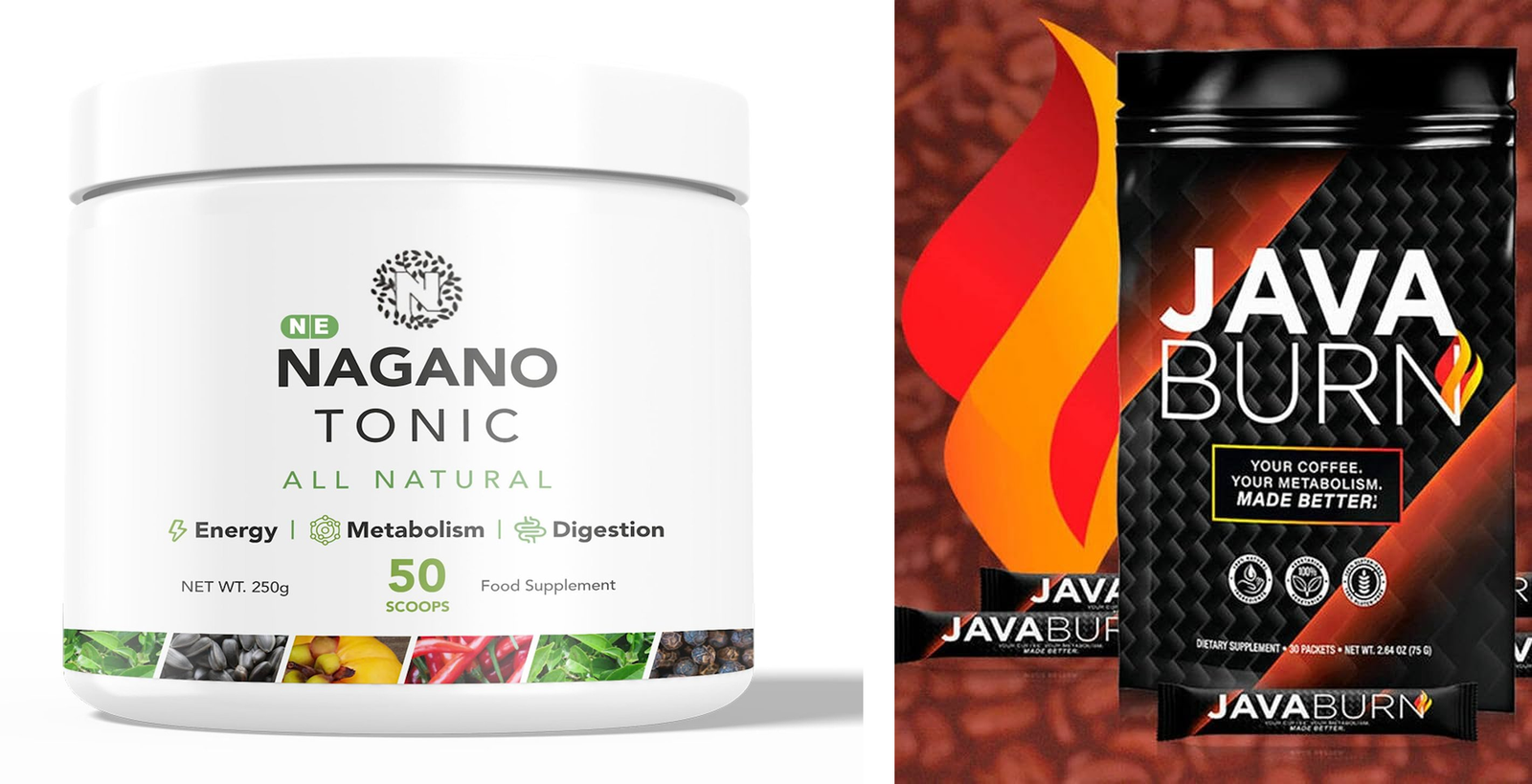
Java Burn and Nagano Tonic are two of the most heavily marketed powdered “metabolism” products on the internet, and they get compared constantly — partly because they target the same buyer and partly because their sales pages make strikingly similar promises. This comparison is the honest version. Java Burn is a flavorless powder you tip into your morning coffee; Nagano Tonic is a flavored powder you blend into water or a smoothie. Both claim to switch your metabolism into a higher gear. Below, we put their ingredients, doses, evidence, safety and pricing side by side, with every effectiveness claim tied to a numbered source — so you can decide which, if either, deserves a place in your routine.
Every effectiveness claim below is checked against primary sources — peer-reviewed research on the individual ingredients, the NIH Office of Dietary Supplements, the NIH National Center for Complementary and Integrative Health, and FDA and FTC guidance — not either brand’s marketing. SourceLean makes money only through transparent affiliate links, disclosed above; we run no star ratings, sponsored placements or fabricated reviews, and our verdict scale (real / modest / weak / hype) is applied the same way to both products. This is educational information, not medical advice.
- Java Burn vs Nagano Tonic: the quick verdict
- What is Java Burn?
- What is Nagano Tonic?
- How do the ingredients compare?
- Does Java Burn actually work?
- Does Nagano Tonic actually work?
- Which has the stronger formula on paper?
- Are the doses disclosed?
- Which has more caffeine?
- Side effects and who should avoid them
- Do they interact with medications?
- How much do they cost?
- Which should you choose?
- The verdict
- FAQ
Java Burn vs Nagano Tonic: what’s the quick verdict?
Java Burn is a flavorless coffee additive built on green tea and a few metabolism nutrients; Nagano Tonic is a broader botanical drink mix that adds berberine, bitter melon, cinnamon and prebiotic fiber. Nagano Tonic wins on ingredient interest, Java Burn on simplicity and stimulant control — but both are modest, dose-hidden add-ons, not fat-loss engines.
Before the detail, here is the head-to-head at a glance. The most important columns are not the marketing claims but the doses disclosed and weight evidence rows, because those decide whether either product can plausibly do what it says.
| Feature | Java Burn | Nagano Tonic |
|---|---|---|
| Format | Flavorless powder for coffee | Flavored powder for water/smoothie |
| Key actives | Green tea (EGCG), L-theanine, L-carnitine, chlorogenic acid, chromium, B-vitamins | Green tea (EGCG), berberine, bitter melon, cinnamon, ginger, ginseng, ashwagandha, inulin |
| Standout ingredient | Green tea + caffeine synergy[2] | Berberine[6] |
| Doses disclosed? | No — proprietary blend | No — proprietary blend |
| Weight evidence | Weak / unverifiable | Modest (berberine) / unverifiable |
| Stimulant load | From the coffee it rides in | Low; positioned as gentle tonic |
| Guarantee | ~60 days (confirm on site) | Longer window (confirm on site) |
| Best for | Daily coffee drinkers wanting a simple add-on | Those wanting a broader blood-sugar-leaning blend |
The table tells most of the story: these are two versions of the same idea — a powdered blend of mostly modest ingredients, anchored by one or two with real evidence, sold with claims that run well ahead of that evidence. The differences are real but narrow, and we work through each below. If you want the deep dives, we also review each product on its own in Does Java Burn actually work? and Does Nagano Tonic work?
What is Java Burn?
Java Burn is a flavorless, dissolvable powder sold in single-serve sachets and designed to be stirred into coffee once a day. It is marketed on the premise that its nutrient blend works synergistically with coffee to boost metabolism, and it bundles green tea extract, L-theanine, L-carnitine, chlorogenic acid, chromium and several B-vitamins.
Java Burn’s pitch is built around a specific hook: that its ingredients become more effective when combined with the caffeine in your morning coffee. There is a genuine kernel here — caffeine and the catechins in green tea have each been studied for small effects on energy expenditure and fat oxidation, and the caffeine–L-theanine pairing is a well-known nootropic combination[2][3]. But the leap from “these ingredients have small individual effects” to “Java Burn ignites your metabolism” is exactly the kind of overstatement that defines this category.
A few honest framing points. Java Burn is a dietary supplement — a product taken by mouth containing dietary ingredients intended to supplement the diet, not to treat disease — and like all supplements it is not approved by the U.S. Food and Drug Administration before sale[9]. Its ingredient amounts are also bundled into a proprietary blend, so the label shows the blend’s total weight but not how much green tea, L-carnitine or chromium each serving actually delivers. As with any formula, dose is what separates a clinically meaningful ingredient from a sprinkle on the label. Java Burn is also a digital-first product, sold primarily through its own pages rather than retail shelves, which means the official site is the only reliable place to confirm its current formula, price and guarantee.
What is Nagano Tonic?
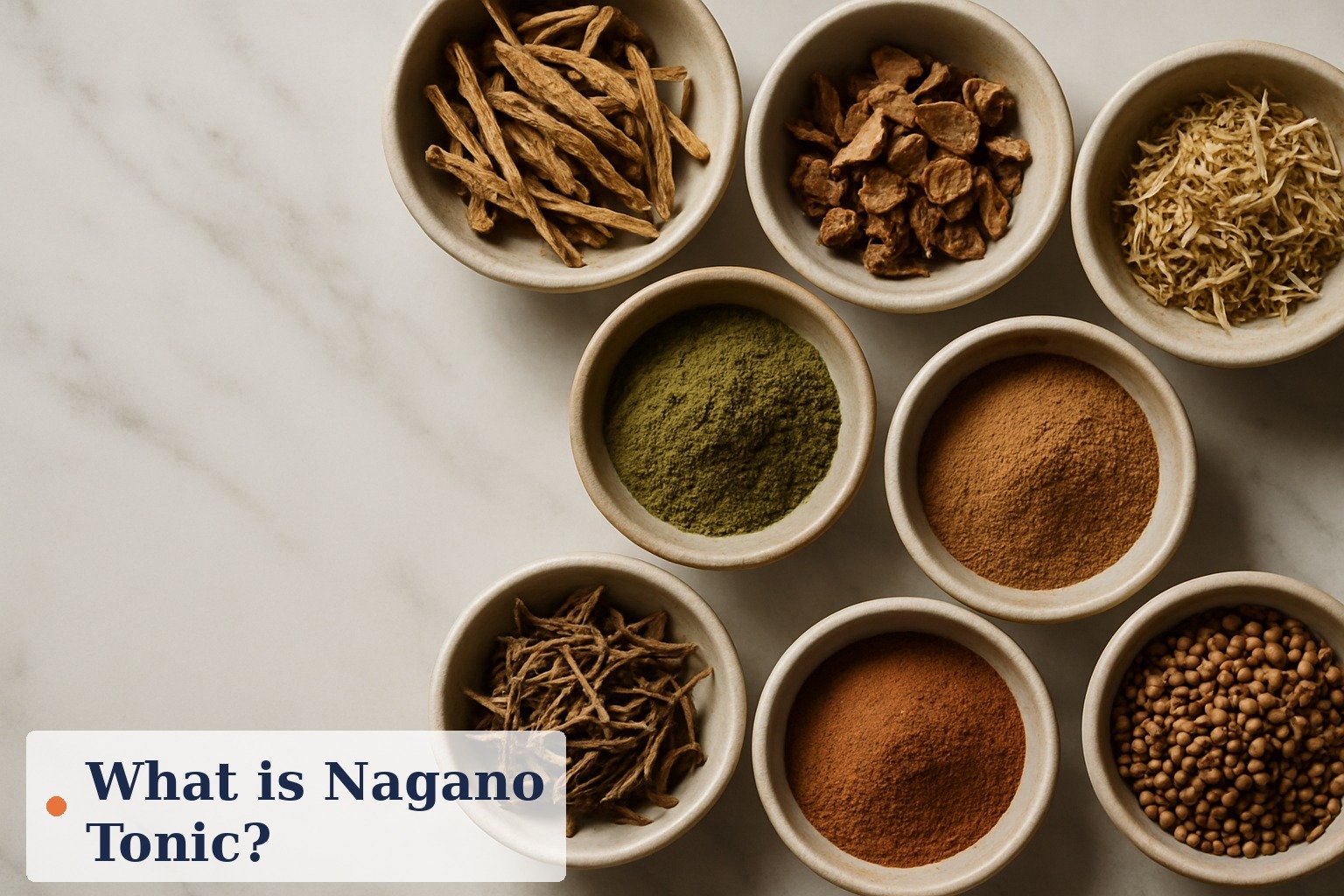
Nagano Tonic is a flavored powder you mix into water, juice or a smoothie once a day, marketed as a “Japanese-inspired” superfood tonic for metabolism and energy. It packs a much larger blend than Java Burn — green tea, berberine, bitter melon, cinnamon, ginger, panax ginseng, ashwagandha, prebiotic fiber and antioxidant fruits like camu camu and acerola.
Where Java Burn is minimalist, Nagano Tonic is a kitchen-sink formula. Its marketing leans on a “blue zone / Japanese mountain” longevity narrative and a long ingredient list that signals comprehensiveness. The breadth is a double-edged sword: it means Nagano Tonic includes berberine — the single most evidence-backed metabolic ingredient across both products[6] — but it also means a lot of those ingredients are antioxidants and adaptogens with little direct weight-loss data, all competing for room inside one proprietary blend.
The same framing rules apply. Nagano Tonic is a dietary supplement, not FDA-approved, and not a treatment for any disease[9]. Its label uses a proprietary blend, so the individual doses of berberine, bitter melon, cinnamon and the rest are hidden behind a single total weight. And like Java Burn, it is sold digital-first, so the official order page is the only dependable source for its current ingredient panel, price and money-back terms. The breadth of the formula makes the hidden-dose problem worse, not better — the more ingredients share a fixed blend weight, the smaller each one’s likely share.
How do the ingredients compare?
Java Burn and Nagano Tonic share green tea catechins but diverge after that: Java Burn adds L-theanine, L-carnitine, chlorogenic acid and chromium, while Nagano Tonic adds berberine, bitter melon, cinnamon, ginger, ginseng and prebiotic fiber. Most ingredients in both formulas have weak direct weight-loss evidence; berberine is the strongest, and it sits only in Nagano Tonic.
Below is the honest read on the headline ingredients in each formula, with the strength of evidence for weight graded plainly. “Evidence for weight” means human research showing the ingredient affects body weight or fat — not whether it is a fine antioxidant or supports blood sugar, which are separate questions. Throughout, remember that the studied dose is what the research used; the label dose is hidden inside each product’s proprietary blend.
| Ingredient | In which product | Studied dose | Evidence for weight |
|---|---|---|---|
| Green tea extract (EGCG) | Both | ~300–500 mg catechins/day[1] | Modest |
| Caffeine (via coffee) | Java Burn (from the coffee) | ~100–300 mg/day[2] | Modest |
| L-theanine | Java Burn | ~100–200 mg/day[3] | None (focus, not fat) |
| L-carnitine | Java Burn | ~2,000 mg/day[4] | Weak |
| Chlorogenic acid (green coffee) | Java Burn | ~200–400 mg/day[5] | Weak |
| Chromium | Java Burn | ~200–1,000 mcg/day[8] | Weak |
| Berberine | Nagano Tonic | ~900–1,500 mg/day split[6] | Moderate |
| Cinnamon bark | Nagano Tonic | ~1–6 g/day[7] | Weak / mixed |
| Bitter melon, ginger, ginseng, ashwagandha | Nagano Tonic | Varies; thin human data | Thin |
| Inulin (prebiotic fiber) | Nagano Tonic | ~10–16 g/day[12] | Weak (satiety) |
The pattern mirrors the rest of the category: both products are built mostly from ingredients with weak direct weight-loss evidence, each anchored by something with a better story — green tea catechins (plus coffee caffeine) for Java Burn, berberine for Nagano Tonic. Of those anchors, berberine has the stronger human weight data, which is the single biggest formula difference between the two. For a broader view of which compounds actually earn their place, see our roundup of the weight-loss ingredients with the strongest evidence.
Does Java Burn actually work?
Java Burn works only modestly, and only as an add-on to diet and activity. Its best-supported mechanism is the small metabolic bump from green tea catechins combined with the caffeine in your coffee — meta-analyses link green tea catechin-plus-caffeine to a few pounds of difference over months[1]. That is the realistic ceiling, not a metabolic switch.
Here is the balanced picture for Java Burn. Green tea catechins, especially EGCG, modestly increase fat oxidation and energy expenditure, and the effect is reliably larger in the presence of caffeine — which is partly why Java Burn is designed for coffee[1][2]. The L-theanine in the blend can smooth out the jitter and focus profile of caffeine, a genuinely well-documented pairing, but it has no direct fat-loss effect[3]. L-carnitine, chlorogenic acid and chromium each have small or inconsistent weight data, and the realistic combined effect of the whole formula is a modest nudge at best[4][5][8].
The “turn your coffee into a fat-burning supercharger” narrative is exactly the kind of effortless-weight-loss promise the U.S. Federal Trade Commission flags as a red flag for deceptive marketing[11]. The NIH Office of Dietary Supplements reaches the same sober conclusion across the category: weight-loss supplements produce, at best, modest effects and are no substitute for diet and physical activity[10]. If Java Burn helps you at all, it will be at the margins — and much of the “morning energy” people feel is plausibly the coffee itself, not the powder stirred into it. Our full single-product analysis is in Does Java Burn actually work?
Does Nagano Tonic actually work?
Nagano Tonic also works only modestly, but its formula has a stronger theoretical case because it contains berberine, which meta-analyses link to about 2 kg of average weight loss over roughly 12 weeks when properly dosed[6]. The catch: its proprietary blend almost certainly cannot fit a full berberine dose alongside a dozen other ingredients.
Nagano Tonic’s most credible ingredient is berberine, a plant alkaloid that mildly activates the cellular energy sensor AMPK and, at roughly 900–1,500 mg per day, modestly improves fasting blood sugar and insulin sensitivity while producing small weight reductions[6]. Green tea catechins add a second modest mechanism, and cinnamon, bitter melon and ginger contribute blood-sugar-leaning rationale with thinner human evidence[1][7]. The prebiotic fiber (inulin) may support satiety in a small way[12]. On paper, that is a more interesting metabolic stack than Java Burn’s.
But the breadth is also the problem. Berberine’s benefit is strongly dose-dependent, and a meaningful daily dose is most of a teaspoon of powder on its own. Squeezing it into a single tonic scoop alongside green tea, cinnamon, ginger, ginseng, ashwagandha, fiber and several fruit antioxidants makes it highly unlikely that the berberine reaches the studied 900–1,500 mg range — and because the blend hides individual amounts, you cannot confirm it gets close. So Nagano Tonic’s better formula on paper may not translate into a better result in the cup. We unpack this in detail in Does Nagano Tonic work?
Which has the stronger formula on paper?
On paper, Nagano Tonic has the stronger formula because it includes berberine, the one ingredient across both products with solid human weight data. But Java Burn’s simpler blend is arguably more honest to its mechanism — green tea plus coffee caffeine — and easier to dose meaningfully, since fewer ingredients share the blend weight.
This is the heart of the comparison, so it is worth being precise. “Stronger on paper” is not the same as “works better in practice.” Nagano Tonic’s ingredient list contains a genuinely better metabolic compound (berberine) and more total mechanisms, which is why it edges the formula contest. Java Burn’s list is thinner, but it concentrates on a synergy — catechins plus caffeine — that has reasonably consistent, if modest, support, and with fewer ingredients fighting for room, the doses that matter have a better chance of landing in a useful range.
Put bluntly: Nagano Tonic has the better ingredients, Java Burn has the better focus. If you could see the actual milligrams, the winner would be obvious — but you can’t, because both use proprietary blends. That uncertainty is the great equalizer here, and it is why neither earns more than a “modest” verdict from us. The deciding factor for most readers will not be the formula at all, but format, stimulant tolerance and price, which we cover below.
Nagano Tonic has the more impressive ingredient list, but its breadth makes a full, effective berberine dose mathematically unlikely inside one scoop. Java Burn has the weaker list, but a more plausible chance of dosing its few actives meaningfully. Neither discloses enough to settle it — which is the real verdict.
Are the doses disclosed in either product?
No — neither Java Burn nor Nagano Tonic discloses its ingredient doses, because both use proprietary blends. A proprietary blend is a group of ingredients listed under one name, where the label legally must disclose only the blend’s total weight, not the amount of each ingredient inside[13]. That hides the exact numbers that decide whether either product works.
This is the single most important point in the whole comparison, and it applies equally to both. Under U.S. labeling rules (21 CFR 101.36), a proprietary blend must list its ingredients in descending order by weight and disclose the blend’s total weight, but it does not have to reveal the milligrams of each individual ingredient[13]. So a tonic listing “berberine” or a coffee additive listing “green tea extract” could contain a clinically useful dose — or a token trace — and the label would be entirely legal and look identical either way.
There is a name for the trick a blend enables: “fairy dusting” — adding a research-backed hero ingredient at a token amount, far below the studied dose, so it can appear on the label without the cost of an effective dose. Inside a proprietary blend, fairy dusting is invisible; on a fully disclosed label, it is obvious. The risk is arguably higher for Nagano Tonic precisely because its longer ingredient list leaves less room for any single active. For Java Burn, the same logic caps how much green tea catechin or L-carnitine can realistically be present. The takeaway is identical for both: a fully disclosed label would let you verify the doses, and the proprietary blend takes that ability away. Learn to spot this in our guide to how to read a supplement label.
Which has more caffeine, Java Burn or Nagano Tonic?
Java Burn itself is marketed as caffeine-free, but it is made to be mixed into coffee, so your real caffeine intake comes from the cup. Nagano Tonic contains green tea and botanicals that can carry small amounts of caffeine but is positioned as a low-stimulant tonic. In practice, a Java Burn coffee usually delivers far more caffeine than a glass of Nagano Tonic.
This distinction matters more than it first appears, because much of the immediate “it’s working” feeling from any metabolism product is simply caffeine — increased alertness, slight appetite suppression, a small thermogenic bump[2]. With Java Burn, that effect is real but it comes from the coffee you were already drinking, not the powder. The powder’s green tea may add a little, but the bulk of the stimulant is the brew.
Nagano Tonic, taken in water, gives you a gentler stimulant profile, which is genuinely useful if you are caffeine-sensitive, take it later in the day, or already drink plenty of coffee. So the caffeine question is really a fit question: if you want the alertness and don’t mind it riding in your coffee, Java Burn suits you; if you want a low-stimulant option you can take any time, Nagano Tonic does. Neither caffeine route changes the modest underlying weight-loss ceiling.
What are the side effects, and who should avoid each?
Both are usually well tolerated, but each carries real cautions. Java Burn’s effects come mainly from green tea extract (which in high amounts has been linked to liver issues) and added caffeine from coffee, which can cause jitteriness and poor sleep. Nagano Tonic’s berberine, bitter melon and cinnamon can cause digestive upset and can lower blood sugar.
For most healthy adults, the individual ingredients in both products are generally well tolerated, but “natural” does not mean “no effects.” For Java Burn, concentrated green tea extract has, in rare cases and usually at high doses, been associated with liver injury, and the caffeine you add via coffee can drive insomnia, anxiety, a faster heartbeat and digestive upset, especially if you are sensitive or combine it with other caffeinated drinks[1][2]. For Nagano Tonic, berberine’s most common side effects are gastrointestinal — cramping, diarrhea or constipation — and they tend to be dose-related, while bitter melon and cinnamon can add to blood-sugar lowering[14][7].
Be cautious with Java Burn if…
- You are sensitive to caffeine or drink a lot of coffee already
- You have anxiety, a heart-rhythm issue, or trouble sleeping
- You have liver concerns (high-dose green tea extract caution)
- You are pregnant or breastfeeding
Be cautious with Nagano Tonic if…
- You take blood-sugar-lowering medication (berberine, bitter melon, cinnamon)
- You are prone to digestive upset (berberine, fiber)
- You are pregnant or breastfeeding (avoid berberine)
- You take prescription drugs metabolized by the liver
Both products should be avoided in pregnancy and breastfeeding, and neither is appropriate as a substitute for medical treatment. The more important safety story for both is drug interactions, covered next.

Do Java Burn and Nagano Tonic interact with medications?
Yes — both can interact with medications. Java Burn’s green tea extract, chromium and added caffeine can affect blood sugar and a few drugs; Nagano Tonic’s berberine, bitter melon and cinnamon can lower blood sugar, and berberine can change how the body metabolizes many medications by affecting liver enzymes[14].
This is the part of the comparison to take most seriously. For Nagano Tonic, berberine is the key concern: it can add to the blood-sugar-lowering effect of diabetes drugs like metformin, raising the risk of hypoglycemia, and it inhibits cytochrome P450 enzymes (notably CYP3A4) that the body uses to break down many prescription drugs, which can raise their levels in the bloodstream — affecting some statins, immunosuppressants and others[14]. Bitter melon and cinnamon can compound the blood-sugar effect.
For Java Burn, the interactions are generally milder but not zero: high-dose green tea extract and chromium can influence blood sugar, and the added caffeine can interact with stimulant medications and certain antidepressants, and can amplify the effect of other caffeine sources[1][8]. The practical rule for both is identical: if you take any prescription medication, are pregnant or nursing, or have a liver or blood-sugar condition, talk to your doctor or pharmacist before starting either product. This is exactly the situation where the hidden blend dose makes self-managing an interaction harder.
How much do Java Burn and Nagano Tonic cost?
Both are sold online in tiered multi-bottle bundles, with the per-unit price dropping sharply on larger orders, and both carry a money-back guarantee — commonly around 60 days for Java Burn and a longer window for Nagano Tonic. Nagano Tonic tends to sit at the higher end per unit. Prices and terms change often, so confirm on each official page.
Both follow the standard digital-supplement pricing model: a higher per-unit price for a single purchase, falling for three- and six-unit bundles, often with free shipping on larger orders and occasional “bonus” digital guides. This structure is designed to push larger upfront commitments, so decide in advance how long you actually intend to trial a product before the bundle math tempts you into a six-month supply. Nagano Tonic’s broader formula and longevity positioning usually place it at a premium relative to Java Burn, though promotions blur the gap.
The money-back guarantees are genuinely useful, because they transfer some risk back to the seller — if a product does nothing for you, a refund window exists. Two practical notes apply to both: guarantees on digital-first products sometimes require returning containers or contacting support within a set window, and the terms can change. So read the current guarantee on each official page rather than trusting any figure in a review, including this one — which is why we have deliberately not printed specific dollar prices here. For most buyers, the smarter test is to start with the smallest quantity that the guarantee covers, not the biggest discount.
Which should you choose: Java Burn or Nagano Tonic?
Choose Java Burn if you are a daily coffee drinker who wants a simple, low-friction add-on and don’t want another drink to prepare. Choose Nagano Tonic if you want a broader, blood-sugar-leaning botanical blend with berberine and prefer a low-stimulant drink you can take any time. Choose neither if you expect real weight loss from a powder alone.
There is no single “best” here, so the honest answer is winner-by-use-case:
Pick A Java Burn
Best for committed coffee drinkers who want the catechin-plus-caffeine angle without changing their routine, and who like the idea of a stimulant ride-along they already take anyway.
Trade-off: thinner formula, no berberine, and much of the felt effect is the coffee itself.
Best for · simplicity & coffee habit
Pick B Nagano Tonic
Best for those who want a broader botanical and blood-sugar-leaning blend, prefer a low-stimulant drink they can take any time of day, and are specifically drawn to berberine.
Trade-off: a long ingredient list makes a full, effective berberine dose unlikely inside one scoop, and it usually costs more.
Best for · broad blend & low stimulant
And a third option worth stating plainly: if your genuine interest is berberine — the one ingredient with real metabolic data — a transparently dosed standalone berberine supplement is almost always the smarter buy than either blend, because you can confirm you are getting the studied amount and you are not paying for fairy-dusted extras. The same logic applies if green tea is your real interest. Either way, the foundation is the part neither product can replace: a calorie-aware diet, adequate protein, sleep and movement, as we lay out in how to lose belly fat: what actually works. You can also weigh other formulas side by side in our comparisons hub.
The verdict: modest either way
Both Java Burn and Nagano Tonic earn a verdict of MODEST. Nagano Tonic wins the formula-on-paper contest thanks to berberine; Java Burn wins on simplicity and stimulant control. But both hide their doses in proprietary blends, so neither can be verified to deliver studied amounts — and neither replaces diet and activity.
Strip away the “ignite your metabolism” story from each, and what is left are two defensible, unremarkable powders whose real-world impact — assuming clinical doses, which the proprietary blends make impossible to confirm — is a small metabolic nudge for some people, on top of the basics. That is not nothing, but it is a long way from either sales page. If you want the broader, berberine-containing blend and accept the dosing uncertainty, Nagano Tonic is the more interesting buy. If you want a frictionless coffee add-on and already rely on caffeine, Java Burn is the easier fit.
Nagano Tonic: better ingredients, dosing math works against it. Java Burn: thinner formula, more plausible focus. If berberine or green tea is what you’re truly after, a single, transparently dosed standalone is usually the smarter buy. Whichever you choose, set realistic expectations and buy only from the official site.
If you’ve read the trade-offs above and still want to try one, buy only from the official site — and treat it as an adjunct to diet and activity, not a substitute. Both links below carry our affiliate disclosure.
Java Burn
The flavorless coffee additive reviewed on this page. Check the current price, bundle tiers and the money-back guarantee on the official site.
Nagano Tonic
The wider berberine-containing drink mix reviewed on this page. Confirm the current price, bundles and guarantee window on the official site.
Frequently asked questions
Java Burn vs Nagano Tonic: which is better for weight loss?
Neither is a strong weight-loss tool; both are modest, diet-dependent add-ons. On paper Nagano Tonic has the more interesting ingredient list because it includes berberine, the one compound here with real metabolic data. Java Burn is simpler and leans on green tea plus the caffeine in your coffee.
Both hide their doses inside proprietary blends, so neither can be verified to deliver studied amounts, and the foundation is still diet and activity.
What is the difference between Java Burn and Nagano Tonic?
Java Burn is a flavorless powder you stir into your morning coffee, built mainly around green tea extract, L-theanine, L-carnitine, chlorogenic acid and chromium. Nagano Tonic is a flavored powder you mix into water or a smoothie, built around a much larger botanical blend including green tea, berberine, bitter melon, cinnamon, ginger, ginseng and prebiotic fiber.
Java Burn is the minimalist; Nagano Tonic is the kitchen-sink formula.
Do Java Burn and Nagano Tonic disclose their ingredient doses?
No. Both Java Burn and Nagano Tonic use proprietary blends, which legally must disclose only the blend’s total weight, not the milligrams of each ingredient. That means you cannot confirm whether the evidence-backed ingredients, such as green tea catechins or berberine, reach the doses used in human trials.
This single fact caps how confident anyone can be about either product’s effectiveness.
Is Java Burn or Nagano Tonic FDA approved?
Neither is FDA approved, because the FDA does not approve any dietary supplement. Under DSHEA, supplements are regulated only after they reach the market.
A brand may accurately say a product is made in an FDA-registered, GMP facility, but that describes the factory and its standards, not approval of the product and not proof that it works.
Can you take Java Burn and Nagano Tonic together?
There is no good reason to take both, and stacking them is not advisable without medical guidance. The two formulas overlap on green tea catechins and stimulant-adjacent ingredients, so combining them increases the chance of digestive upset, jitteriness and unintended ingredient overlap, while doubling your spend.
If you want to try one, pick the single formula that best fits your goals rather than running both at once.
Which has more caffeine, Java Burn or Nagano Tonic?
Java Burn itself is marketed as caffeine-free, but it is designed to be taken in coffee, so your actual caffeine intake comes from the cup it rides in. Nagano Tonic contains green tea and other botanicals that can carry small amounts of caffeine, but it is positioned as a lower-stimulant tonic.
In practice, a Java Burn coffee usually delivers more caffeine than a glass of Nagano Tonic.
How long do Java Burn and Nagano Tonic take to work?
Any real effect from either product builds over several weeks of consistent daily use alongside diet and activity changes, in line with the multi-week trials of their key ingredients such as green tea catechins and berberine.
Neither delivers visible fat loss in days, and any product or sales page promising rapid, effortless results is overstating what these ingredients can do.
Do Java Burn or Nagano Tonic interact with medications?
Yes, both can. Green tea extract in high amounts and the chromium in Java Burn can affect blood sugar and a few medications, while Nagano Tonic’s berberine, bitter melon and cinnamon can lower blood sugar and berberine can alter how the body metabolizes many drugs.
If you take diabetes, blood-pressure or other prescription medication, are pregnant or breastfeeding, talk to a doctor or pharmacist before using either.
How much do Java Burn and Nagano Tonic cost?
Both are sold online in tiered multi-bottle bundles, with the per-unit price falling sharply on larger orders, and both are backed by a money-back guarantee, commonly around 60 days for Java Burn and longer for Nagano Tonic. Nagano Tonic tends to sit at the higher end per unit.
Prices and guarantee terms change often, so confirm the current numbers on each official order page.
Are Java Burn and Nagano Tonic scams?
Neither is obviously a scam: both contain real, recognizable ingredients and offer standard money-back guarantees. The fair criticism is overstated marketing and proprietary blends that hide individual doses, so you cannot verify the actives reach studied amounts.
Treat the dramatic weight-loss claims skeptically, expect modest results at best, and buy only from each official site to avoid counterfeits.
Does Java Burn actually work?
Does Nagano Tonic work?
Berberine: what the research really says
Green tea extract, explained
Strongest-evidence weight-loss ingredients
Side-by-side comparisons
We research weight-loss supplements and the ingredients inside them, scoring products on label transparency rather than hype. No star spam, no fabricated reviews — just the evidence, stated plainly. Our editorial standards →
- Hursel R, et al. The effects of green tea on weight loss and weight maintenance: a meta-analysis. International Journal of Obesity, 2009. pubmed.ncbi.nlm.nih.gov
- Dulloo AG, et al. Efficacy of a green tea extract rich in catechin polyphenols and caffeine in increasing 24-h energy expenditure. American Journal of Clinical Nutrition, 1999. pubmed.ncbi.nlm.nih.gov
- Owen GN, et al. The combined effects of L-theanine and caffeine on cognitive performance and mood. Nutritional Neuroscience, 2008. pubmed.ncbi.nlm.nih.gov
- Pooyandjoo M, et al. The effect of L-carnitine on weight loss in adults: a systematic review and meta-analysis. Obesity Reviews, 2016. pubmed.ncbi.nlm.nih.gov
- Onakpoya I, et al. The use of green coffee extract as a weight loss supplement: a systematic review and meta-analysis of randomised clinical trials. Gastroenterology Research and Practice, 2011. pubmed.ncbi.nlm.nih.gov
- Ilyas Z, et al. The effect of Berberine on weight loss in order to prevent obesity: A systematic review. Biomedicine & Pharmacotherapy, 2020. pubmed.ncbi.nlm.nih.gov
- Allen RW, et al. Cinnamon use in type 2 diabetes: an updated systematic review and meta-analysis. Annals of Family Medicine, 2013. pubmed.ncbi.nlm.nih.gov
- NIH Office of Dietary Supplements — Chromium (Health Professional Fact Sheet). ods.od.nih.gov
- U.S. FDA — Questions and Answers on Dietary Supplements (supplements are not FDA approved; post-market oversight). fda.gov
- NIH Office of Dietary Supplements — Dietary Supplements for Weight Loss (Health Professional Fact Sheet). ods.od.nih.gov
- U.S. FTC — “Gut Check”: red-flag weight-loss claims; Health Products Compliance Guidance. ftc.gov
- Hume MP, et al. Prebiotic supplementation improves appetite control in children with overweight and obesity: a randomized controlled trial. American Journal of Clinical Nutrition, 2017. pubmed.ncbi.nlm.nih.gov
- U.S. FDA — Supplement Facts panel and proprietary blend rules, 21 CFR 101.36 (eCFR). ecfr.gov
- NIH National Center for Complementary and Integrative Health — Berberine and Weight Loss (evidence status and safety). nccih.nih.gov
- Jun 18, 2026 — Comparison published; Java Burn and Nagano Tonic ingredient claims checked against current NIH, FDA, FTC and peer-reviewed sources.
Affiliate disclosure: SourceLean is reader-supported. When you buy through links on this site, we may earn a commission at no extra cost to you. Checkout is always handled on the official product website.