A whole product category built on one modest pharmacological truth — and a great deal of marketing on top of it. Here’s the honest, fully-sourced read on what fat burners can and can’t do.
Fat burners work, but only a little, and only on top of a calorie deficit. The strongest ingredient — caffeine — produces a small, real bump in energy expenditure and fat oxidation, and meta-analyses link it to modest reductions in weight and body fat[1]. Most other ingredients are weak, inconsistent or unproven. No capsule overrides energy balance, so the honest verdict is MODEST at best — a small assist, never the engine of fat loss.
“Fat burner” is one of the most profitable phrases in the supplement aisle, and one of the most slippery. It promises a pill that melts fat while you sit still — the exact opposite of the unglamorous calorie deficit that actually drives fat loss. At SourceLean we take that promise apart for a living, so this guide is the honest version: what a fat burner actually is, which ingredients have human evidence behind them, how big the real effect is, and where the marketing outruns the science. Every effectiveness claim below is tied to a numbered source, and the short answer is the same one the research keeps returning: a fat burner can nudge, but it cannot do the work for you.
Every effectiveness claim below is checked against primary sources — peer-reviewed meta-analyses on the individual ingredients, the NIH Office of Dietary Supplements, the NIH National Center for Complementary and Integrative Health, and FDA and FTC guidance — not supplement marketing. SourceLean makes money only through transparent affiliate links, disclosed above; we run no star ratings, sponsored placements or fabricated reviews, and our verdict scale (strong / moderate / preliminary / weak / none) is applied the same way to every ingredient. This is educational information, not medical advice.
- What is a fat burner?
- Do fat burners actually work?
- How are fat burners supposed to work?
- Which ingredients have the most evidence?
- Does caffeine actually burn fat?
- Does green tea extract burn fat?
- Do capsaicin and “thermogenic” spices work?
- Do appetite-suppressing fat burners work?
- What about berberine and metabolic ingredients?
- Which fat burner ingredients are mostly hype?
- How big is the real effect?
- Are fat burners safe?
- Who should avoid fat burners?
- What are the honest limitations?
- How to choose a fat burner if you try one
- The verdict
- FAQ
What is a fat burner?
A fat burner is a dietary supplement marketed to increase fat loss by raising metabolism, suppressing appetite, or boosting fat oxidation. “Fat burner” is a marketing label, not a regulated drug class — most are blends of caffeine, plant extracts and nutrients, and none are approved to treat obesity or any disease.
The first thing to understand about fat burners is that the phrase describes a marketing promise, not a defined category of medicine. A dietary supplement is a product taken by mouth that contains a “dietary ingredient” — a vitamin, mineral, herb, amino acid or similar — intended to supplement the diet rather than to treat disease. There is no legal definition of a “fat burner,” so anything from a single caffeine tablet to a fifteen-ingredient proprietary blend can wear the label. That flexibility is exactly why the category is so crowded and so inconsistent.
Fat burners generally fall into a few overlapping buckets: thermogenics (which aim to raise the amount of energy your body burns, usually through stimulants like caffeine), appetite suppressants (which aim to reduce how much you eat, often using viscous fibers), fat oxidizers or “mobilizers” (which claim to help the body release and burn stored fat), and carb or fat “blockers” (which claim to reduce absorption of what you eat). Many commercial products combine two or three of these mechanisms in one capsule, which makes their marketing sound comprehensive but also makes it harder to know which ingredient — if any — is doing anything.
Two framing facts matter before the claims begin. First, fat burners are not approved by the U.S. Food and Drug Administration; the FDA does not approve any dietary supplement before it goes on sale, and regulates the category only after the fact[9]. Second, the prescription weight-loss medications that genuinely move body weight in a large way — the GLP-1 drugs and a handful of older agents — are not fat burners and are not what we are discussing here; if that is your interest, see our look at natural alternatives to Ozempic. A fat burner is a supplement, with a supplement’s ceiling.
Do fat burners actually work?
Fat burners work modestly at best, and only as an add-on to a calorie deficit. The best-studied ingredient, caffeine, slightly raises energy expenditure and fat oxidation, and meta-analyses tie caffeine intake to small reductions in weight, BMI and body fat[1]. Most other ingredients have weak, inconsistent or no human evidence.
Here is the balanced picture. A few fat burner ingredients have genuine, measurable pharmacology — caffeine raises metabolic rate, viscous fibers can blunt appetite, capsaicin nudges thermogenesis. But “measurable in a lab” is a long way from “meaningful on the scale.” When researchers pool the human trials, the average extra weight loss attributable to the best ingredients is small — typically a couple of pounds beyond placebo over weeks to months — and it depends entirely on the person also being in a calorie deficit[1][3].
The NIH Office of Dietary Supplements reaches the same sober conclusion across the whole category: dietary supplements for weight loss produce, at most, modest effects, the evidence for most ingredients is limited or conflicting, and none is a substitute for diet and physical activity[3]. The U.S. Federal Trade Commission goes further on the marketing, treating any promise of substantial, effortless weight loss from a pill as a near-automatic red flag for deception — its “Gut Check” guidance lists claims like “burn fat without diet or exercise” as scientifically implausible on their face[11].
So the honest answer to “do fat burners work?” is: a small assist for some people, conditional on the diet being right, and far smaller than the packaging implies. If you want the things that actually move the needle, our guide to what actually works for fat loss and our roundup of the ingredients with the strongest evidence are the more useful starting points. A fat burner is the garnish, not the meal.
How are fat burners supposed to work?
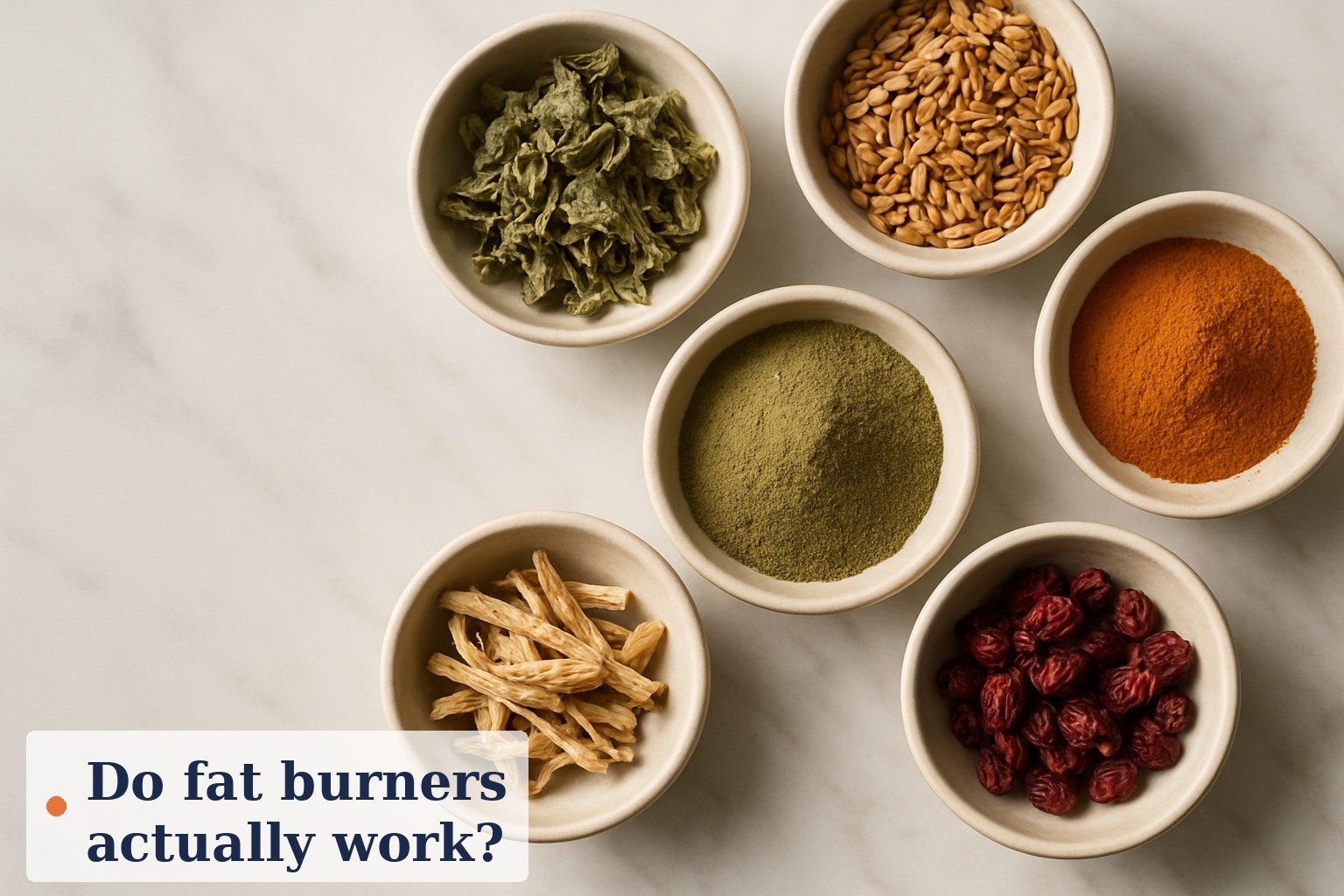
Fat burners are supposed to work through four main mechanisms: thermogenesis (burning more energy as heat), appetite suppression (eating less), increased fat oxidation (using more fat for fuel), and reduced absorption of calories. In practice, each mechanism produces only a small shift, and the body partly compensates by adjusting hunger and energy use.
It helps to take the four claimed mechanisms one at a time, because the marketing usually blurs them together. Thermogenesis means increasing the energy your body expends, often measured as a small rise in resting metabolic rate. Stimulants like caffeine genuinely do this, but the size of the bump is modest — a few percent over a few hours — and the body adapts to it. Appetite suppression works by making you feel full sooner or longer, usually through fibers that swell in the stomach or, with stimulants, a temporary blunting of hunger. If it leads you to eat less, it can help; but appetite is strongly defended by the body, and a mild suppressant is easy to override.
Increased fat oxidation is the most misunderstood mechanism. Some ingredients do shift the body toward using a higher proportion of fat for fuel, but burning more fat in the moment does not automatically mean losing more fat overall — that still depends on total energy balance over days and weeks. You can oxidize more fat during a workout and gain weight if you eat more than you burn. Finally, reduced absorption — the “carb blocker” or “fat blocker” pitch — aims to stop some calories from being absorbed; the over-the-counter versions have weak effects and often unpleasant digestive side effects.
The thread running through all four is energy balance: body fat changes when energy in and energy out diverge over time. Every legitimate fat burner mechanism is just a small lever on one side of that equation, and the body actively pushes back — eating a little more, moving a little less, or down-regulating metabolism — which is why the real-world effects shrink to the modest numbers the trials report. A fat burner does not break energy balance; at best, it tilts it slightly in your favor while you do the actual work.
Which fat burner ingredients have the most evidence?
Among common fat burner ingredients, only caffeine has reasonably consistent human evidence, and even that is for a small effect. Green tea catechins and capsaicin show smaller, less reliable effects; glucomannan may modestly aid fullness; and popular ingredients like garcinia, raspberry ketones and forskolin have weak or no human weight-loss evidence at typical doses.
Below is the honest read on the ingredients you are most likely to meet on a fat burner label, with the strength of human weight-loss evidence graded plainly. “Evidence for weight” here means controlled human research showing the ingredient changes body weight or fat — not whether it has effects in a test tube or in rodents, where almost everything looks promising. Note especially the gap between the studied dose (what trials used) and the typical label dose (what blends often deliver), because that gap is where a lot of fat burners quietly fail.
| Ingredient | Claimed mechanism | Studied dose vs. typical label dose | Evidence for weight |
|---|---|---|---|
| Caffeine | Thermogenesis, fat oxidation, appetite | ~3–6 mg/kg (≈200–400 mg/day) studied; blends vary 100–300 mg[1] | Moderate |
| Green tea extract (EGCG) | Catechins + caffeine raise fat oxidation | ~250–500 mg catechins studied; often under-dosed in blends[2] | Weak |
| Capsaicin / capsinoids | Thermogenesis, mild appetite effect | ~2–6 mg capsaicinoids studied; blends rarely state amount[4] | Preliminary |
| Glucomannan | Viscous fiber, promotes fullness | ~3 g/day before meals studied; capsules often under this[6] | Weak |
| Berberine | AMPK activation, glucose & lipid metabolism | ~900–1,500 mg/day studied; rarely fully dosed in burners[7] | Moderate |
| L-carnitine | Shuttles fatty acids into mitochondria | ~2 g/day studied; effect tiny even when dosed[8] | Weak |
| Garcinia cambogia (HCA) | Blocks fat synthesis, curbs appetite | ~1,500–2,800 mg HCA studied; effect not clinically meaningful[5] | Weak / none |
| Green coffee (chlorogenic acid) | Slows carb absorption, antioxidant | Trials small, low quality; effect unreliable[3] | Weak |
| Raspberry ketones | Claimed lipolysis (from rodent/cell data) | No established human dose; no human weight trials[3] | None |
| Forskolin | Raises cAMP, claimed lipolysis | ~250 mg (10% forskolin) studied; weight effect unproven[3] | Weak / none |
| Bitter orange (synephrine) | Stimulant thermogenesis | ~50 mg synephrine used; safety concerns, weak evidence[12] | Weak |
The pattern is hard to miss: a single ingredient — caffeine — carries most of whatever effect a fat burner actually has, a handful of others contribute small or uncertain effects, and a large group of popular “hero” ingredients are essentially riding on rodent studies and hope. The rest of this guide works through what each can and cannot do, and why the studied-dose-versus-label-dose gap matters so much.
Does caffeine actually burn fat?
Caffeine does modestly increase energy expenditure and fat oxidation for a few hours, and a 2019 dose-response meta-analysis linked higher caffeine intake to small reductions in weight, BMI and body fat[1]. The effect is real but small, fades as tolerance builds within days to weeks, and is easily cancelled out by eating more.
Caffeine is the most credible ingredient in the entire fat burner category, so it deserves a careful look. It is a stimulant of the central nervous system that, among other effects, modestly raises metabolic rate and increases the breakdown and oxidation of fat for fuel, particularly during exercise. In a 2019 systematic review and dose-response meta-analysis, higher caffeine intake was associated with reductions in weight, BMI and fat mass, with the data suggesting a dose-dependent relationship[1]. Doses studied for metabolic and performance effects typically fall around 3–6 mg per kilogram of body weight — roughly 200–400 mg for many adults, the caffeine in two to four cups of coffee.
Three honest caveats keep this in proportion. First, the effect is small: the metabolic bump is a few percent and the weight differences in trials are modest, not transformative. Second, tolerance develops — the thermogenic response blunts as your body adapts to regular caffeine over days to weeks, so the “extra burn” you get on day one is not what you get on day thirty. Third, it is easy to eat back: a small rise in energy expenditure disappears entirely if it nudges you toward one extra snack. Caffeine is best thought of as a mild, reliable training and appetite aid, not a fat-melting agent.
It is also worth noting that a cup of coffee or a plain caffeine tablet delivers the same studied compound far more cheaply than most branded thermogenics, which often wrap a moderate caffeine dose in a costly proprietary blend. If caffeine is the ingredient doing the work, paying a premium for the packaging around it is rarely worth it. For safety, the FDA cites roughly 400 mg per day as an amount not generally associated with dangerous effects in healthy adults — a ceiling that stacked stimulant blends can blow past quickly[10].
Does green tea extract burn fat?
Green tea extract, which supplies catechins like EGCG plus caffeine, produces a small effect on weight at best. A Cochrane review found green tea preparations caused only a small, statistically non-significant weight loss in overweight adults[2]. The catechin-plus-caffeine combination may slightly raise fat oxidation, but it is not a reliable weight-loss tool.
Green tea extract is the second-most common “evidence-based” fat burner ingredient, and the reality is more muted than the marketing. The active compounds are catechins — antioxidant plant compounds, the most studied being epigallocatechin gallate (EGCG) — usually delivered alongside the tea’s natural caffeine. The proposed mechanism is that catechins inhibit an enzyme that breaks down noradrenaline, mildly prolonging the fat-oxidation signal that caffeine triggers. In short-term metabolic studies, the combination can produce a small increase in daily energy expenditure and fat oxidation.
The trouble is that this lab effect does not translate into reliable weight loss. A Cochrane systematic review of green tea preparations for weight loss in overweight and obese adults concluded the effect on body weight was small and not statistically significant, with considerable variation between trials[2]. Studied doses of catechins generally sit around 250–500 mg per day, but many fat burner blends deliver far less, or bury the green tea inside a proprietary blend so you cannot tell. You can read the full breakdown in our guide to green tea extract for fat loss.
There is also a real safety footnote: high-dose green tea extract supplements (not brewed tea) have been linked in rare cases to liver injury, which is why concentrated extracts deserve respect rather than casual mega-dosing[2]. The practical takeaway is that green tea is a plausible, gentle contributor at sensible doses, but it is not the workhorse the “fat-burning catechin” marketing implies — and brewed green tea gives you most of the upside with none of the extract’s downside.
Do capsaicin and “thermogenic” spices work?
Capsaicin, the compound that makes chili peppers hot, mildly raises thermogenesis and can slightly reduce appetite and energy intake in short studies. A systematic review found capsaicinoids may modestly increase energy expenditure and reduce appetite, but the effect on actual body weight is small and the evidence is preliminary[4].
Capsaicin and its milder cousins, the capsinoids, are the “spicy food makes you burn more” ingredients, and there is a real kernel here. Capsaicin is the pungent compound in chili peppers; it activates heat-sensing receptors that can trigger a small rise in energy expenditure and may slightly blunt appetite, leading some people to eat a little less at the next meal. A systematic review of capsaicinoids and capsinoids concluded they may support weight management by modestly increasing energy expenditure and reducing energy intake, while cautioning that the effects are small and the human evidence is preliminary[4].
Studied doses typically sit around 2–6 mg of capsaicinoids, and the practical problems are familiar: tolerance to the “heat” effect builds with regular use, the appetite reduction is easy to override, and fat burner labels rarely disclose how much capsaicinoid you are actually getting inside a blend. Like caffeine, capsaicin is a small lever, not a switch. The honest framing is that adding chili to your food is a pleasant, near-zero-risk habit that may shave a few calories at the margins — but a capsule of pepper extract is not going to reshape your body composition on its own.
Do appetite-suppressing fat burners work?
Appetite-suppressing fat burners, usually built on viscous fibers like glucomannan, work only weakly. Glucomannan can promote fullness when taken with water before meals, but a meta-analysis found it did not produce significant weight loss versus placebo in controlled trials[6]. Stimulant-based appetite suppression is real but modest and short-lived.
The appetite-suppressant wing of the fat burner market splits into two approaches. The first is viscous fiber, most commonly glucomannan — a soluble fiber from the konjac root that absorbs water and forms a gel in the stomach, theoretically slowing gastric emptying and increasing fullness. The mechanism is plausible, and glucomannan is genuinely a fiber with effects on satiety and bowel regularity. But when researchers pooled the randomized controlled trials, glucomannan supplementation did not produce a statistically significant reduction in body weight compared with placebo, despite reasonable doses around 3 g per day taken before meals with water[6].
The second approach is stimulant-driven appetite suppression, where caffeine and related compounds temporarily reduce hunger. This effect is real but modest and prone to tolerance, and it comes bundled with the stimulant side effects discussed below. Neither approach is a reliable substitute for the more durable appetite levers — adequate protein intake, fiber from whole foods, sleep, and managing the habits and cues that drive eating.
One safety note specific to glucomannan and similar fibers: because they expand on contact with water, they must be taken with plenty of fluid, and there have been reports of choking or esophageal obstruction when fiber tablets were taken with too little water. Powders and capsules taken with a full glass of water before a meal are the safer format. If appetite is your main struggle, our look at the best and worst drinks for weight loss covers cheaper, lower-risk ways to manage hunger than a fiber capsule.
What about berberine and metabolic ingredients?
Berberine is the metabolic ingredient with the most credible evidence in this category. At about 900–1,500 mg per day it modestly improves blood sugar and lipids and is linked to roughly 2 kg of average weight loss over about three months[7]. But fat burners rarely dose it fully, and it carries real drug interactions.
Berberine has earned a reputation as “nature’s Ozempic,” which overstates it, but it does have the strongest metabolic data among the plant compounds that show up in fat burners. Berberine is an alkaloid (a nitrogen-containing plant compound) found in plants like barberry and goldenseal, and it mildly activates AMPK, a cellular energy sensor involved in glucose and fat metabolism. A 2020 systematic review concluded berberine produces a small but statistically significant reduction in body weight — on the order of about 2 kg — alongside modest improvements in blood sugar and lipids, mostly in people with metabolic conditions[7].
The catch for fat burners is dose. Berberine’s benefits come from roughly 900–1,500 mg per day, split into two or three doses with meals because it clears the body quickly. A multi-ingredient fat burner almost never delivers that much berberine — there simply is not room in the capsule alongside everything else — so the berberine in a typical blend is often present at a fraction of the studied dose. Berberine also interacts with many medications, including diabetes and blood-pressure drugs, and inhibits drug-metabolizing enzymes, so it is not a casual add-on. We cover all of this in detail in our berberine for weight loss guide.
L-carnitine deserves a brief mention here because it appears in so many “stim-free” fat burners on the logic that it shuttles fatty acids into mitochondria to be burned. In a meta-analysis, L-carnitine supplementation was associated with a small reduction in body weight, but the effect was minor and the trials were heterogeneous[8]. As with berberine, the studied dose (around 2 g/day) is often higher than what a blend delivers, and the realistic effect is small. The pattern repeats: a plausible mechanism, a tiny real-world effect, and a dose that the product rarely matches.
Which fat burner ingredients are mostly hype?
Several heavily marketed fat burner ingredients — garcinia cambogia, raspberry ketones, forskolin and most “carb blockers” — have weak or no human weight-loss evidence at the doses used in products. Their reputations rest largely on rodent or test-tube studies and on celebrity endorsements, not on controlled human trials showing meaningful fat loss[5].
Garcinia cambogia supplies hydroxycitric acid (HCA), promoted to block fat synthesis and curb appetite. A systematic review and meta-analysis of randomized trials found that garcinia produced only a small difference in weight versus placebo, and concluded the effect was of questionable clinical relevance and the magnitude small enough to be undermined by the studies’ limitations[5]. Garcinia has also been associated with rare reports of liver problems, which makes the poor risk-reward worse, not better.
Raspberry ketones are the textbook example of hype outrunning evidence. The compound increases fat breakdown in isolated cells and in rodents given very high doses, but there are essentially no human trials showing raspberry ketones cause weight loss in people, and the doses implied by the animal data would be impractically and unsafely large in humans[3]. Forskolin, from the coleus plant, raises cellular cAMP and showed a hint of effect on body composition in one small study often cited in marketing, but the broader evidence does not support meaningful weight loss[3].
The “carb blocker” and “fat blocker” categories (white kidney bean extract, chitosan and similar) round out the hype list: small, inconsistent effects, frequent digestive side effects, and a mechanism that, even when it works, only reduces absorption of a fraction of calories. The common thread across all of these is that an impressive cell-culture or animal result gets marketed as if it were a human outcome. As a rule of thumb, if an ingredient’s evidence base is dominated by petri dishes and mice rather than randomized human trials, treat the weight-loss claim as unproven — and read the label with the skepticism we describe in our guide to setting realistic expectations with supplements.
How big is the real effect?
The real effect of even the best fat burner ingredients is small — typically a couple of pounds beyond placebo over weeks to months in controlled trials, with wide individual variation[3]. That is enough to be statistically detectable but rarely enough to be life-changing, and it depends on the person already being in a calorie deficit.
It is worth putting numbers on the “modest” verdict, because vagueness is where marketing thrives. For caffeine, the dose-response meta-analysis found measurable but small reductions in weight and fat with higher intake[1]. For green tea, the Cochrane review put the weight change in the small, non-significant range[2]. For garcinia and glucomannan, the pooled effects were small enough that the reviewers questioned their clinical meaning[5][6]. Across the category, the NIH ODS summary is that supplements yield, at best, modest effects on weight[3].
An average effect of one to two extra kilograms over three months — the upper end for the best-studied ingredients — works out to a few hundred grams a month. That can be real and worthwhile for someone already doing everything else right. But it is an average from trials using full, disclosed doses; in a proprietary blend that under-doses the active, the expected effect shrinks toward nothing, and individual responses range from a small benefit to none at all.
Two statistical points are easy to lose. First, an average is not a promise: a 2 kg mean effect includes people who lost more, people who lost nothing, and people who gained. Second, study conditions are not real life: trial participants take a verified dose, often under supervision, frequently with a controlled diet. A fat burner bought online and taken haphazardly alongside an unchanged diet is operating in much worse conditions than the studies it cites. The realistic expectation, then, is a small tailwind for someone already moving in the right direction — not a result you would notice if the diet underneath it is not working.
Are fat burners safe?
Most caffeine-based fat burners are tolerated by healthy adults below about 400 mg of caffeine per day, but they can cause jitteriness, insomnia, raised heart rate and blood pressure, anxiety and palpitations[10]. Stacked stimulant blends are easy to overdose, and some products have been found adulterated with undeclared pharmaceutical drugs[9].
“Natural” does not mean “no effects,” and fat burners are where that gap bites hardest. The most common issues come from stimulants: caffeine and its companions can cause jitteriness, anxiety, difficulty sleeping, headaches, a faster heart rate and elevated blood pressure, especially at higher doses or in people sensitive to them. The FDA cites roughly 400 mg of caffeine a day as the amount not generally associated with dangerous effects in healthy adults — but multi-ingredient “thermogenic” products often stack caffeine with green tea, guarana, yerba mate and other caffeine sources, making the true total hard to track and easy to overshoot[10].
Beyond stimulants, specific ingredients carry specific risks: concentrated green tea extract has been linked in rare cases to liver injury[2]; garcinia has rare liver-safety reports[5]; bitter orange (synephrine) is a stimulant that may raise cardiovascular strain, particularly when combined with caffeine[12]; and high-dose fibers can cause bloating, gas or, taken with too little water, a choking risk. The single biggest safety concern, though, is one you cannot see on the label.
That concern is adulteration. The FDA has repeatedly identified weight-loss products sold as “supplements” that were secretly spiked with undeclared pharmaceutical drugs — including sibutramine, a stimulant withdrawn from the U.S. market for cardiovascular risk[9]. The FTC, for its part, treats dramatic effortless-weight-loss claims as a marker of products to distrust[11]. The practical defense is to buy only from reputable sellers, avoid products making implausible promises, and treat any “proprietary blend” that hides doses as a reason for caution rather than intrigue.
Who should avoid fat burners?
Fat burners should be avoided by anyone who is pregnant or breastfeeding, has heart disease, high blood pressure, an arrhythmia, anxiety or a sleep disorder, is sensitive to stimulants, or takes interacting medications. Teenagers, older adults with cardiovascular risk, and anyone with a history of disordered eating should also steer clear, or check with a doctor first.
You should avoid fat burners if…
- You are pregnant, trying to conceive, or breastfeeding
- You have heart disease, high blood pressure, or a heart-rhythm problem
- You have anxiety, panic attacks, or a sleep disorder that stimulants worsen
- You take medication affected by caffeine, berberine, or synephrine (including some antidepressants, stimulants, diabetes and blood-pressure drugs)
- You are under 18, or have a history of disordered eating
Talk to a clinician first if…
- You have diabetes or take blood-sugar-lowering medication
- You have liver or kidney disease
- You take any prescription drug metabolized by the liver
- You are caffeine-sensitive but want to try a stim-free option
- You are unsure how much caffeine a stacked blend really contains
The reason the “avoid” list is long is that the same stimulant action that produces the modest benefit also produces the risk. Raising heart rate and blood pressure is trivial for a healthy 30-year-old and genuinely dangerous for someone with an undiagnosed arrhythmia. Berberine’s blood-sugar effect is a curiosity for most people and a hypoglycemia risk for someone on insulin or metformin. The honest rule for fat burners is the same as for any active supplement: if you take medication, have a health condition, or are pregnant or nursing, the two-minute conversation with a pharmacist or doctor beats a guess every time — and matters more here than usual because the doses inside blends are often hidden.
What are the honest limitations of the evidence?
The honest limitations are significant: most fat burner trials are short, small, and industry-influenced; effect sizes are small and inconsistent; proprietary blends hide doses so products cannot be matched to the studies; and cell or animal results are routinely marketed as human outcomes. Long-term safety and effectiveness data for most ingredients are thin.
Anyone quoting fat burner research — including us — has to be candid about how shaky much of it is. First, study quality is mixed. Many ingredient trials are small, last only a few weeks, and are funded or conducted by parties with a commercial interest, all of which tends to inflate apparent effects. Reviewers repeatedly flag “high risk of bias” and call for larger, independent trials — which often never come, because there is little incentive to fund research that might show a popular ingredient does nothing.
Second, the dose problem is everywhere. A trial might use 500 mg of green tea catechins or 1,500 mg of berberine, but the product on the shelf hides those ingredients in a proprietary blend that may contain a small fraction of the studied amount. A proprietary blend legally needs to disclose only the blend’s total weight, not the milligrams of each ingredient, so you cannot verify whether the actives reach effective doses — the practice called “fairy dusting” (adding a research-backed ingredient at a token amount). We explain how to read past it in our guide to supplement formats.
Third, mechanism is not outcome. The fact that an ingredient does something in a cell or a mouse — increases lipolysis, activates a receptor, raises a metabolic marker — gets marketed as if it caused weight loss in humans, which is a different and much harder claim to prove. And fourth, long-term data are scarce: most trials are far too short to tell us whether any effect persists past tolerance, or whether daily stimulant use over years is wise. The result is a category where confident marketing sits on top of genuinely uncertain science, and the uncertainty almost always runs in the direction of “less than promised.”
How to choose a fat burner if you decide to try one?
If you try a fat burner, choose a product that fully discloses its doses (no proprietary blends), keeps total caffeine within a sensible limit, sticks to ingredients with at least some human evidence, and is sold by a reputable brand — ideally one third-party tested. Treat it as a minor add-on, set a fixed trial period, and judge it honestly.
Suppose you have read all of the above, your diet and activity are already in order, and you still want to experiment. There are sensible ways to do that and reckless ones. The sensible version starts with full label transparency: choose products that list the exact milligrams of every active ingredient, and treat any proprietary blend as a reason to pass, because you cannot judge a dose you cannot see. Favor ingredients with at least some human evidence — caffeine, green tea catechins, glucomannan, perhaps berberine if dosed properly — over the hype list.
Then mind the stimulant math. Add up every caffeine source on the label (caffeine anhydrous, green tea, guarana, yerba mate) and keep your total daily intake from all sources — including coffee — within a sensible limit, around 400 mg for most healthy adults[10]. Look for third-party testing (NSF Certified for Sport, Informed Choice, USP) as a partial safeguard against contamination and mislabeling, and buy from the official site or a reputable retailer rather than an unknown marketplace where counterfeits and adulterated products are more common[9].
Finally, structure the trial so it actually tells you something. Change one variable at a time, keep your diet and activity steady, set a fixed window (say, four to six weeks), and track weight and waist measurements. If you cannot detect a difference on top of your existing habits, that is your answer, and the money is better spent elsewhere. Honestly, for most people the best “fat burner” is a strong cup of coffee before a workout plus a calorie deficit they can sustain — the rest is optimization at the margins, as our 2026 supplement buyer’s guide lays out.
The verdict: a small assist, never the engine
Fat burners earn a verdict of MODEST at best. A few ingredients — led by caffeine — have real but small effects on energy expenditure and appetite, and the rest range from weak to unproven. No fat burner overrides energy balance, so the category can support fat loss at the margins but never replace the calorie deficit that actually drives it.
Strip away the “melt fat effortlessly” story and what remains is a narrow, conditional truth: a handful of fat burner ingredients can give a small, measurable nudge to people who are already eating in a deficit, training, sleeping and managing their appetite. That nudge is real, it is worth understanding, and for some people it is worth a modest spend. But it is a tailwind, not an engine, and it disappears entirely if the fundamentals are not in place.
If you want the best-evidenced “fat burner” on earth, it is caffeine — and a cup of coffee delivers it for pennies. Beyond that, favor transparently dosed single ingredients over crowded proprietary blends, keep your expectations small, and put the real effort into a diet and activity pattern you can sustain. A fat burner can decorate that work; it cannot do it for you.
This is an educational guide, not a pitch for one product. If you’re weighing a specific thermogenic or metabolism formula, start with our honest, fully-sourced reviews of the popular options — each one applies the same studied-dose-versus-label-dose lens used above.
Java Burn review
A caffeine-and-green-tea metabolism formula designed to stir into coffee. Our review checks whether its actives reach studied doses.
Best weight-loss supplements of 2026
Our evidence-ranked buyer’s guide to the category, judged on disclosed dosing and human data rather than hype.
Berberine for weight loss
The metabolic compound with the most credible data — and the dose fat burners almost never deliver in full.
Java Burn vs Nagano Tonic
Two popular metabolism products head-to-head on ingredients, dosing transparency and realistic effect.
Frequently asked questions
Do fat burners actually work?
Fat burners work only modestly, and only as an add-on to a calorie deficit. The best-supported ingredient, caffeine, slightly raises energy expenditure and fat oxidation, and meta-analyses link caffeine intake to small reductions in weight and body fat.
Most other ingredients have weak, inconsistent or no human evidence, and no fat burner overrides energy balance — so the realistic expectation is a small assist, not a transformation.
What is the most effective fat burner ingredient?
Caffeine has the most consistent human evidence among fat burner ingredients. At roughly 3 to 6 mg per kilogram of body weight it raises metabolic rate and fat oxidation for a few hours and can blunt appetite slightly.
Green tea catechins and capsaicin show smaller, less consistent effects. The effect sizes are small, and tolerance builds over time.
How much weight can you lose with a fat burner?
Realistically, a fat burner adds at most a few extra pounds over months on top of diet and activity, not a transformation. Meta-analyses of the best-studied ingredients report average differences measured in low single-digit pounds versus placebo.
Individual responses vary widely, and many people see no measurable benefit at all once their diet is accounted for.
Are fat burners safe?
Most caffeine-based fat burners are tolerated by healthy adults below about 400 mg of caffeine per day, but they can cause jitteriness, insomnia, raised heart rate and blood pressure, and anxiety. Stimulant blends stacking several caffeine sources are easy to overdose.
Some products have also been found tainted with undeclared drugs, so buy only from reputable sellers and avoid implausible promises.
Do fat burners work without diet and exercise?
No. No fat burner overrides energy balance, so without a calorie deficit there is nothing for a small metabolic nudge to add to.
The thermogenic boost from even the best ingredients is modest and partly offset by tolerance and by eating more, so a fat burner only helps at the margins of diet, protein, sleep and movement.
Does caffeine really burn fat?
Caffeine does modestly increase energy expenditure and fat oxidation for a few hours, and a 2019 dose-response meta-analysis linked higher caffeine intake to small reductions in weight, BMI and body fat.
The effect is real but small, fades as tolerance builds within days to weeks, and is easily cancelled out by extra eating.
Does green tea extract help you lose weight?
Green tea extract, which supplies catechins like EGCG plus caffeine, produces a small effect on weight at best. A Cochrane review found green tea preparations caused only a small, statistically non-significant weight loss in overweight adults.
The catechin-plus-caffeine combination may slightly raise fat oxidation, but it is not a reliable weight-loss tool.
Do stimulant-free fat burners work?
Stimulant-free fat burners rely on ingredients like glucomannan, L-carnitine, green coffee, garcinia or raspberry ketones, which have weak or no human weight-loss evidence.
Glucomannan, a viscous fiber, may slightly aid fullness when taken before meals with water, but most caffeine-free formulas perform no better than placebo in controlled trials.
Are fat burners FDA approved?
No. The FDA does not approve any dietary supplement, including fat burners, before sale. Under DSHEA the FDA regulates supplements only after they reach the market.
A brand may truthfully say it is made in an FDA-registered facility, but that describes the factory, not approval of the product or proof that it works.
Who should not take fat burners?
People who are pregnant or breastfeeding, those with heart conditions, high blood pressure, anxiety or sleep problems, anyone sensitive to stimulants, and people taking medications that interact with caffeine or other actives should avoid fat burners or check with a doctor first.
Teenagers and people with a history of eating disorders should also avoid them.
Do fat burners burn belly fat specifically?
No. No supplement targets belly fat specifically. Spot fat reduction is a myth; the body draws on fat stores throughout the body in a pattern set largely by genetics and hormones.
A fat burner can only support a whole-body calorie deficit, which is what reduces visceral and belly fat over time.
How long do fat burners take to work?
Any thermogenic effect from a caffeine-based fat burner begins within an hour and lasts a few hours, but any meaningful change in body weight unfolds over weeks of a sustained calorie deficit.
Products promising visible fat loss within days are overstating what these ingredients can do.
Are expensive fat burners better than cheap ones?
Not necessarily. Price reflects branding and marketing more than effective dosing. Many expensive fat burners hide modest amounts of active ingredients inside proprietary blends.
A plain caffeine tablet or a cup of coffee delivers the best-studied effect cheaply, so judge a product on disclosed doses, not on price.
The weight-loss ingredients with the strongest evidence
How to lose belly fat: what actually works
Why am I not losing belly fat? 9 honest reasons
Green tea extract for fat loss
Berberine for weight loss
Setting realistic expectations with supplements
All ingredient guides
We research weight-loss supplements and the ingredients inside them, scoring products on label transparency rather than hype. No star spam, no fabricated reviews — just the evidence, stated plainly. Our editorial standards →
- Tabrizi R, et al. The effects of caffeine intake on weight loss: a systematic review and dose-response meta-analysis of randomized controlled trials. Critical Reviews in Food Science and Nutrition, 2019. pubmed.ncbi.nlm.nih.gov
- Jurgens TM, et al. Green tea for weight loss and weight maintenance in overweight or obese adults (Cochrane Systematic Review). Cochrane Database of Systematic Reviews, 2012. pubmed.ncbi.nlm.nih.gov
- NIH Office of Dietary Supplements — Dietary Supplements for Weight Loss (Health Professional Fact Sheet). ods.od.nih.gov
- Whiting S, et al. Capsaicinoids and capsinoids. A potential role for weight management? A systematic review of the evidence. Appetite, 2012. pubmed.ncbi.nlm.nih.gov
- Onakpoya I, et al. The use of Garcinia extract (hydroxycitric acid) as a weight loss supplement: a systematic review and meta-analysis of randomised clinical trials. Journal of Obesity, 2011. pubmed.ncbi.nlm.nih.gov
- Onakpoya I, et al. The efficacy of glucomannan supplementation in overweight and obesity: a systematic review and meta-analysis of randomized clinical trials. Journal of the American College of Nutrition, 2014. pubmed.ncbi.nlm.nih.gov
- Ilyas Z, et al. The effect of Berberine on weight loss in order to prevent obesity: A systematic review. Biomedicine & Pharmacotherapy, 2020. pubmed.ncbi.nlm.nih.gov
- Pooyandjoo M, et al. The effect of (L-)carnitine on weight loss in adults: a systematic review and meta-analysis of randomized controlled trials. Obesity Reviews, 2016. pubmed.ncbi.nlm.nih.gov
- U.S. FDA — Tainted Weight Loss Products and Questions and Answers on Dietary Supplements (supplements are not FDA approved; undeclared drug warnings). fda.gov
- U.S. FDA — Spilling the Beans: How Much Caffeine is Too Much? (≈400 mg/day guidance for healthy adults). fda.gov
- U.S. FTC — “Gut Check”: A Reference Guide for Media on Spotting False Weight-Loss Claims. ftc.gov
- NIH National Center for Complementary and Integrative Health — Bitter Orange (synephrine): safety and evidence. nccih.nih.gov
- Jun 29, 2026 — Guide published as a full evidence review of the fat burner category; ingredient claims checked against current NIH, FDA, FTC and peer-reviewed sources.
Affiliate disclosure: SourceLean is reader-supported. When you buy through links on this site, we may earn a commission at no extra cost to you. Checkout is always handled on the official product website.