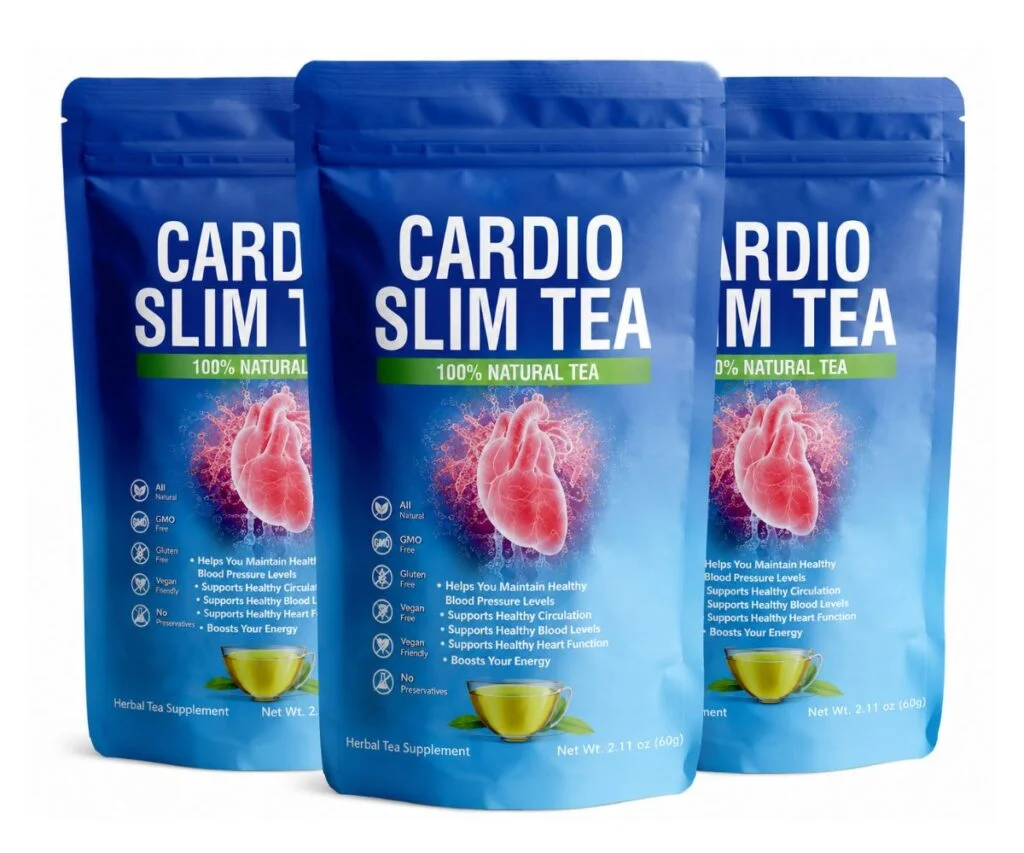
Cardio Slim Tea: Official Website Link & Ingredient Review
Heart-supportive weight-loss herbal tea blend
Looking for the official Cardio Slim Tea website? The official site is the only authorized seller. SourceLean is an independent review site, and the “Official site” button on this page goes straight to it.
Cardio Slim Tea is a herbal weight-loss tea designed to be brewed and sipped daily; it claims to support metabolism, aid digestion, and promote weight loss. It’s marketed as a herbal slimming tea, using ingredients like beetroot powder, hibiscus flowers, decaffeinated green tea, hawthorn berries, and ginger root.
- 15 plant-based ingredients targeting heart health and weight management
- Beetroot, hibiscus, hawthorn for cardiovascular support
- Decaffeinated green tea + oolong for metabolic support
- Refreshing lemon-mint flavor profile
- Caffeine-free / decaffeinated formulation
Why people pick Cardio Slim Tea
Modest blood pressure support
Hibiscus tea at 250-500 mL daily has documented small blood pressure reductions in…
Improved circulation from
Beetroot is rich in dietary nitrates, which convert to nitric oxide and support vasodilation
Small thermogenic effect
Green tea catechins and ginger have mild thermogenic properties
Hydration-driven satiety
Drinking water-based beverages before meals modestly reduces caloric intake in trials
Cardio Slim Tea video review: watch before you buy
Prefer reading? Everything in the video is covered below. Watch on YouTube
What is Cardio Slim Tea?
Cardio Slim Tea is a herbal tea blend designed to support cardiovascular health, healthy circulation, and weight management through a daily tea ritual. Brewed as a hot or iced tea and consumed 1-3 times per day, the brand markets it as a heart-supportive, natural metabolism booster that combines time-honored herbal wisdom with modern nutrition science. Claimed benefits include improved blood circulation, healthy blood pressure support, balanced metabolism, fat burning, reduced bloating, mental clarity, and sustained energy without stimulants. The formula contains 15 plant-based ingredients including Beetroot Powder, Hibiscus Flowers, Decaffeinated Green Tea, Ginger Root, Oolong Tea, Hawthorn Berries, Lemongrass, Ginseng, Curcumin (Turmeric), Cinnamon, Monk Fruit, Chamomile, and TMG (Trimethylglycine). Individual doses are not disclosed. Manufactured in an FDA-registered, GMP-certified US facility. 60-day money-back guarantee.
Cardio Slim Tea official website: how to buy the real product
The only official seller of Cardio Slim Tea is its official website. Use the “Official site” button on this page to go there directly. SourceLean is an independent review site; we don’t sell Cardio Slim Tea ourselves.
How to spot lookalike “official” pages
Search results for “Cardio Slim Tea official website” include many pages on unrelated domains and subdomains that call themselves the official site. Before you enter card details, check these things:
- The checkout is run by ClickBank. Cardio Slim Tea orders are processed by ClickBank, so ClickBank appears on the order page and the charge on your card statement starts with “CLKBANK*”.
- The guarantee matches. The official offer comes with a 60-day money-back guarantee. A page offering different terms is a warning sign.
- The price matches the official packages. Extreme discount claims on unfamiliar sites are a red flag.
How refunds work
Because ClickBank processes the order, refund requests within the guarantee period go through ClickBank’s customer support at clkbank.com, using the order number from your confirmation email.
Cardio Slim Tea benefits
- Modest blood pressure support: Hibiscus tea at 250-500 mL daily has documented small blood pressure reductions in hypertensive individuals (McKay 2010 trial: ~7 mmHg systolic). Cardio Slim Tea includes hibiscus alongside other ingredients, but the per-cup hibiscus content is not disclosed.
- Improved circulation from beetroot nitrates: Beetroot is rich in dietary nitrates, which convert to nitric oxide and support vasodilation. Acute effects on blood pressure and exercise performance are documented at oral beetroot doses around 5-7 mmol nitrate. The tea-format dose is likely much lower.
- Small thermogenic effect: Green tea catechins and ginger have mild thermogenic properties. Tea-format dosing produces smaller effects than capsule supplementation but still adds up over 1-3 cups daily.
- Hydration-driven satiety: Drinking water-based beverages before meals modestly reduces caloric intake in trials. The hydration effect of 16-24 oz of tea daily is real, even if the ingredient effects are small.
- Anti-inflammatory load: Curcumin (turmeric), ginger, and hibiscus all have anti-inflammatory properties. Bioavailability from tea is poor (especially curcumin without piperine), but cumulative daily exposure provides some effect.
Cardio Slim Tea ingredients
Here is what the label discloses, what each ingredient does, and an honest note on dose where research gives us a reference point.
| Ingredient | Label status | What it does | Dose note |
|---|---|---|---|
| Beetroot Powder | Per-cup amount not stated | Supplies nitrates studied for circulation and exercise capacity. | 5-7 mmol nitrate (~500g raw equivalent) for BP effects — Real nitrate-NO pathway. Tea-format dose is necessarily much smaller than trial doses. |
| Hibiscus Flowers | Per-cup amount not stated | A tart flower rich in antioxidants, studied for fluid balance and metabolic markers. | 250-500 mL strong infusion daily for BP — Real BP-lowering evidence at trial doses. Tea-format dose may be partially effective if hibiscus is a major component. |
| Decaffeinated Green Tea (EGCG) | Per-cup amount not stated | Supplies catechins such as EGCG, studied for a small thermogenic and fat-oxidation effect. | 300-500 mg EGCG/day for thermogenic effects — Decaffeination preserves EGCG but per-cup catechin content is naturally 50-100 mg. See our green tea page. |
| Hawthorn Berries | Per-cup amount not stated | A formula ingredient included for metabolic or general wellness support; see the label for context. | 160-1,800 mg standardized extract for cardiac effects — Real cardiac evidence in supplement trials. Tea infusion of hawthorn berries delivers much lower phytochemical doses. |
| Ginger Root | Per-cup amount not stated | A warming root studied for digestion, thermogenesis and appetite support. | 1-3 g/day for digestive/anti-inflammatory effects — Real anti-inflammatory and pro-motility evidence. Tea-format ginger is typically 50-200 mg per cup. |
| Oolong Tea | Per-cup amount not stated | A formula ingredient included for metabolic or general wellness support; see the label for context. | 100-300 mL daily for modest weight-management effects — Some Asian-population trials suggest 1-2 kg additional weight loss over 12 weeks with oolong consumption. |
| Cinnamon | Per-cup amount not stated | A spice studied for supporting insulin sensitivity and steadier post-meal blood sugar. | 1-6 g/day cassia for glucose effects — Mild insulin-sensitivity effects in trials. Long-term high cassia doses raise coumarin safety concerns. |
| Curcumin (Turmeric) | Per-cup amount not stated | Provides curcumin, an antioxidant studied for inflammation and metabolic support. | 500-2,000 mg/day with piperine for anti-inflammatory effects — Poor oral bioavailability without piperine or lipid carriers. Tea-format curcumin delivers minimal absorption. |
| TMG (Trimethylglycine) | Per-cup amount not stated | A formula ingredient included for metabolic or general wellness support; see the label for context. | 1-6 g/day for homocysteine reduction — Real homocysteine-lowering evidence. Tea-format dose is likely far below trial range. |
| Lemongrass, Chamomile, Ginseng, Monk Fruit, Garlic (or similar supporting botanicals) | Per-cup amounts not stated | An adaptogenic root studied for energy, glucose metabolism and fatigue. | Various — Supporting ingredients. Each has individual evidence at supplement doses; tea-format contributions are modest. |
See how Cardio Slim Tea’s ingredients and doses are disclosed — check current packages and the guarantee on the official site.
Go to official site →Formula review
Cardio Slim Tea earns on balanced balance. The positives: most ingredients have real published evidence at higher trial doses, the caffeine-free profile is safer than stimulant fat burners, the cardiovascular angle (hibiscus, beetroot, hawthorn) is genuinely evidence-backed, and the tea format has one of the safest profiles in the category. The 60-day guarantee de-risks trial purchase. The negatives: per-cup doses of any individual ingredient are not disclosed, and tea-format consumption inherently delivers smaller doses than capsule supplementation. Curcumin without piperine has essentially no absorption in this format. The 15-ingredient blend necessarily dilutes each component. For users specifically wanting cardiovascular support, loose-leaf hibiscus tea brewed strongly delivers more BP-active hibiscus per cup at lower cost. For users wanting a pleasant daily ritual that supports both heart health and weight management in a low-risk format, Cardio Slim Tea is a reasonable choice.
How Cardio Slim Tea works
Beetroot contains 250-650 mg/100g of dietary nitrates, which convert through the enterosalivary pathway to nitric oxide. NO is a potent vasodilator. Trial doses for blood pressure effects: ~5-7 mmol nitrate (roughly 500 g raw beetroot or concentrated beet juice). Per-cup amounts in tea are much smaller. Hibiscus contains anthocyanins and polyphenols that inhibit angiotensin-converting enzyme (ACE) modestly. Clinical trials use 250-500 mL of strong hibiscus infusion daily. The mechanism is real; the dose in a multi-ingredient blend is likely diluted. Hawthorn extracts have been studied in mild heart failure (Pittler 2008 Cochrane review) at doses of 160-1,800 mg standardized extract. As a tea ingredient at unknown concentration, the dose is likely far below trial levels. EGCG and other catechins inhibit COMT and prolong norepinephrine signaling. Brewed tea contains 50-100 mg EGCG per cup, well below the 300-500 mg used in concentrated supplement trials. Gingerols and shogaols in ginger have anti-inflammatory and pro-motility effects in the gut. Trial doses 1-3 g/day. Tea-format ginger is typically lower. Cinnamon contains procyanidins and cinnamaldehyde that mildly improve insulin signaling. Trial doses 1-6 g/day cassia cinnamon. Coumarin content of cassia at high doses is a long-term safety concern (the EU set a Tolerable Daily Intake of 0.1 mg/kg). TMG donates methyl groups for homocysteine remethylation, supporting cardiovascular markers. Trial doses 1-6 g/day. Per-cup amounts in tea are small.
Cardio Slim Tea pros and cons
Pros
- Multiple ingredients with real evidence for cardiovascular support (beetroot, hibiscus, hawthorn, garlic)
- Caffeine-free / decaffeinated — suitable for evening consumption and caffeine-sensitive users
- Tea format provides hydration benefit alongside any ingredient effects
- Pleasant lemon-mint flavor profile per user reports
Cons
- Zero individual ingredient doses disclosed across 15 ingredients
- Tea format inherently delivers smaller doses than capsule supplements
- Most ingredients are below trial doses at any realistic tea-cup consumption
- Curcumin bioavailability in tea format is essentially negligible
Ready to try Cardio Slim Tea? View pricing and bundles on the official site.
View packages →Cardio Slim Tea price & packages
Pricing and packages are set on the official website and may change. Always confirm current pricing, shipping and guarantee terms at checkout.
Cardio Slim Tea clarity score
Reflects how clearly the formula discloses its ingredients and doses. It is a transparency measure, not a rating of effectiveness.
Cardio Slim Tea safety & side effects
Cardio Slim Tea is generally well-tolerated by healthy adults. The caffeine-free / decaffeinated formula avoids the jitters and sleep disruption common with caffeine-based fat burners. Tea-format herbal blends have one of the safest profiles among weight-management supplements, though several ingredients have notable drug-interaction profiles. The main safety considerations involve blood-pressure-lowering effects (hibiscus, beetroot, hawthorn), glucose-lowering effects (cinnamon, ginger), and potential interactions with cardiovascular medications. Anyone on prescription antihypertensives or blood thinners should consult their physician before regular consumption.
Key ingredients at a glance
Explore the research behind each compound
What the research says about Cardio Slim Tea’s ingredients
We looked up the strongest published human study for each main Cardio Slim Tea ingredient, preferring meta-analyses and Cochrane reviews over single trials. No clinical trial of the finished Cardio Slim Tea formula has been published, so this tells you about the ingredients, not about Cardio Slim Tea itself.
The short version: Of the 9 ingredients we checked in Cardio Slim Tea, 0 have moderate human evidence for weight loss, 3 limited, 2 weak and 4 none (they were studied for other things, such as sleep, stress or blood pressure). Even the best-supported ingredients produced about 1 kg (2 lb) of extra weight loss over several weeks in trials, and only alongside diet changes.
| Ingredient | Best human evidence | Dose studied | What it found | Weight-loss evidence |
|---|---|---|---|---|
| Beetroot (nitrate) | Meta-analysis, 16 trials (254 people)[1] | varied by trial | Systolic blood pressure fell about 4.4 mmHg. Weight was not studied. | None for weight |
| Hibiscus | Meta-analysis, 5 RCTs (390 people)[2] | varied by trial | Systolic blood pressure fell about 7.6 mmHg. Weight was not studied. | None for weight |
| Green tea extract (EGCG) | Cochrane review, 18 RCTs (1,945 people)[3] | about 270–650 mg catechins a day | Outside Japan, green tea made no meaningful difference to weight (−0.04 kg vs placebo). | Weak |
| Hawthorn | Cochrane review, 14 RCTs[4] | varied by trial | Improved exercise capacity and symptoms in heart failure. Weight was not studied. | None for weight |
| Ginger | Meta-analysis, 14 RCTs (473 people)[5] | varied by trial | A modest reduction in body weight and waist-to-hip ratio. | Limited |
| Oolong tea | Uncontrolled study (102 people)[6] | 8 g tea a day for 6 weeks | About two-thirds lost over 1 kg, but with no control group it can’t show cause. | Weak |
| Cinnamon | Meta-analysis, 12 RCTs (786 people)[7] | 2 g+ a day for 12+ weeks | About 1 kg more weight lost and 2.4 cm less waist than control. | Limited |
| Turmeric (curcumin) | Meta-analysis, 21 trials (1,604 people)[8] | 70–2,400 mg a day | Small reductions in weight, BMI and waist; evidence quality was low to moderate. | Limited |
| Betaine (TMG) | Meta-analysis of RCTs[9] | under and over 4 g a day | No significant effect on weight, fat mass or lean mass. | None for weight |
Beetroot (nitrate) in Cardio Slim Tea
The best human evidence we found for beetroot (nitrate) is a meta-analysis, 16 trials (254 people)[1]. Dose studied: varied by trial. Systolic blood pressure fell about 4.4 mmHg. Weight was not studied. Our rating for weight-loss evidence: none. Cardio Slim Tea does not publish its exact dose of every ingredient, so you can’t confirm it matches the amount used in this research.
Hibiscus in Cardio Slim Tea
The best human evidence we found for hibiscus is a meta-analysis, 5 RCTs (390 people)[2]. Dose studied: varied by trial. Systolic blood pressure fell about 7.6 mmHg. Weight was not studied. Our rating for weight-loss evidence: none. Cardio Slim Tea does not publish its exact dose of every ingredient, so you can’t confirm it matches the amount used in this research.
Green tea extract (EGCG) in Cardio Slim Tea
The best human evidence we found for green tea extract (egcg) is a cochrane review, 18 RCTs (1,945 people)[3]. Dose studied: about 270–650 mg catechins a day. Outside Japan, green tea made no meaningful difference to weight (−0.04 kg vs placebo). Our rating for weight-loss evidence: weak. Cardio Slim Tea does not publish its exact dose of every ingredient, so you can’t confirm it matches the amount used in this research.
Hawthorn in Cardio Slim Tea
The best human evidence we found for hawthorn is a cochrane review, 14 RCTs[4]. Dose studied: varied by trial. Improved exercise capacity and symptoms in heart failure. Weight was not studied. Our rating for weight-loss evidence: none. Cardio Slim Tea does not publish its exact dose of every ingredient, so you can’t confirm it matches the amount used in this research.
Ginger in Cardio Slim Tea
The best human evidence we found for ginger is a meta-analysis, 14 RCTs (473 people)[5]. Dose studied: varied by trial. A modest reduction in body weight and waist-to-hip ratio. Our rating for weight-loss evidence: limited. Cardio Slim Tea does not publish its exact dose of every ingredient, so you can’t confirm it matches the amount used in this research.
Oolong tea in Cardio Slim Tea
The best human evidence we found for oolong tea is a uncontrolled study (102 people)[6]. Dose studied: 8 g tea a day for 6 weeks. About two-thirds lost over 1 kg, but with no control group it can’t show cause. Our rating for weight-loss evidence: weak. Cardio Slim Tea does not publish its exact dose of every ingredient, so you can’t confirm it matches the amount used in this research.
Cinnamon in Cardio Slim Tea
The best human evidence we found for cinnamon is a meta-analysis, 12 RCTs (786 people)[7]. Dose studied: 2 g+ a day for 12+ weeks. About 1 kg more weight lost and 2.4 cm less waist than control. Our rating for weight-loss evidence: limited. Cardio Slim Tea does not publish its exact dose of every ingredient, so you can’t confirm it matches the amount used in this research.
Turmeric (curcumin) in Cardio Slim Tea
The best human evidence we found for turmeric (curcumin) is a meta-analysis, 21 trials (1,604 people)[8]. Dose studied: 70–2,400 mg a day. Small reductions in weight, BMI and waist; evidence quality was low to moderate. Our rating for weight-loss evidence: limited. Cardio Slim Tea does not publish its exact dose of every ingredient, so you can’t confirm it matches the amount used in this research.
Betaine (TMG) in Cardio Slim Tea
The best human evidence we found for betaine (tmg) is a meta-analysis of RCTs[9]. Dose studied: under and over 4 g a day. No significant effect on weight, fat mass or lean mass. Our rating for weight-loss evidence: none. Cardio Slim Tea does not publish its exact dose of every ingredient, so you can’t confirm it matches the amount used in this research.
Who should talk to a doctor before taking Cardio Slim Tea
Check with your doctor or pharmacist first if you are pregnant or breastfeeding, under 18, take any prescription medicine, or have surgery planned in the next two weeks. Ingredient-specific cautions for Cardio Slim Tea:
- Hibiscus can lower blood pressure, so take care if you take blood-pressure medication.
- Concentrated green tea extract has been linked to rare cases of liver injury. Take it with food, and avoid it if you have liver problems.
- Hawthorn can interact with heart medicines such as digoxin.
- Curcumin may interact with blood thinners. Avoid it if you have gallbladder problems.
Stop taking it and get medical advice if you notice yellowing skin or eyes, dark urine, a racing heart or a severe headache.
How to use Cardio Slim Tea
- Follow the serving size printed on the Cardio Slim Tea label. Taking more doesn’t speed up results and raises the chance of side effects.
- Take the tea at the same time each day so you don’t miss servings.
- Pair it with the basics the trials above relied on: a modest calorie deficit, protein at each meal, daily walking and 7–8 hours of sleep.
- Weigh yourself once a week, not daily, and judge it after 8–12 weeks.
- If it isn’t working, request a refund inside the 60-day guarantee window and keep your order number.
Scientific references
- Siervo M et al. Inorganic nitrate and beetroot juice supplementation reduces blood pressure in adults: a systematic review and meta-analysis. J Nutr. 2013. PubMed
- Serban C et al. Effect of sour tea (Hibiscus sabdariffa L.) on arterial hypertension: a systematic review and meta-analysis of RCTs. J Hypertens. 2015. PubMed
- Jurgens TM et al. Green tea for weight loss and weight maintenance in overweight or obese adults. Cochrane Database Syst Rev. 2012. PMC full text
- Guo R, Pittler MH, Ernst E. Hawthorn extract for treating chronic heart failure. Cochrane Database Syst Rev. 2008. PubMed
- Maharlouei N et al. The effects of ginger intake on weight loss and metabolic profiles among overweight and obese subjects: a systematic review and meta-analysis of RCTs. Crit Rev Food Sci Nutr. 2019. PubMed
- He RR et al. Beneficial effects of oolong tea consumption on diet-induced overweight and obese subjects. Chin J Integr Med. 2009. Source
- Mousavi SM et al. Cinnamon supplementation positively affects obesity: a systematic review and dose-response meta-analysis of RCTs. Clin Nutr. 2020. PubMed
- Akbari M et al. The effects of curcumin on weight loss among patients with metabolic syndrome and related disorders: a systematic review and meta-analysis of RCTs. Front Pharmacol. 2019. PMC full text
- Ashtary-Larky D et al. Betaine supplementation fails to improve body composition: a systematic review and meta-analysis. Br J Nutr. 2022. PubMed
Evidence ratings are SourceLean’s summary of the cited studies, last checked November 2026. This is not medical advice.
Official website checks for popular supplements
We verify the real checkout page for every product we review, so you can skip lookalike sellers.
- Java Burn official website — verified link for the coffee-additive metabolism powder, with ingredients and refund terms
- Nagano Tonic official website — verified link for the Japanese-inspired tonic powder, with ingredients and refund terms
- Resurge official website — verified link for the night-time sleep and metabolism capsule, with ingredients and refund terms
- Okinawa Flat Belly Tonic official website — verified link for the fruit-based morning tonic, with ingredients and refund terms
- Liv Pure official website — verified link for the liver-support capsule, with ingredients and refund terms
- Venus Factor official website — verified link for the women’s diet and workout program, with ingredients and refund terms
- HydroLean XT official website — verified link for the hydration-based weight capsule, with ingredients and refund terms
- Ikaria Lean Belly Juice official website — verified link for the juice powder with milk thistle and citrus, with ingredients and refund terms
See all supplement comparisons · Read our 29-label transparency study
Cardio Slim Tea FAQ
Where is the official Cardio Slim Tea website?
Is Cardio Slim Tea legit?
How many cups of Cardio Slim Tea should I drink per day?
Does the tea actually help blood pressure?
Is it safe to drink with blood pressure medication?
Can I drink Cardio Slim Tea at night?
How long until I see weight-loss results?
Is the decaffeinated green tea as effective as regular green tea?
Cardio Slim Tea review summary
Cardio Slim Tea is heart-supportive weight-loss herbal tea blend. With a label-transparency clarity score of 65/100, it leans on a proprietary blend, so several ingredient doses aren’t disclosed. Treat it as one option to weigh within the weight-loss category: compare the ingredient doses against the research, keep expectations realistic, and confirm current pricing and the guarantee on the official site before buying.
Related formulas
Compare before you buy
See how this formula stacks up against similar ones — or get ingredient explainers and breakdowns by email.
Affiliate disclosure: SourceLean is reader-supported. When you buy through links on this site, we may earn a commission at no extra cost to you. Checkout is always handled on the official product website.