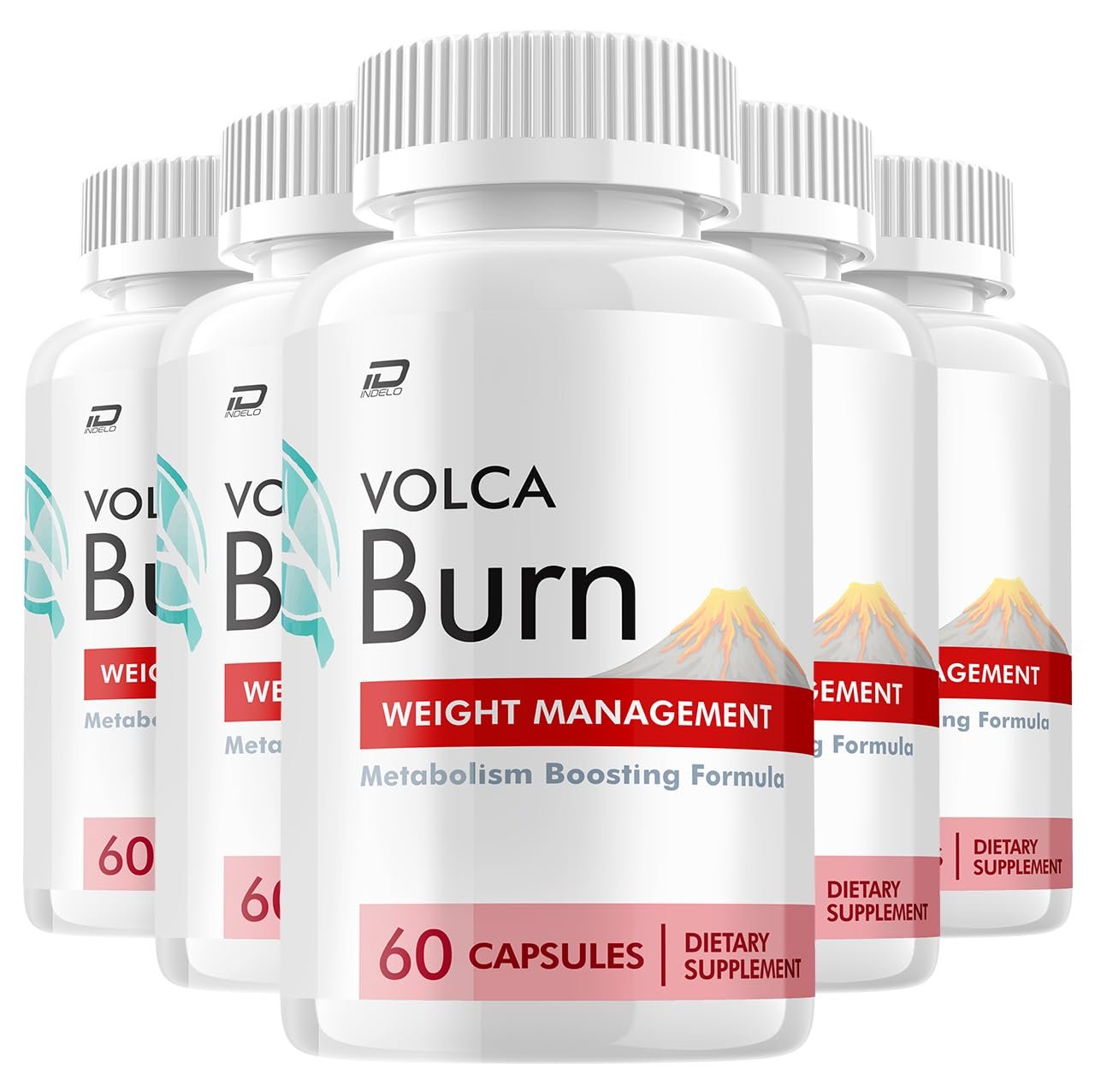
VolcaBurn: Official Website Link & Ingredient Review
A 7-ingredient capsule built around UCP-1 (brown fat) activation
Looking for the official VolcaBurn website? The official site is the only authorized seller. SourceLean is an independent review site, and the “Official site” button on this page goes straight to it.
VolcaBurn is a daily dietary supplement in capsule form designed to be taken once a day; it claims to trigger thermogenesis, accelerate fat burning, and boost energy. It’s marketed as a thermogenic fat-burning formula, using ingredients like gochugaru, luma leaves extract, Irvingia gabonensis, olea europaea, and holy basil.
- Format: 30 vegetarian capsules, 1 capsule/day
- Key ingredients: Gochugaru, Luma Leaves, Irvingia, Olea Europaea, Holy Basil, Citrus Bioflavonoids, Berberis
- Doses disclosed: Partial — main 7 listed
- Guarantee: 180-day money-back
- Price: From $59/bottle
Why people pick VolcaBurn
Mild thermogenic effect
Capsaicinoids from Gochugaru have modest thermogenic effects (3-5% increased energy…
Glucose handling support
Berberine has strong evidence for glucose control at 1500 mg/day; VolcaBurn likely…
Adaptogenic stress support
Holy Basil reduces cortisol modestly, helping with stress-driven eating
Anti-inflammatory
Citrus bioflavonoids provide general antioxidant support
VolcaBurn video review: watch before you buy
Prefer reading? Everything in the video is covered below. Watch on YouTube
What is VolcaBurn?
VolcaBurn is a capsule in the weight-loss category. VolcaBurn is positioned around UCP-1 (uncoupling protein 1), which converts white fat into metabolically-active brown fat that burns calories for heat. It is typically taken as 30 vegetarian capsules, 1 capsule/day.
VolcaBurn benefits
- Mild thermogenic effect: Capsaicinoids from Gochugaru have modest thermogenic effects (3-5% increased energy expenditure).
- Glucose handling support: Berberine has strong evidence for glucose control at 1500 mg/day; VolcaBurn likely delivers less.
- Adaptogenic stress support: Holy Basil reduces cortisol modestly, helping with stress-driven eating.
- Anti-inflammatory bioflavonoids: Citrus bioflavonoids provide general antioxidant support.
- African mango appetite mechanism: Irvingia has weak-to-moderate evidence for appetite reduction at 150-300 mg/day.
VolcaBurn ingredients
Here is what the label discloses, what each ingredient does, and an honest note on dose where research gives us a reference point.
| Ingredient | Label status | What it does | Dose note |
|---|---|---|---|
| Gochugaru (Capsicum) | Proprietary blend amount not stated | Chili-derived capsaicinoids studied for stimulating thermogenesis (heat production). | 2-10 mg capsaicinoids/day for thermogenesis — Possibly in range |
| Luma Leaves Extract | Proprietary blend amount not stated | A formula ingredient included for metabolic or general wellness support; see the label for context. | Limited human trial data available — Sparse evidence |
| Irvingia Gabonensis (African Mango) | Proprietary blend amount not stated | Irvingia gabonensis seed, a fiber-rich extract studied for appetite and metabolic markers. | 150-300 mg/day for 10 weeks in obesity trials — Possibly in range |
| Olea Europaea (Olive Leaf) | Proprietary blend amount not stated | Provides oleuropein, a polyphenol studied for metabolic and cardiovascular support. | 500-1000 mg/day oleuropein-standardized for BP/metabolic — Possibly in range |
| Holy Basil (Tulsi) | Proprietary blend amount not stated | A formula ingredient included for metabolic or general wellness support; see the label for context. | 300-1200 mg/day for stress/glucose effects — Possibly in range |
| Citrus Bioflavonoids | Proprietary blend amount not stated | A formula ingredient included for metabolic or general wellness support; see the label for context. | 500 mg/day for general antioxidant support — Possibly in range |
| Berberis Vulgaris (Berberine) | Proprietary blend amount not stated | A plant alkaloid that activates AMPK, studied for blood-sugar, lipid and metabolic support. | 500 mg 3x/day for glucose/weight effects — Likely below 1500 mg/day |
See how VolcaBurn’s ingredients and doses are disclosed — check current packages and the guarantee on the official site.
Go to official site →Formula review
VolcaBurn includes some genuinely evidence-based ingredients (berberine, holy basil, olive leaf) targeting a real mechanism (UCP-1/brown fat). The weakness is that per-capsule doses are undisclosed and berberine especially is likely well below the 1500 mg/day clinical dose. The 180-day refund makes a trial low-risk, but standalone berberine + holy basil + olive leaf will deliver more proven effects for similar monthly cost.
How VolcaBurn works
VolcaBurn is positioned around UCP-1 (uncoupling protein 1), which converts white fat into metabolically-active brown fat that burns calories for heat. The mechanism is supported by metabolic research; whether VolcaBurn’s specific combination at undisclosed doses meaningfully activates UCP-1 in humans hasn’t been clinically tested. The strongest ingredient (berberine) has substantial glucose-and-weight evidence at 1500 mg/day, but VolcaBurn’s single-capsule dose likely delivers far less.
VolcaBurn pros and cons
Pros
- Berberine inclusion (one of the strongest natural metabolic ingredients)
- Stimulant-free, suitable for caffeine-sensitive users
- 180-day money-back guarantee through ClickBank
- Targets a real mechanism (UCP-1/brown fat activation) supported by metabolic research
Cons
- Doses not per-ingredient disclosed
- Berberine likely below the 1500 mg/day trial dose in a single capsule
- Luma leaves has thin published research base
- Marketing uses sensational language (‘red tingle hack’, ‘effortless fat loss’)
Ready to try VolcaBurn? View pricing and bundles on the official site.
View packages →VolcaBurn price & packages
Pricing and packages are set on the official website and may change. Always confirm current pricing, shipping and guarantee terms at checkout.
VolcaBurn clarity score
Reflects how clearly the formula discloses its ingredients and doses. It is a transparency measure, not a rating of effectiveness.
VolcaBurn safety & side effects
Berberine can interact with metformin, statins, cyclosporine, and many other medications via CYP3A4 inhibition. Capsaicinoids can cause GI discomfort, especially on empty stomach. Holy basil may modestly lower blood sugar and BP. Consult pharmacist if on multiple medications.
Key ingredients at a glance
Explore the research behind each compound
Official website checks for popular supplements
We verify the real checkout page for every product we review, so you can skip lookalike sellers.
- Java Burn official website — verified link for the coffee-additive metabolism powder, with ingredients and refund terms
- Nagano Tonic official website — verified link for the Japanese-inspired tonic powder, with ingredients and refund terms
- Resurge official website — verified link for the night-time sleep and metabolism capsule, with ingredients and refund terms
- Okinawa Flat Belly Tonic official website — verified link for the fruit-based morning tonic, with ingredients and refund terms
- Liv Pure official website — verified link for the liver-support capsule, with ingredients and refund terms
- Venus Factor official website — verified link for the women’s diet and workout program, with ingredients and refund terms
- HydroLean XT official website — verified link for the hydration-based weight capsule, with ingredients and refund terms
- Ikaria Lean Belly Juice official website — verified link for the juice powder with milk thistle and citrus, with ingredients and refund terms
See all supplement comparisons · Read our 29-label transparency study
What the research says about VolcaBurn’s ingredients
We looked up the strongest published human study for each main VolcaBurn ingredient, preferring meta-analyses and Cochrane reviews over single trials. No clinical trial of the finished VolcaBurn formula has been published, so this tells you about the ingredients, not about VolcaBurn itself.
The short version: Of the 6 ingredients we checked in VolcaBurn, 1 has moderate human evidence for weight loss, 1 limited, 2 weak and 2 none (they were studied for other things, such as sleep, stress or blood pressure). Even the best-supported ingredients produced about 1 kg (2 lb) of extra weight loss over several weeks in trials, and only alongside diet changes.
| Ingredient | Best human evidence | Dose studied | What it found | Weight-loss evidence |
|---|---|---|---|---|
| Capsaicin (red pepper) | Meta-analysis, 8 trials (191 people)[1] | 2 mg+ before a meal | People ate about 74 kcal less at that meal. Weight loss itself wasn’t measured. | Limited |
| African mango (Irvingia) | Systematic review of 3 small RCTs[2] | varied by trial | All 3 trials reported statistically significant drops in weight and waist vs placebo, but the reviewers judged them small and poorly reported and said the evidence is too limited to show a benefit. | Weak |
| Olive leaf extract | Crossover RCT (46 overweight men)[3] | 51 mg oleuropein + 10 mg hydroxytyrosol a day for 12 weeks | Insulin sensitivity improved by about 15% vs placebo, but there was no effect on body composition. | None for weight |
| Holy basil (tulsi) | Open-label randomized pilot trial (30 people, no placebo)[4] | 250 mg extract twice a day for 8 weeks | BMI improved in the tulsi group (p=0.005) but the size of the change was not reported, and there was no placebo or blinding. A 2017 systematic review of 24 human tulsi studies (Jamshidi & Cohen) did not assess weight. | Weak |
| Quercetin | Meta-analysis, 9 RCTs (525 people)[5] | varied by trial | No significant change in weight, BMI or waist size. | None for weight |
| Berberine | Meta-analysis, 49 RCTs[6] | 0.2–6 g a day; best near 1 g a day | About 0.8 kg more weight lost than control, plus a small drop in BMI. | Moderate |
Capsaicin (red pepper) in VolcaBurn
The best human evidence we found for capsaicin (red pepper) is a meta-analysis, 8 trials (191 people)[1]. Dose studied: 2 mg+ before a meal. People ate about 74 kcal less at that meal. Weight loss itself wasn’t measured. Our rating for weight-loss evidence: limited. VolcaBurn does not publish its exact dose of every ingredient, so you can’t confirm it matches the amount used in this research.
African mango (Irvingia) in VolcaBurn
The best human evidence we found for african mango (irvingia) is a systematic review of 3 small RCTs[2]. Dose studied: varied by trial. All 3 trials reported statistically significant drops in weight and waist vs placebo, but the reviewers judged them small and poorly reported and said the evidence is too limited to show a benefit. Our rating for weight-loss evidence: weak. VolcaBurn does not publish its exact dose of every ingredient, so you can’t confirm it matches the amount used in this research.
Olive leaf extract in VolcaBurn
The best human evidence we found for olive leaf extract is a crossover RCT (46 overweight men)[3]. Dose studied: 51 mg oleuropein + 10 mg hydroxytyrosol a day for 12 weeks. Insulin sensitivity improved by about 15% vs placebo, but there was no effect on body composition. Our rating for weight-loss evidence: none. VolcaBurn does not publish its exact dose of every ingredient, so you can’t confirm it matches the amount used in this research.
Holy basil (tulsi) in VolcaBurn
The best human evidence we found for holy basil (tulsi) is a open-label randomized pilot trial (30 people, no placebo)[4]. Dose studied: 250 mg extract twice a day for 8 weeks. BMI improved in the tulsi group (p=0.005) but the size of the change was not reported, and there was no placebo or blinding. A 2017 systematic review of 24 human tulsi studies (Jamshidi & Cohen) did not assess weight. Our rating for weight-loss evidence: weak. VolcaBurn does not publish its exact dose of every ingredient, so you can’t confirm it matches the amount used in this research.
Quercetin in VolcaBurn
The best human evidence we found for quercetin is a meta-analysis, 9 RCTs (525 people)[5]. Dose studied: varied by trial. No significant change in weight, BMI or waist size. Our rating for weight-loss evidence: none. VolcaBurn does not publish its exact dose of every ingredient, so you can’t confirm it matches the amount used in this research.
Berberine in VolcaBurn
The best human evidence we found for berberine is a meta-analysis, 49 RCTs[6]. Dose studied: 0.2–6 g a day; best near 1 g a day. About 0.8 kg more weight lost than control, plus a small drop in BMI. Our rating for weight-loss evidence: moderate. VolcaBurn does not publish its exact dose of every ingredient, so you can’t confirm it matches the amount used in this research.
Who should talk to a doctor before taking VolcaBurn
Check with your doctor or pharmacist first if you are pregnant or breastfeeding, under 18, take any prescription medicine, or have surgery planned in the next two weeks. Ingredient-specific cautions for VolcaBurn:
- Capsaicin can upset the stomach.
- Holy basil may lower blood sugar and slow blood clotting; stop it two weeks before surgery.
- Berberine can lower blood sugar and interacts with several medicines, including diabetes drugs.
Stop taking it and get medical advice if you notice yellowing skin or eyes, dark urine, a racing heart or a severe headache.
How to use VolcaBurn
- Follow the serving size printed on the VolcaBurn label. Taking more doesn’t speed up results and raises the chance of side effects.
- Take the capsule at the same time each day so you don’t miss servings.
- Pair it with the basics the trials above relied on: a modest calorie deficit, protein at each meal, daily walking and 7–8 hours of sleep.
- Weigh yourself once a week, not daily, and judge it after 8–12 weeks.
- If it isn’t working, request a refund inside the 180-day guarantee window and keep your order number.
Scientific references
- Whiting S et al. Could capsaicinoids help to support weight management? A systematic review and meta-analysis of energy intake data. Appetite. 2014. PubMed
- Onakpoya I et al. The efficacy of Irvingia gabonensis supplementation in the management of overweight and obesity: a systematic review of randomized controlled trials. J Diet Suppl. 2013. PubMed
- de Bock M et al. Olive (Olea europaea L.) Leaf Polyphenols Improve Insulin Sensitivity in Middle-Aged Overweight Men: A Randomized, Placebo-Controlled, Crossover Trial. PLoS One. 2013. PubMed
- Satapathy S et al. Effect of Tulsi (Ocimum sanctum Linn.) Supplementation on Metabolic Parameters and Liver Enzymes in Young Overweight and Obese Subjects. Indian J Clin Biochem. 2017. PubMed
- Huang H et al. Clinical effectiveness of quercetin supplementation in the management of weight loss: a pooled analysis of RCTs. Diabetes Metab Syndr Obes. 2019. PMC full text
- Zamani M et al. The effects of berberine supplementation on cardiovascular risk factors in adults: a systematic review and dose-response meta-analysis. Front Nutr. 2022. PMC full text
Evidence ratings are SourceLean’s summary of the cited studies, last checked November 2026. This is not medical advice.
VolcaBurn FAQ
Where is the official VolcaBurn website?
Is VolcaBurn legit?
How do I take VolcaBurn?
Will I feel a ‘red tingle’ from the capsaicin?
Is it safe with diabetes medications?
How long until I see results?
Can I take more than one capsule?
How does the 180-day refund work?
VolcaBurn review summary
VolcaBurn is a 7-ingredient capsule built around UCP-1 (brown fat) activation. With a label-transparency clarity score of 65/100, it leans on a proprietary blend, so several ingredient doses aren’t disclosed. Treat it as one option to weigh within the weight-loss category: compare the ingredient doses against the research, keep expectations realistic, and confirm current pricing and the guarantee on the official site before buying.
Related formulas
Compare before you buy
See how this formula stacks up against similar ones — or get ingredient explainers and breakdowns by email.
Affiliate disclosure: SourceLean is reader-supported. When you buy through links on this site, we may earn a commission at no extra cost to you. Checkout is always handled on the official product website.