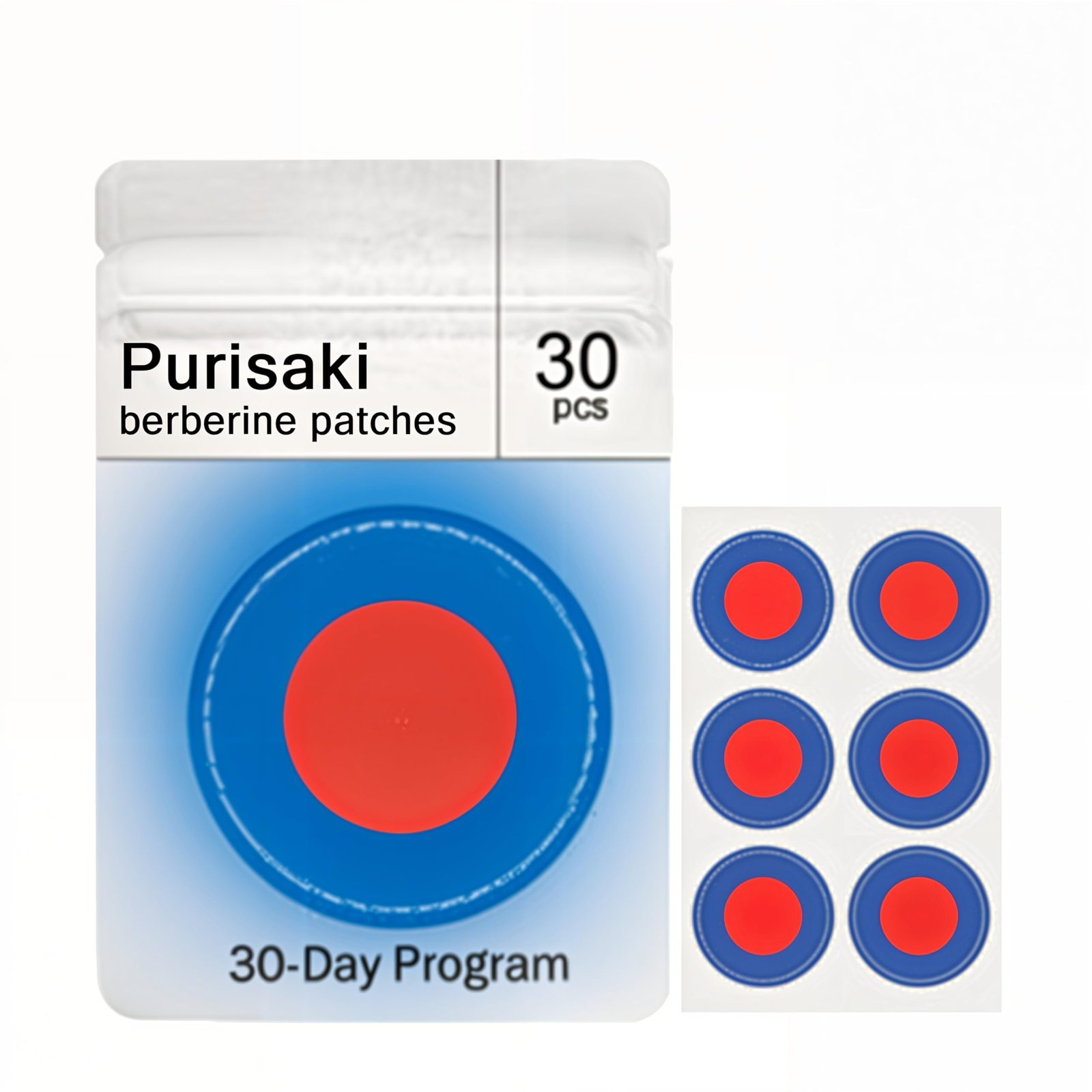
Purisaki Berberine Patches
Transdermal berberine weight-loss patch
Purisaki Berberine Patches is a transdermal patch designed to be applied to the skin and worn through the day; it claims to support metabolism, help balance blood sugar, and aid weight management. It’s marketed as a transdermal berberine patch for weight support, using ingredients like berberine extract, fucoxanthin extract, pomegranate oil, green tea extract, and African mango extract.
- Transdermal delivery system — novel format vs capsules/drinks
- Berberine is the lead ingredient with the strongest research at oral trial doses
- Additional botanicals: Fucoxanthin, Green Tea, African Mango, Pomegranate Oil
- Individual ingredient doses per patch are not disclosed
- Apply one patch daily for 8 hours; no pills or powders
Why people pick Purisaki Berberine Patches
Realistic transdermal
Berberine’s molecular structure makes skin penetration difficult without specialized…
Minimal direct effect from
Fucoxanthin, pomegranate oil, green tea extract, and African mango have varying degrees…
Possible mild AMPK activation
If meaningful amounts of berberine cross the skin barrier, the mechanism (AMP-activated…
Avoidance of berberine GI
If transdermal delivery does work to some degree, users would avoid the diarrhea,…
What is Purisaki Berberine Patches?
Purisaki Berberine Patches are transdermal weight-loss patches designed to deliver berberine and additional botanical ingredients through the skin over an 8-hour wear period. Apply one patch to clean, dry skin (upper arm, shoulder, or lower abdomen) each morning. The brand markets the patch as a pill-free metabolic support system that bypasses digestion for better absorption. Claimed benefits include healthy weight management, reduced body fat, appetite control, balanced blood sugar, and steady daily energy. The patch contains 12 botanical ingredients including Berberine Extract, Fucoxanthin, Pomegranate Oil, Green Tea Extract, African Mango Extract, and Vitamins C, B1, and B3. Individual amounts per patch are not disclosed. Manufactured by UAB BeWell EU in Lithuania, with global fulfillment. 60-day money-back guarantee.
Purisaki Berberine Patches benefits
- Realistic transdermal delivery is uncertain: Berberine’s molecular structure makes skin penetration difficult without specialized permeation enhancers. The amount of berberine actually entering systemic circulation from one patch is likely a small fraction of what oral 500 mg doses deliver.
- Minimal direct effect from supporting botanicals: Fucoxanthin, pomegranate oil, green tea extract, and African mango have varying degrees of evidence in oral supplementation. Transdermal evidence for any of them in weight management is essentially absent.
- Possible mild AMPK activation if berberine reaches systemic circulation: If meaningful amounts of berberine cross the skin barrier, the mechanism (AMP-activated protein kinase activation, glucose regulation) is the same as oral berberine. The ‘if’ is the operative word.
- Avoidance of berberine GI side effects: If transdermal delivery does work to some degree, users would avoid the diarrhea, cramping, and constipation common with oral berberine. This is the patch’s clearest theoretical advantage.
- Negligible weight loss without lifestyle changes: Realistic expectations: minimal to no measurable effect on body weight purely from patch use. Effects, if any, would be small and dependent on diet/exercise context.
Purisaki Berberine Patches ingredients
Here is what the label discloses, what each ingredient does, and an honest note on dose where research gives us a reference point.
| Ingredient | Label status | What it does | Dose note |
|---|---|---|---|
| Berberine Extract | In blend; per-patch amount not stated | A plant alkaloid that activates AMPK, studied for blood-sugar, lipid and metabolic support. | 900-1,500 mg/day oral for trial-range effects — Lead ingredient, but no transdermal dose disclosed. Oral berberine has ~5% bioavailability; transdermal route is likely worse without enhancers. See our berberine page. |
| Fucoxanthin Extract | Per-patch amount not stated | A brown-seaweed carotenoid studied in early research for fat metabolism. | 2.4-8 mg/day oral — Some thermogenic evidence in animal models and one small human trial. Transdermal absorption is uncharacterized. |
| Pomegranate Oil (punicic acid) | Per-patch amount not stated | A formula ingredient included for metabolic or general wellness support; see the label for context. | No standardized weight-loss dose — Antioxidant. Direct weight effects in humans are minimal. Lipophilic, which actually favors transdermal delivery, but evidence is sparse. |
| Green Tea Extract (EGCG) | Per-patch amount not stated | Supplies catechins such as EGCG, studied for a small thermogenic and fat-oxidation effect. | 300-500 mg EGCG/day oral — Real oral evidence at trial doses. Transdermal EGCG penetration is poor. See our green tea page. |
| African Mango Extract (Irvingia) | Per-patch amount not stated | Irvingia gabonensis seed, a fiber-rich extract studied for appetite and metabolic markers. | 150-300 mg twice daily oral — Early small trials showed mild appetite-suppression effects. Methodological concerns. Transdermal absorption is uncharacterized. |
| Vitamin C | Per-patch amount not stated | A formula ingredient included for metabolic or general wellness support; see the label for context. | 90 mg RDA — Water-soluble, ionic at physiological pH. Transdermal delivery of meaningful amounts is unlikely. |
| Vitamin B1 (Thiamine) | Per-patch amount not stated | A formula ingredient included for metabolic or general wellness support; see the label for context. | 1.2 mg RDA — Water-soluble vitamin. Transdermal delivery in meaningful amounts is unlikely. |
| Vitamin B3 (Niacin) | Per-patch amount not stated | Vitamin B3, involved in converting food into cellular energy. | 16 mg RDA — Some niacin forms (nicotinamide) have transdermal use for skin conditions, but as a metabolic supplement at meaningful doses, transdermal data is sparse. |
| Additional botanicals (capsaicin, Coptis Chinensis, ginger, sophoricoside, etc.) | Mentioned in product materials; not on supplement facts panel | The active heat compound in chili peppers, studied for thermogenesis and appetite support. | Various — Inconsistent ingredient lists across product materials. Transdermal evidence for these botanicals in weight management is absent. |
See how Purisaki Berberine Patches’s ingredients and doses are disclosed — check current packages and the guarantee on the official site.
Go to official site →Formula review
Purisaki Berberine Patches reads for one core reason: the central premise of the product — meaningful transdermal berberine absorption — lacks published clinical-trial evidence in humans. Berberine’s molecular characteristics (polar, ionic, low skin permeability) make passive transdermal delivery biologically difficult. The patch format has genuine advantages for users who struggle with oral berberine’s GI side effects, and the broader ingredient list (fucoxanthin, green tea, African mango) represents reasonable choices on paper. But none of these ingredients have established transdermal delivery profiles for weight management. Per-patch doses are not disclosed. The Lithuania/China supply chain is unusual. For users specifically seeking berberine’s metabolic effects, an oral berberine HCl supplement at 500 mg three times daily has decades of research, dose transparency, and established (if poor) bioavailability. The patch offers convenience and GI-side-effect avoidance — potentially worthwhile if the transdermal delivery actually delivers anything systemically, which the evidence does not establish.
How Purisaki Berberine Patches works
When delivered orally, berberine activates AMP-activated protein kinase (AMPK) in cells, promoting glucose uptake and fat oxidation. Trial doses are 900-1,500 mg/day oral. Bioavailability is poor (~5%) even orally, which is why effective doses are high. The stratum corneum is a lipid-rich barrier ~10-20 microns thick. Molecules need specific lipophilicity (logP ~1-3), low molecular weight (<500 Da), and non-ionic form to passively diffuse. Berberine fails on the ionic-form criterion and has poor skin permeability without enhancers. Fucoxanthin (from brown seaweed) upregulates UCP1 protein in adipose tissue in rodent studies. Some human evidence exists at oral doses of 2.4-8 mg/day. Transdermal evidence is absent. EGCG inhibits COMT and prolongs norepinephrine signaling, increasing fat oxidation. Oral doses 300-500 mg EGCG/day. Transdermal delivery of EGCG is even less studied than berberine. Some early small trials suggested appetite-suppression effects at 150 mg twice daily oral, but the evidence is weak and the studies have methodological concerns. Transdermal data is absent. Antioxidant and anti-inflammatory in cell studies. Direct weight-management evidence in humans is minimal. Routine micronutrient cofactors for energy metabolism. Transdermal vitamin delivery in any meaningful amount is questionable.
Purisaki Berberine Patches pros and cons
Pros
- Berberine is a legitimate evidence-based ingredient at oral trial doses
- Patch format avoids the GI side effects (diarrhea, cramping) common with oral berberine
- Once-daily application is convenient and pill-free
- Caffeine-free, stimulant-free formula
Cons
- Transdermal berberine delivery has essentially no clinical-trial evidence in humans for weight loss
- Berberine’s molecular structure makes effective skin penetration unlikely without specialized enhancers
- Per-patch ingredient doses are not disclosed — impossible to audit
- Manufactured in Lithuania with China fulfillment — unusual supply chain for a US affiliate product
Ready to try Purisaki Berberine Patches? View pricing and bundles on the official site.
View packages →Purisaki Berberine Patches price & packages
Pricing and packages are set on the official website and may change. Always confirm current pricing, shipping and guarantee terms at checkout.
Purisaki Berberine Patches clarity score
Reflects how clearly the formula discloses its ingredients and doses. It is a transparency measure, not a rating of effectiveness.
Purisaki Berberine Patches safety & side effects
Purisaki Berberine Patches are generally well-tolerated at the recommended single-patch daily use. The transdermal format avoids the most common berberine side effect (gastrointestinal upset). The most common reported side effects are mild skin irritation at the application site (redness, itching, or rash). If transdermal delivery does work to deliver meaningful berberine systemically, the same drug-interaction profile as oral berberine applies. If transdermal delivery does NOT work, the patch is essentially a placebo. Either way, anyone on prescription medications affected by CYP3A4 should treat the patch the same as oral berberine for interaction risk.
Key ingredients at a glance
Explore the research behind each compound
Purisaki Berberine Patches FAQ
Do transdermal berberine patches actually work?
Why use a patch instead of oral berberine?
Is the company legitimate?
Can I shower with the patch on?
Will I experience any sensation while wearing the patch?
How long until I see results?
Purisaki Berberine Patches review summary
Purisaki Berberine Patches is transdermal berberine weight-loss patch. With a label-transparency clarity score of 58/100, it leans on a proprietary blend, so several ingredient doses aren’t disclosed. Treat it as one option to weigh within the weight-loss category: compare the ingredient doses against the research, keep expectations realistic, and confirm current pricing and the guarantee on the official site before buying.
Related formulas
Compare before you buy
See how this formula stacks up against similar ones — or get ingredient explainers and breakdowns by email.
Affiliate disclosure: SourceLean is reader-supported. When you buy through links on this site, we may earn a commission at no extra cost to you. Checkout is always handled on the official product website.