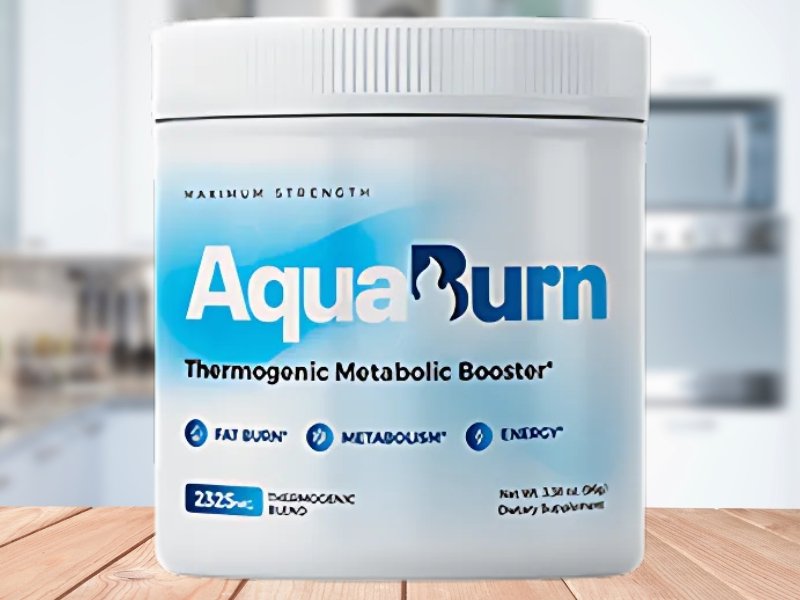
Aquaburn: Official Website Link & Ingredient Review
Brown-fat activation weight-loss capsule
Looking for the official Aquaburn website? The official site is the only authorized seller. SourceLean is an independent review site, and the “Official site” button on this page goes straight to it.
Aquaburn is a daily dietary supplement in capsule form designed to be taken once a day with water; it claims to support hydration, fire up metabolism, and aid fat burning. It’s marketed as a hydration-and-metabolism weight formula, using ingredients like resveratrol, fucoxanthin, quercetin, green tea extract, and cayenne.
- 10 plant-based ingredients targeting brown adipose tissue
- Resveratrol and fucoxanthin are core brown-fat activators
- Quercetin, ginger, cinnamon for metabolic support
- Milk thistle and dandelion for liver/detox support
- Stimulant-free formula (no caffeine added)
Why people pick Aquaburn
Mild brown fat upregulation
Both compounds have documented BAT-activating effects in animal studies and limited human…
Quercetin antioxidant + AMPK
Quercetin at 500-1,000 mg/day has modest effects on metabolic markers
Cayenne capsaicin
Capsaicin activates TRPV1 receptors and stimulates BAT
Cinnamon insulin sensitivity
Cinnamaldehyde and procyanidins mildly improve insulin signaling at 1-6 g/day
AquaBurn video review: watch before you buy
Prefer reading? Everything in the video is covered below. Watch on YouTube
What is Aquaburn?
Aquaburn is a capsule-format weight-loss supplement built around the brown adipose tissue (BAT) concept — the idea that activating “brown fat” (a heat-generating fat tissue type) burns calories more effectively than relying on stimulants alone. Brown fat is real, but its role in adult human weight loss is more limited than supplement marketing suggests. Adults have small amounts of metabolically active brown fat (~50 g typically, mainly around the collarbone and upper back). Cold exposure and certain compounds (capsaicin, catechins, resveratrol) can mildly upregulate BAT activity. The total caloric impact, even with maximal BAT activation, is typically 50-200 kcal/day — modest, not transformative. Aquaburn combines 10 plant-based ingredients across thermogenic, antioxidant, glucose-modulation, and liver-support categories. No individual doses are disclosed.
Aquaburn official website: how to buy the real product
The only official seller of Aquaburn is its official website. Use the “Official site” button on this page to go there directly. SourceLean is an independent review site; we don’t sell Aquaburn ourselves.
How to spot lookalike “official” pages
Search results for “Aquaburn official website” include many pages on unrelated domains and subdomains that call themselves the official site. Before you enter card details, check these things:
- The checkout is run by ClickBank. Aquaburn orders are processed by ClickBank, so ClickBank appears on the order page and the charge on your card statement starts with “CLKBANK*”.
- The guarantee matches. The official offer comes with a 180-day money-back guarantee. A page offering different terms is a warning sign.
- The price matches the official packages. Extreme discount claims on unfamiliar sites are a red flag.
How refunds work
Because ClickBank processes the order, refund requests within the guarantee period go through ClickBank’s customer support at clkbank.com, using the order number from your confirmation email.
Aquaburn benefits
- Mild brown fat upregulation from resveratrol and fucoxanthin: Both compounds have documented BAT-activating effects in animal studies and limited human trials. Resveratrol trial doses 150-1,000 mg/day; fucoxanthin 2.4-8 mg/day.
- Quercetin antioxidant + AMPK activation: Quercetin at 500-1,000 mg/day has modest effects on metabolic markers. Bioavailability is poor without bromelain or vitamin C.
- Cayenne capsaicin thermogenesis: Capsaicin activates TRPV1 receptors and stimulates BAT. Trial doses 6-9 mg capsaicinoids/day.
- Cinnamon insulin sensitivity: Cinnamaldehyde and procyanidins mildly improve insulin signaling at 1-6 g/day.
- Ginger gingerol anti-inflammatory effects: Gingerols mildly increase thermogenesis at gram-level doses.
Aquaburn ingredients
Here is what the label discloses, what each ingredient does, and an honest note on dose where research gives us a reference point.
| Ingredient | Label status | What it does | Dose note |
|---|---|---|---|
| Resveratrol (Japanese Knotweed) | Per-capsule amount not stated | A polyphenol antioxidant studied for metabolic and cardiovascular support. | 150-1,000 mg/day — Weak human weight-loss evidence. Mostly rodent and in-vitro studies. Dose unverifiable. |
| Fucoxanthin | Per-capsule amount not stated | A brown-seaweed carotenoid studied in early research for fat metabolism. | 2.4-8 mg/day — Real UCP1 mechanism in studies. Trial dose is small (mg-level) but per-capsule amount unverifiable. |
| Quercetin | Per-capsule amount not stated | A plant flavonoid with antioxidant properties, studied for metabolic support. | 500-1,000 mg/day — Poor bioavailability. Effects modest. |
| Green Tea Extract | Per-capsule amount not stated | Supplies catechins such as EGCG, studied for a small thermogenic and fat-oxidation effect. | 300-500 mg EGCG/day — Real evidence. Dose unverifiable. See our green tea page. |
| Cayenne (Capsaicin) | Per-capsule amount not stated | The active heat compound in chili peppers, studied for thermogenesis and appetite support. | 6-9 mg capsaicinoids/day — Modest thermogenic effect at trial dose. See our capsaicin page. |
| Cinnamon | Per-capsule amount not stated | A spice studied for supporting insulin sensitivity and steadier post-meal blood sugar. | 1-6 g/day cassia — Real but small insulin-sensitivity effects. Coumarin safety concern at high cassia doses. |
| Ginger | Per-capsule amount not stated | A warming root studied for digestion, thermogenesis and appetite support. | 1-3 g/day — Modest thermogenic and digestive support at gram-level doses. |
| Panax Ginseng | Per-capsule amount not stated | An adaptogenic root studied for energy, glucose metabolism and fatigue. | 100-400 mg standardized extract — Adaptogenic effects. Dose unverifiable. |
| Milk Thistle, Dandelion (liver support) | Per-capsule amounts not stated | A liver-support herb providing silymarin, studied for hepatic and antioxidant effects. | Various — Standard liver-supportive botanicals. Doses unverifiable. |
See how Aquaburn’s ingredients and doses are disclosed — check current packages and the guarantee on the official site.
Go to official site →Formula review
Aquaburn earns. The positives: real evidence-backed ingredients (resveratrol, fucoxanthin, capsaicin, quercetin), stimulant-free formula, the brown-fat activation concept has genuine biological basis, and the 180-day money-back guarantee is industry-leading. The negatives: zero individual doses disclosed, brown-fat caloric impact is small even at optimal activation (50-200 kcal/day), resveratrol human weight-loss evidence is weak, and several ingredients have known bioavailability problems. For users curious about brown-fat-activation supplements, Aquaburn is a reasonable starter product. For dose precision, standalone fucoxanthin or resveratrol supplements offer better transparency.
How Aquaburn works
Brown adipose tissue contains uncoupling protein 1 (UCP1), which generates heat instead of ATP. Activating UCP1 produces caloric burn through “futile” thermogenesis. Resveratrol activates sirtuin-1, which can upregulate brown-fat biogenesis. Fucoxanthin (from brown seaweed) directly upregulates UCP1 expression in white adipose tissue, encouraging “browning.” Quercetin activates AMPK and inhibits fatty acid synthase. Capsaicin from cayenne stimulates TRPV1 receptors, activating brown fat thermogenesis. Cinnamon procyanidins mimic insulin and reduce post-meal glucose spikes. Liver-supportive compounds aid xenobiotic metabolism.
Aquaburn pros and cons
Pros
- Real evidence-backed ingredients (resveratrol, fucoxanthin, capsaicin, quercetin)
- Stimulant-free formula — no caffeine
- Multi-mechanism approach: BAT activation, AMPK, insulin sensitivity, liver support
- 180-day money-back guarantee — industry-leading
Cons
- Zero individual doses disclosed across 10 ingredients
- Brown-fat caloric impact is biologically real but small (50-200 kcal/day maximum)
- Resveratrol human weight-loss evidence is weak
- Quercetin bioavailability is poor without enhancers
Ready to try Aquaburn? View pricing and bundles on the official site.
View packages →Aquaburn price & packages
Pricing and packages are set on the official website and may change. Always confirm current pricing, shipping and guarantee terms at checkout.
Aquaburn clarity score
Reflects how clearly the formula discloses its ingredients and doses. It is a transparency measure, not a rating of effectiveness.
Aquaburn safety & side effects
Aquaburn is generally well-tolerated by healthy adults. The stimulant-free, multi-botanical formula has a relatively safe profile, though several ingredients have drug-interaction considerations. The main considerations involve ginseng (blood pressure), cinnamon (long-term coumarin exposure), capsaicin (GI sensitivity), and resveratrol (mild antiplatelet effects).
Key ingredients at a glance
Explore the research behind each compound
What the research says about Aquaburn’s ingredients
We looked up the strongest published human study for each main Aquaburn ingredient, preferring meta-analyses and Cochrane reviews over single trials. No clinical trial of the finished Aquaburn formula has been published, so this tells you about the ingredients, not about Aquaburn itself.
The short version: Of the 9 ingredients we checked in Aquaburn, 0 have moderate human evidence for weight loss, 4 limited, 3 weak and 2 none (they were studied for other things, such as sleep, stress or blood pressure). Even the best-supported ingredients produced about 1 kg (2 lb) of extra weight loss over several weeks in trials, and only alongside diet changes.
| Ingredient | Best human evidence | Dose studied | What it found | Weight-loss evidence |
|---|---|---|---|---|
| Resveratrol | Meta-analysis, 36 RCTs[1] | varied by trial | Small reductions in weight, BMI and waist size. | Weak |
| Fucoxanthin | RCT (151 women)[2] | 2.4 mg with pomegranate seed oil for 16 weeks | About 5 kg more lost than placebo, but it tested a combination product in one trial. | Limited |
| Quercetin | Meta-analysis, 9 RCTs (525 people)[3] | varied by trial | No significant change in weight, BMI or waist size. | None for weight |
| Green tea extract (EGCG) | Cochrane review, 18 RCTs (1,945 people)[4] | about 270–650 mg catechins a day | Outside Japan, green tea made no meaningful difference to weight (−0.04 kg vs placebo). | Weak |
| Capsaicin (red pepper) | Meta-analysis, 8 trials (191 people)[5] | 2 mg+ before a meal | People ate about 74 kcal less at that meal. Weight loss itself wasn’t measured. | Limited |
| Cinnamon | Meta-analysis, 12 RCTs (786 people)[6] | 2 g+ a day for 12+ weeks | About 1 kg more weight lost and 2.4 cm less waist than control. | Limited |
| Ginger | Meta-analysis, 14 RCTs (473 people)[7] | varied by trial | A modest reduction in body weight and waist-to-hip ratio. | Limited |
| Ginseng | RCT (50 women)[8] | 8 weeks | Weight fell in the ginseng group but did not differ from placebo. | Weak |
| Milk thistle (silymarin) | Small RCT (64 people)[9] | 210 mg a day for 8 weeks | Liver enzymes fell more than with placebo. No weight effect was reported. | None for weight |
Resveratrol in Aquaburn
The best human evidence we found for resveratrol is a meta-analysis, 36 RCTs[1]. Dose studied: varied by trial. Small reductions in weight, BMI and waist size. Our rating for weight-loss evidence: weak. Aquaburn does not publish its exact dose of every ingredient, so you can’t confirm it matches the amount used in this research.
Fucoxanthin in Aquaburn
The best human evidence we found for fucoxanthin is a rCT (151 women)[2]. Dose studied: 2.4 mg with pomegranate seed oil for 16 weeks. About 5 kg more lost than placebo, but it tested a combination product in one trial. Our rating for weight-loss evidence: limited. Aquaburn does not publish its exact dose of every ingredient, so you can’t confirm it matches the amount used in this research.
Quercetin in Aquaburn
The best human evidence we found for quercetin is a meta-analysis, 9 RCTs (525 people)[3]. Dose studied: varied by trial. No significant change in weight, BMI or waist size. Our rating for weight-loss evidence: none. Aquaburn does not publish its exact dose of every ingredient, so you can’t confirm it matches the amount used in this research.
Green tea extract (EGCG) in Aquaburn
The best human evidence we found for green tea extract (egcg) is a cochrane review, 18 RCTs (1,945 people)[4]. Dose studied: about 270–650 mg catechins a day. Outside Japan, green tea made no meaningful difference to weight (−0.04 kg vs placebo). Our rating for weight-loss evidence: weak. Aquaburn does not publish its exact dose of every ingredient, so you can’t confirm it matches the amount used in this research.
Capsaicin (red pepper) in Aquaburn
The best human evidence we found for capsaicin (red pepper) is a meta-analysis, 8 trials (191 people)[5]. Dose studied: 2 mg+ before a meal. People ate about 74 kcal less at that meal. Weight loss itself wasn’t measured. Our rating for weight-loss evidence: limited. Aquaburn does not publish its exact dose of every ingredient, so you can’t confirm it matches the amount used in this research.
Cinnamon in Aquaburn
The best human evidence we found for cinnamon is a meta-analysis, 12 RCTs (786 people)[6]. Dose studied: 2 g+ a day for 12+ weeks. About 1 kg more weight lost and 2.4 cm less waist than control. Our rating for weight-loss evidence: limited. Aquaburn does not publish its exact dose of every ingredient, so you can’t confirm it matches the amount used in this research.
Ginger in Aquaburn
The best human evidence we found for ginger is a meta-analysis, 14 RCTs (473 people)[7]. Dose studied: varied by trial. A modest reduction in body weight and waist-to-hip ratio. Our rating for weight-loss evidence: limited. Aquaburn does not publish its exact dose of every ingredient, so you can’t confirm it matches the amount used in this research.
Ginseng in Aquaburn
The best human evidence we found for ginseng is a rCT (50 women)[8]. Dose studied: 8 weeks. Weight fell in the ginseng group but did not differ from placebo. Our rating for weight-loss evidence: weak. Aquaburn does not publish its exact dose of every ingredient, so you can’t confirm it matches the amount used in this research.
Milk thistle (silymarin) in Aquaburn
The best human evidence we found for milk thistle (silymarin) is a small RCT (64 people)[9]. Dose studied: 210 mg a day for 8 weeks. Liver enzymes fell more than with placebo. No weight effect was reported. Our rating for weight-loss evidence: none. Aquaburn does not publish its exact dose of every ingredient, so you can’t confirm it matches the amount used in this research.
Who should talk to a doctor before taking Aquaburn
Check with your doctor or pharmacist first if you are pregnant or breastfeeding, under 18, take any prescription medicine, or have surgery planned in the next two weeks. Ingredient-specific cautions for Aquaburn:
- Resveratrol may interact with blood thinners.
- Concentrated green tea extract has been linked to rare cases of liver injury. Take it with food, and avoid it if you have liver problems.
- Capsaicin can upset the stomach.
- Ginseng may interact with blood thinners such as warfarin and with diabetes medication.
Stop taking it and get medical advice if you notice yellowing skin or eyes, dark urine, a racing heart or a severe headache.
How to use Aquaburn
- Follow the serving size printed on the Aquaburn label. Taking more doesn’t speed up results and raises the chance of side effects.
- Take the capsule at the same time each day so you don’t miss servings.
- Pair it with the basics the trials above relied on: a modest calorie deficit, protein at each meal, daily walking and 7–8 hours of sleep.
- Weigh yourself once a week, not daily, and judge it after 8–12 weeks.
- If it isn’t working, request a refund inside the 180-day guarantee window and keep your order number.
Scientific references
- Tabrizi R et al. The effects of resveratrol intake on weight loss: a systematic review and meta-analysis of RCTs. Crit Rev Food Sci Nutr. 2020. PubMed
- Abidov M et al. The effects of Xanthigen in the weight management of obese premenopausal women with non-alcoholic fatty liver disease and normal liver fat. Diabetes Obes Metab. 2010. PubMed
- Huang H et al. Clinical effectiveness of quercetin supplementation in the management of weight loss: a pooled analysis of RCTs. Diabetes Metab Syndr Obes. 2019. PMC full text
- Jurgens TM et al. Green tea for weight loss and weight maintenance in overweight or obese adults. Cochrane Database Syst Rev. 2012. PMC full text
- Whiting S et al. Could capsaicinoids help to support weight management? A systematic review and meta-analysis of energy intake data. Appetite. 2014. PubMed
- Mousavi SM et al. Cinnamon supplementation positively affects obesity: a systematic review and dose-response meta-analysis of RCTs. Clin Nutr. 2020. PubMed
- Maharlouei N et al. The effects of ginger intake on weight loss and metabolic profiles among overweight and obese subjects: a systematic review and meta-analysis of RCTs. Crit Rev Food Sci Nutr. 2019. PubMed
- Kwon DH et al. Efficacy of Korean red ginseng by single nucleotide polymorphism in obese women: randomized, double-blind, placebo-controlled trial. J Ginseng Res. 2012. PubMed
- Solhi H et al. Silymarin in treatment of non-alcoholic steatohepatitis: a randomized clinical trial. Caspian J Intern Med. 2014. PMC full text
Evidence ratings are SourceLean’s summary of the cited studies, last checked November 2026. This is not medical advice.
Official website checks for popular supplements
We verify the real checkout page for every product we review, so you can skip lookalike sellers.
- Java Burn official website — verified link for the coffee-additive metabolism powder, with ingredients and refund terms
- Nagano Tonic official website — verified link for the Japanese-inspired tonic powder, with ingredients and refund terms
- Resurge official website — verified link for the night-time sleep and metabolism capsule, with ingredients and refund terms
- Okinawa Flat Belly Tonic official website — verified link for the fruit-based morning tonic, with ingredients and refund terms
- Liv Pure official website — verified link for the liver-support capsule, with ingredients and refund terms
- Venus Factor official website — verified link for the women’s diet and workout program, with ingredients and refund terms
- HydroLean XT official website — verified link for the hydration-based weight capsule, with ingredients and refund terms
- Ikaria Lean Belly Juice official website — verified link for the juice powder with milk thistle and citrus, with ingredients and refund terms
See all supplement comparisons · Read our 29-label transparency study
Aquaburn FAQ
Where is the official Aquaburn website?
Is Aquaburn legit?
Does brown fat activation actually work in adults?
Is Aquaburn the same as cold-exposure therapy?
How long until I see results?
Is the 180-day guarantee enforced?
Can vegans/vegetarians use Aquaburn?
How does Aquaburn compare to standalone fucoxanthin?
Aquaburn review summary
Aquaburn is brown-fat activation weight-loss capsule. With a label-transparency clarity score of 65/100, it leans on a proprietary blend, so several ingredient doses aren’t disclosed. Treat it as one option to weigh within the weight-loss category: compare the ingredient doses against the research, keep expectations realistic, and confirm current pricing and the guarantee on the official site before buying.
Related formulas
Compare before you buy
See how this formula stacks up against similar ones — or get ingredient explainers and breakdowns by email.
Affiliate disclosure: SourceLean is reader-supported. When you buy through links on this site, we may earn a commission at no extra cost to you. Checkout is always handled on the official product website.